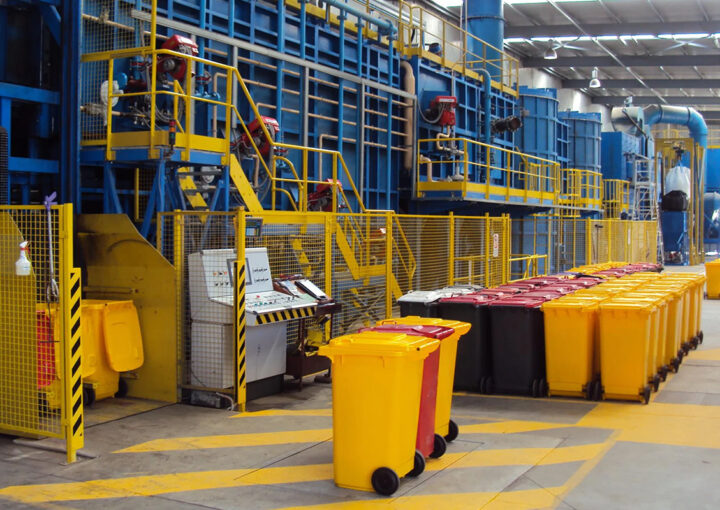



Global Sustainability in the Healthcare Sector
Across the globe, the healthcare industry faces a fundamental challenge: how to reduce the pressure its operations place on planetary health while saving lives and safeguarding human well-being. Building a more sustainable healthcare system has become a central agenda among industry leaders worldwide.
Carbon Footprint Pressure in the Healthcare Industry
Healthcare systems generate a significant carbon footprint through their daily operations. Studies indicate that if the global healthcare sector were considered a country, it would rank among the leading greenhouse gas emitters. One major contributor is the continuous growth in single-use medical consumables. After fulfilling their brief function, these items inevitably become medical waste requiring disposal.
This linear “use-and-dispose” model not only increases resource consumption over time but also creates substantial downstream waste management burdens. As a result, more hospitals and procurement departments are incorporating “green procurement” into their core decision-making criteria. Selecting products with a smaller environmental footprint is no longer merely a matter of regulatory compliance; it is a critical action for fulfilling institutional social responsibility and shaping a responsible brand image.
Waste Management as a Strategic Pillar
Among various sustainability topics, medical waste management is rapidly shifting from a back-end operational issue to a strategic priority. First, the costs of classification, transportation, and disposal of medical waste continue to rise. Second, traditional disposal methods rely heavily on incineration or landfill, and the conventional plastic bags used to contain such waste are themselves derivatives of fossil fuels.
During incineration, these plastics may release harmful substances; in landfills, they degrade extremely slowly, imposing long-term environmental burdens. This dual pressure—economic cost and environmental cost—is driving policy and practical transformation worldwide.
The concept of “sustainable medical waste management” has emerged accordingly. Its core principle is to reduce waste generation at the source and to adopt environmentally preferable alternative materials wherever possible. This shift creates new standards and opportunities throughout the entire supply chain, including the primary waste collection container: the biodegradable medical waste bag.
What Makes a Bag “Eco-Friendly”?
In medical waste management, a bag labeled as “eco-friendly” represents far more than simply being “biodegradable.” It reflects a carefully balanced approach among material sourcing, end-of-life treatment, and performance requirements.
More Than Just “Biodegradable”
A truly environmentally meaningful bag must be evaluated across multiple dimensions.
First, material sourcing matters. The bio-based content of the bag indicates that part or all of its plastic components originate from renewable plant resources, such as sugarcane or corn starch, rather than purely from fossil fuels. This reduces dependence on non-renewable resources.
Second, its end-of-life pathway is critical. A common environmentally favorable endpoint is compostability, but distinctions are essential. “Industrial compostability” requires decomposition under controlled conditions in specialized facilities, whereas “home compostability” occurs in backyard compost environments. In the medical sector, the former is generally applicable.
Equally important are the degradation timeframe and completeness. An ideal biodegradable medical waste bag should fully decompose into harmless substances within a controlled period, without leaving microplastic residues, thereby achieving genuine environmental compatibility throughout its life cycle.
Balancing Performance and Environmental Responsibility
For medical waste applications, environmental benefits must never compromise core performance and safety standards. A qualified biodegradable medical waste bag must meet or exceed traditional plastic performance in the following areas:
- Physical Barrier Performance:It must provide excellent puncture resistance and leak resistance to ensure safe containment during collection and transport.
- Mechanical Strength:Adequate load-bearing capacity and reliable heat-seal strength are essential to withstand waste weight and maintain closure integrity.
- Safety Compliance:It must fulfill all safety and regulatory requirements for managing high-risk waste categories, including infectious and pathological waste.
The advancement of environmental responsibility must never come at the expense of infection control standards. Any biodegradable medical waste bag must first and foremost function as a safe and reliable medical waste container.
In parallel, environmentally friendly medical waste incinerators are also available. For further information, please refer to the article: Eco-Friendly Medical Waste Incinerators: Reducing Emissions.
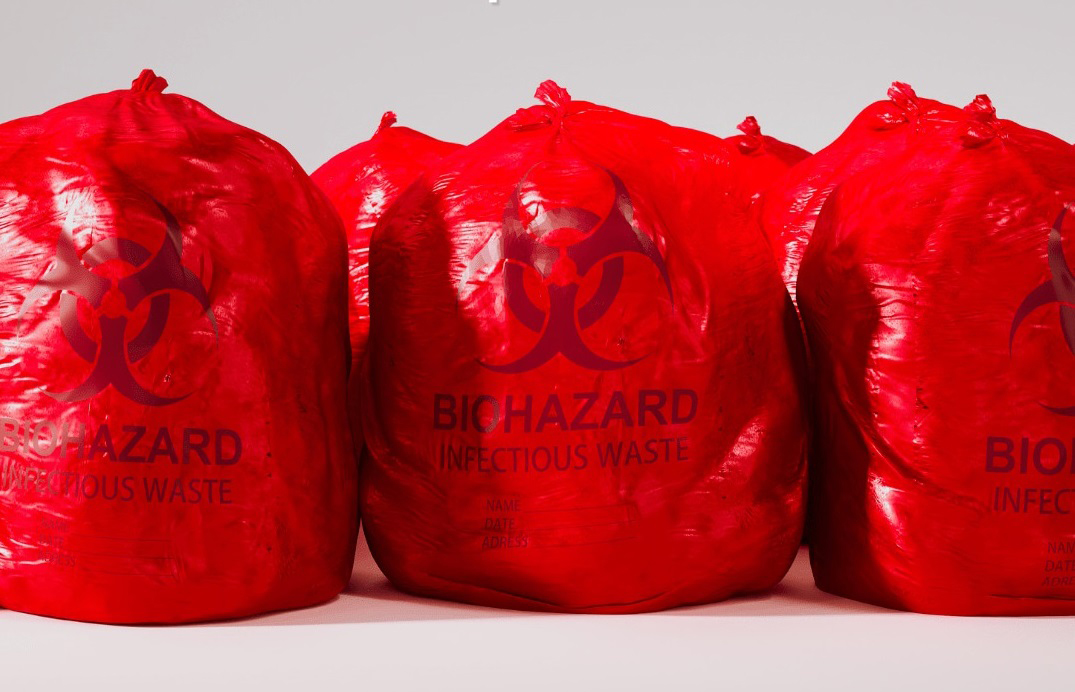
Alternative Materials — Corn Starch, PBAT, and PLA
To reduce environmental burden while maintaining strict medical waste handling standards, the industry is increasingly adopting several key alternative materials. Understanding their characteristics supports informed product selection for different clinical scenarios.
Corn Starch-Based Blends
Corn starch materials offer the advantage of renewable sourcing, typically derived from agricultural crops such as corn. However, pure starch materials have limited mechanical performance. In practical manufacturing, corn starch is commonly blended with other materials such as PBAT.
This blending enhances flexibility and durability, representing a widely adopted solution that balances environmental objectives, cost control, and necessary mechanical strength in the production of biodegradable medical waste bag products.
PBAT
PBAT (polybutylene adipate terephthalate) is a fossil-based but biodegradable polyester. Its key value lies in providing excellent flexibility and tear resistance, compensating for the brittleness of certain bio-based materials such as PLA.
As a result, PBAT has become a critical formulation component in many biodegradable medical waste bag products, ensuring durability and reducing the risk of rupture during handling.
Polylactic Acid (PLA)
PLA is a commonly used bio-based plastic derived from corn or sugarcane. It is characterized by relatively high rigidity and strength but limited flexibility, making it more prone to cracking under bending stress.
This property makes PLA more suitable for lighter medical waste without sharp or heavy components, such as certain outpatient-generated waste streams.
Application Scenarios by Material Type
Material selection depends on the specific waste profile:
- High-Load Infectious Waste:Typically requires composite formulations combining corn starch and PBAT to ensure sufficient impact resistance and load-bearing capacity for safe containment of high-risk waste.
- Laboratory Waste:May involve chemical reagents or sharp instruments. Chemical compatibility and puncture resistance are critical considerations, and high-strength composite formulations are commonly preferred.
- Outpatient or Lightweight Medical Waste:For general waste without sharp objects—such as dressings or packaging materials—PLA or PLA-rich blends can provide a feasible environmentally responsible solution.
Certification of Biodegradable Bags
To ensure the authenticity and compliance of environmentally friendly products, a series of international certification standards are essential. These standards generally fall into two main categories: environmental performance certification and medical industry compliance certification. Both are indispensable and complementary.
European Union and International Standards
Within the European Union, the authoritative standard for compostable plastics is EN 13432. This standard specifies detailed requirements under industrial composting conditions, including complete biodegradation, disintegration within a defined timeframe, and confirmation that the resulting compost does not adversely affect plant growth.
These requirements are also reflected in ISO 17088, which adopts similar criteria at the international level. Compliance with EN 13432 forms the foundation for obtaining recognized industrial compostability labeling within the European market.
North American Standards
In North America, the most widely recognized equivalent standard is ASTM D6400. Its core requirements align closely with EN 13432, defining compostability criteria for plastics processed in industrial composting facilities.
The Biodegradable Products Institute (BPI) provides third-party certification based on ASTM D6400. BPI certification is a key market credential for compostable plastic products entering the North American market.
Medical Regulatory Compliance
As medical-use products, biodegradable medical waste bag solutions must also meet strict healthcare regulatory requirements. Manufacturers are expected to establish and maintain a quality management system compliant with ISO 13485, ensuring product consistency, traceability, and reliability.
Additionally, the bags must comply with specific regulations governing medical waste collection containers, including requirements related to minimum thickness, color coding, and clearly visible biohazard labeling.
Procurement Consideration: Environmental certifications (such as EN 13432 or BPI) validate end-of-life environmental performance, while medical compliance certifications (such as ISO 13485 and national medical regulations) ensure safety and effectiveness as medical-use products. For healthcare procurement, both are mandatory and non-interchangeable.

Comparison Between Biodegradable and Traditional Plastic Bags
The following comparison outlines the key differences between biodegradable medical waste bag products and conventional plastic (such as LDPE) medical waste bags across three core dimensions.
| Comparison Dimension | Biodegradable Medical Waste Bag | Traditional Plastic Bag (e.g., LDPE) | |
| التأثير البيئي | Carbon Emissions (LCA) | Generally lower. Raw materials are derived from renewable resources, reducing fossil fuel consumption and cradle-to-gate carbon emissions. | Generally higher. Fully dependent on fossil-based raw materials, with higher emissions from extraction, refining, and production processes. |
| Landfill Degradation | Not recommended for landfill disposal. Degrades slowly under anaerobic landfill conditions and may generate methane (a potent greenhouse gas). Environmental value depends on industrial composting. | Extremely difficult to degrade. May persist for hundreds or thousands of years, contributing to permanent plastic pollution. | |
| Incineration Emissions | Emissions during incineration are similar to traditional plastics; however, if bio-based, released carbon dioxide is part of the short-term carbon cycle. | Incineration produces carbon dioxide and other greenhouse gases, as well as potentially toxic emissions (such as dioxins), depending on combustion conditions and additives. | |
| Cost Structure | Unit Price | Higher. Raw material and production technology costs are typically greater than those of conventional plastics. | Lower. Mature large-scale petrochemical production offers significant cost advantages. |
| Total Lifecycle Cost | Potentially lower. Where industrial composting infrastructure and supportive policies exist, end-of-life treatment fees may decrease and carbon tax reductions may apply. | Potentially higher hidden costs. Increasing waste management fees, plastic taxes (such as in the EU), and carbon pricing pressures may apply. | |
| Policy Incentives | Strong potential. Aligns with circular economy policies and may qualify for subsidies, tax reductions, or preferential procurement status. | Facing restrictions. Many countries are gradually phasing out single-use conventional plastics through bans and taxation measures. | |
| Risks and Challenges | Storage Conditions | Strict requirements. Sensitive to humidity and temperature; premature degradation may occur in hot and humid environments. Requires dry and cool storage. | Stable. Good weather resistance and minimal storage condition requirements; maintains strength over time. |
| Shelf Life | Defined shelf life. Mechanical performance declines over time; inventory must be carefully managed using a first-in, first-out approach. | Essentially no strict shelf-life limitation. Stable performance allows long-term storage. | |
| Supply Chain Stability | Emerging and variable. Raw material availability depends on agricultural yield and biopolymer production capacity; supply chain maturity is still developing. | Highly mature and stable. Well-established global supply networks ensure consistent availability. | |
In summary, the core advantage of biodegradable medical waste bag products lies in reducing fossil resource dependence and supporting circular end-of-life pathways. However, successful implementation depends heavily on access to industrial composting infrastructure and disciplined inventory management. Traditional plastic bags offer performance stability, cost efficiency, and reliable supply chains but face intensifying environmental and regulatory pressure. Selection should be based on disposal pathways, cost structure, and institutional risk management capabilities.
Adoption Trends in Hospitals
The adoption of biodegradable medical waste bag solutions varies significantly by region. Key driving forces include regulatory frameworks, procurement policies, and economic considerations.
European Market
Europe represents a leading market for environmentally certified medical waste solutions. The primary driver is top-down policy guidance. Many public hospitals incorporate environmental footprint criteria into green tendering processes.
Large healthcare institutions have formally integrated Environmental, Social, and Governance (ESG) metrics into procurement systems. The use of certified biodegradable medical waste bag products supports institutional carbon reduction goals and broader sustainability commitments.
North American Market
In North America, adoption is influenced by both regional regulations and voluntary commitments by major healthcare systems. Certain states have introduced stringent plastic reduction and waste diversion policies, prompting medical institutions to seek compliant alternatives.
Large healthcare networks increasingly leverage centralized procurement systems to standardize specifications and strengthen negotiation power. Through structured substitution programs, traditional plastic consumables are gradually replaced with certified biodegradable alternatives, accelerating market transition.
Asia-Pacific and Emerging Markets
In many Asia-Pacific and developing regions, cost sensitivity remains the dominant factor in purchasing decisions. Broad, immediate replacement strategies are uncommon.
A more prevalent approach involves phased implementation. Hospitals often initiate pilot programs in departments with lower infection risk and simpler waste composition. After validating performance and cost control, expansion may proceed incrementally based on operational experience.
This gradual transition model reflects the need to balance sustainability objectives with financial and operational constraints in emerging healthcare systems.

Introduction to the BiosafePro Eco Series
The BiosafePro Eco Series is a high-performance environmental solution specifically designed for advanced medical waste management standards. It aims to help healthcare institutions achieve the dual objectives of safe infectious waste handling and sustainable development.
Product Positioning
This series is positioned as a high-strength biodegradable medical waste bag solution developed in strict accordance with medical waste container specifications. Its structural strength and safety performance fully meet the requirements for the collection, transportation, and disposal of infectious waste.
Core Advantages
Optimized PBAT/PLA Formulation
The proprietary biopolymer formulation combines efficient biodegradation performance with significantly enhanced mechanical strength and flexibility. This approach addresses the brittleness and rupture risks commonly associated with traditional degradable materials.
Dual Environmental Certification
The product has passed authoritative testing and fully complies with EN 13432 (European Union) and ASTM D6400 (North America) standards, ensuring complete and safe conversion into compost under industrial composting conditions.
Medical-Grade Performance Assurance
As a medical-grade product, environmental responsibility does not compromise core functionality. The series maintains load-bearing capacity, puncture resistance, and sealing reliability equivalent to traditional LDPE medical waste bags, ensuring safe clinical application.
Application Scenarios
Hospital ICUs and Operating Rooms: Suitable for handling high-intensity, high-risk infectious waste.
Medical Laboratories and Diagnostic Departments: Designed for collecting pathogen-containing cultures, specimens, and discarded laboratory materials.
Outpatient Clinics, Medical Practices, and Long-Term Care Facilities: Meets routine medical waste disposal requirements and serves as an effective starting point for implementing green operational strategies.
Further comprehensive information regarding BiosafePro products can be found in the publication titled Top Medical Waste Bag Suppliers in China for Global Buyers.
Becoming a Partner in Green Healthcare
The green transformation of the healthcare industry has shifted from an optional initiative to an inevitable pathway. BiosafePro invites you to upgrade procurement strategies and collaboratively build a sustainable medical supply chain.
By choosing BiosafePro, you gain a partner committed to:
- Products that integrate medical safety compliance with authoritative environmental certifications (EN 13432 / ASTM D6400).
- Stable large-scale manufacturing capacity and global supply capability.
- Customization services tailored to precise clinical application requirements.
Commitment to the Future
- Looking ahead, BiosafePro will continue to invest in:
- Developing next-generation products with higher proportions of bio-based materials.
- Establishing a transparent and traceable green supply chain system.
Supporting hospitals in achieving carbon reduction targets and creating measurable environmental value.