

By BiosafePro Editorial Team | Biomedical Waste Management Specialists
BiosafePro is a professional manufacturer and global supplier of medical waste management solutions, including a full range of sharps disposal containers certified to international standards. Our team works directly with hospitals, laboratories, distributors, and procurement officers across more than 30 countries.
Every year, millions of healthcare workers face the preventable risk of occupational exposure to lethal infections. In high-stakes clinical environments, ranging from bustling hospital emergency departments to precision medical laboratories, systemic lapses in medical waste management continue to threaten institutional compliance and frontline safety. For hospital procurement officers, clinical directors, and medical distributors, understanding the root causes of these vulnerabilities is not merely a matter of operational protocol—it is a critical mandate for safeguarding human lives and mitigating substantial financial liabilities.
While advanced safety-engineered devices have successfully mitigated some risks, improper sharps disposal remains a primary driver of occupational hazards. Minor, everyday shortcuts in handling and disposal protocols frequently compound into severe institutional failures.
This comprehensive guide breaks down the seven most critical sharps disposal mistakes that elevate workplace injuries, analyzes their regulatory and clinical ramifications, and outlines how your facility can achieve a higher standard of healthcare worker safety and compliance.
Why Proper Sharps Disposal Matters
In a clinical or laboratory setting, the margins for error are non-existent. A single contaminated needle can alter a healthcare professional’s life instantly. Therefore, establishing rigorous proper sharps disposal protocols is foundational to effective infection prevention and institutional risk management.
According to the Occupational Safety and Health Administration (OSHA) under the Bloodborne Pathogens Standard (29 CFR 1910.1030), healthcare facilities are legally mandated to implement engineering and work practice controls to eliminate or minimize employee exposure to contaminated sharps.
When organizations fail to enforce these guidelines, the consequences are severe and multifaceted:
- Needlestick injuries among healthcare workers: The Centers for Disease Control and Prevention (CDC) estimates that hospital-based healthcare personnel sustain approximately 385,000 needlestick and other sharps-related injuries annually.
- Exposure to bloodborne pathogens: Contaminated needles can transmit dangerous pathogens, including Hepatitis B Virus (HBV), Hepatitis C Virus (HCV), and Human Immunodeficiency Virus (HIV). A study published in the Journal of Hospital Infection (De Carli et al., 2014)underscores that even superficial percutaneous injuries carry quantifiable risks of seroconversion if the source patient is viremic.
- Cross-contamination between patients and staff: Poorly managed waste pathways allow pathogens to breach containment zones, jeopardizing sterile environments and patient safety.
- Increased workers’ compensation costs: The financial burden of a single needlestick injury can be astronomical. Beyond initial laboratory screening and post-exposure prophylaxis (PEP), which typically ranges from $500 to $3,000 per incident, long-term liability, psychological counseling, and legal fees can escalate costs past $100,000 per severe occurrence.
- Regulatory compliance violations: Non-compliance with OSHA, EPA, or local environmental guidelines invites severe financial penalties, institutional probation, and irreparable damage to the facility’s reputation.
- Operational disruptions during incident investigations: Each sharps injury triggers mandatory internal investigations, extensive documentation, and potential staffing shortages that drain administrative resources and lower frontline morale.
1. Recapping Needles Before Disposal
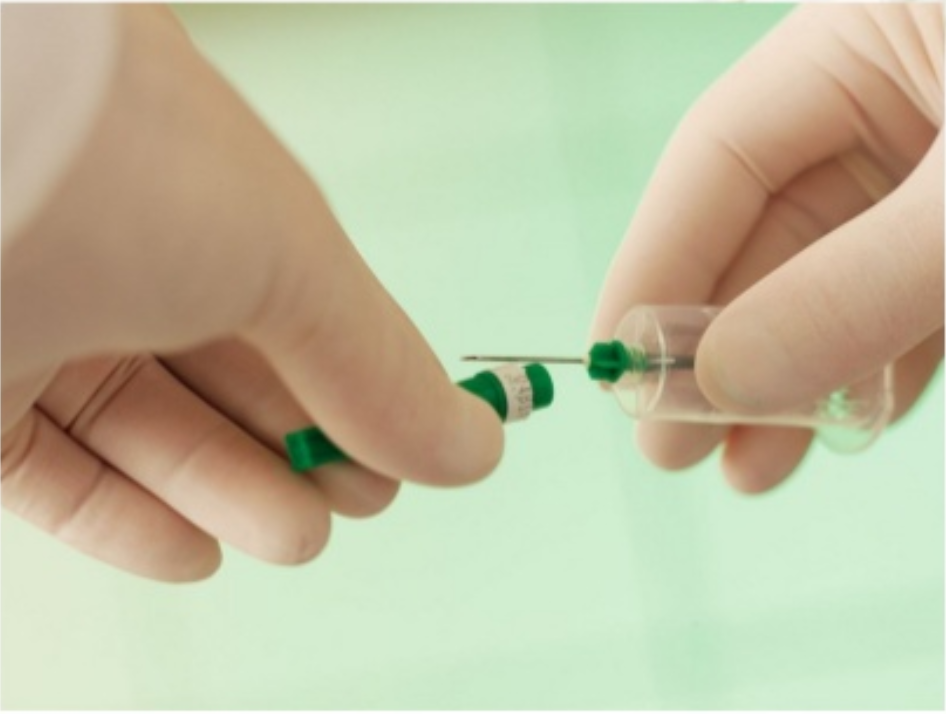
Recapping used needles is historically one of the most persistent and dangerous errors in clinical practice. Despite decades of education, clinicians occasionally default to two-handed recapping under high-stress or fast-paced conditions.
The Risk Mechanics
When a healthcare worker attempts to guide a contaminated needle back into its plastic sheath using both hands, any sudden patient movement, lapse in focus, or minor physical misalignment can cause the needle to miss the cap and pierce the worker’s fingers. This manual manipulation bypasses built-in safety mechanisms and significantly accelerates the rate of workplace injuries.
Best Practice
Enforce an absolute ban on manual, two-handed needle recapping. Modern medical design mandates the use of safety-engineered sharps with integrated shields or retracting mechanisms. If recapping is legally or clinically unavoidable in an exceptional circumstance, staff must strictly utilize a one-handed “scoop” technique or a mechanical recapping device, ensuring hands remain well behind the exposed point.
Furthermore, procuring the right disposal hardware can eliminate the temptation to recap. Facilities should evaluate engineering standards across their supply chains. For a granular analysis of container specifications, procurement teams should review what buyers should know before choosing a sharps container.
2. Delaying Needle Disposal
Leaving used sharps on a bedside table, surgical tray, or countertop with the intention of disposing of them “in a moment” creates an immediate, severe hazard for everyone in the room.
The Risk Mechanics
Delayed needle disposal drastically extends the window of vulnerability. In busy treatment rooms or operating theaters, a forgotten syringe can quickly become buried under surgical drapes, gauze, or paper packaging.
When environmental services staff or fellow clinicians later clear the workspace, they risk encountering uncontained, contaminated needles completely blind, leading to deep percutaneous trauma.
Best Practice
Adhere strictly to the “point-of-use” disposal rule. A used needle disposal protocol must dictate that the individual who activates the sharp must dispose of it immediately after use.
Sharps containers must be positioned within arm’s reach of the patient treatment area to make immediate disposal seamless. If a container is too far away or filled to capacity, clinicians are far more likely to delay disposal, increasing the likelihood of an accident.
To prevent these scenarios, check out the operational thresholds detailed in why overfilled sharps containers are a serious safety risk.
3. Carrying Used Sharps Across Departments
Transporting exposed, contaminated sharps through hospital corridors or laboratory hallways to reach a central disposal bin introduces unnecessary and widespread risk.
The Risk Mechanics
Walking through public or clinical corridors with an exposed sharp invites disaster. A sudden collision with a colleague turning a corner, an unexpected stumble, or a dropped tray can send a contaminated needle airborne or drop it onto the floor, exposing unsuspecting colleagues, patients, and visitors to immediate injury.
Best Practice
Bring the disposal container to the point of care, never the sharp to the container. If transport within a department is required for a specialized procedure, the sharp must be secured inside a puncture-resistant, leak-proof secondary containment tray or a designated mobile sharps cart.
Ensuring a high density of wall-mounted or bedside sharps containers across all clinical zones effectively eliminates the perceived need to transport dangerous waste through shared hallways.
4. Improper Segregation of Medical Waste
Mixing non-hazardous waste with sharps, or placing sharps into standard biohazard bags rather than rigid containers, is a catastrophic operational failure in healthcare waste management.
| Waste Stream | Proper Containment | Potential Consequence of Mismanagement |
| General Waste | Black/Clear Trash Liners | Unnecessary escalation of waste treatment costs. |
| Biohazardous Soft Waste | Red Biohazard Bags | Puncture wounds to janitorial staff handling soft bags. |
| Sharps Waste | Rigid, Puncture-Resistant Containers | Immediate percutaneous injury, environmental contamination. |
The Risk Mechanics
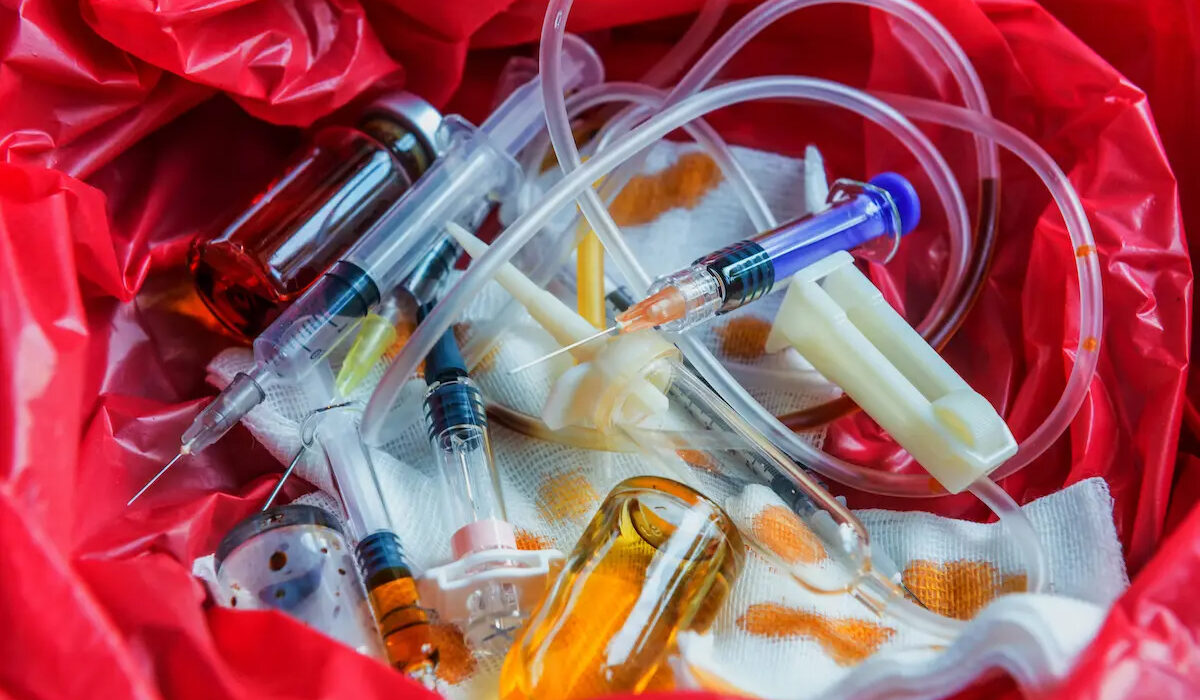
When staff throw syringes, scalpels, or lancets into flexible red biohazard bags or standard trash cans, those sharps easily pierce the plastic liners.
Environmental services personnel handling, lifting, or compressing these bags are completely unprotected against the hidden blades and points inside, resulting in severe, preventable needlestick injuries.
Conversely, tossing soft waste into sharps containers fills them prematurely, generating unnecessary costs and escalating systemic risks.
Best Practice
Implement a rigorous, color-coded segregation system backed by continuous staff auditing. Every clinician must clearly understand what constitutes sharps waste versus standard regulated medical waste (RMW).
For an exhaustive, compliance-verified breakdown of material sorting, consult the clinical guide to sharps disposal compliance.
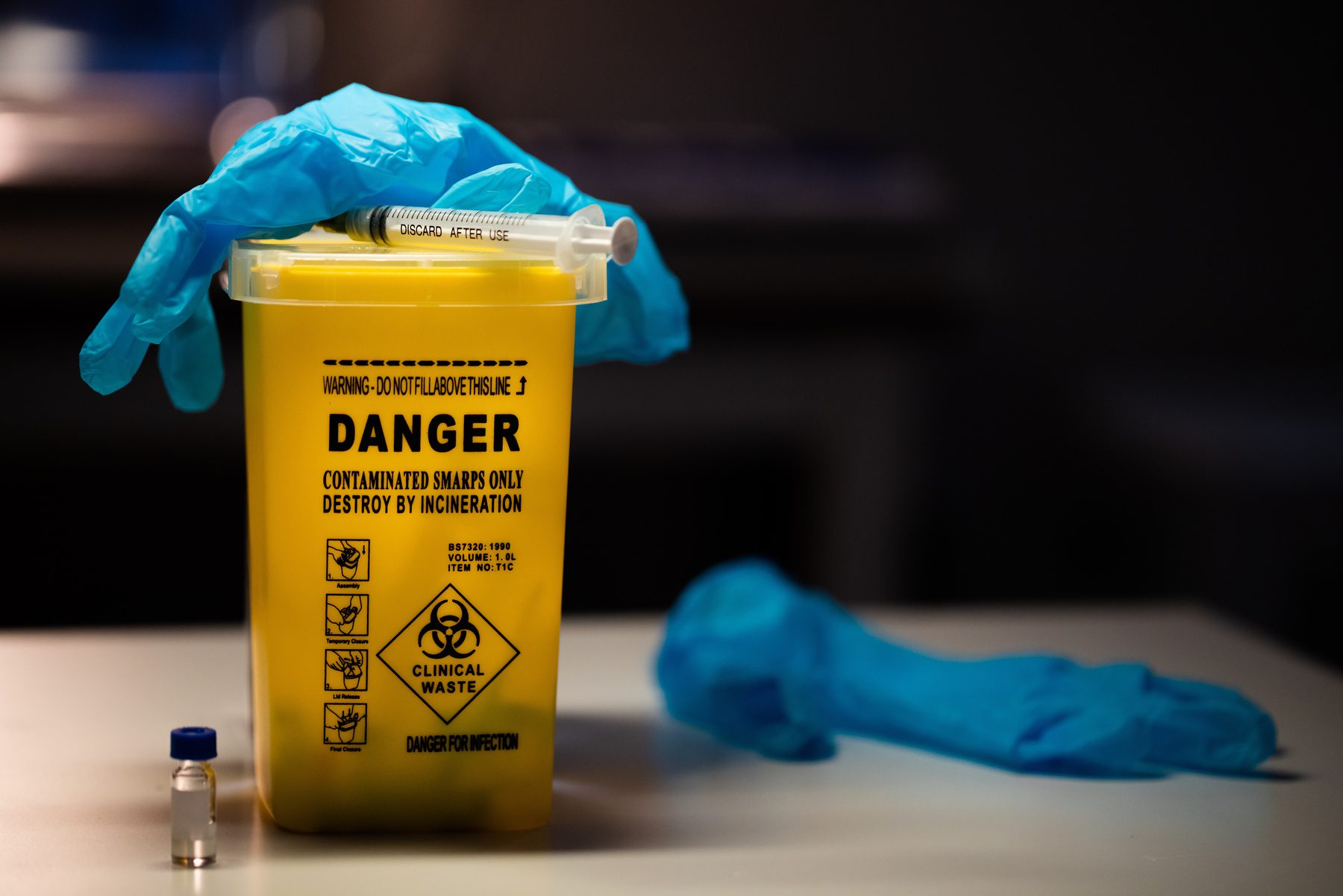
5. Handling Sharps by Hand During Cleanup
Manually picking up dropped needles, broken glass, or used scalpels during post-procedure cleanup or laboratory decontamination is a direct path to occupational exposure.
The Risk Mechanics
Even when wearing standard nitrile or latex clinical gloves, medical staff have virtually zero protection against the mechanical force of a sharp point or edge. Attempting to pinch a dropped needle between the fingers or sweep up broken capillary tubes by hand frequently results in the sharp puncturing both the glove and the skin.
Best Practice
Enforce a strict “no-manual-handling” policy for dropped or discarded sharps during cleanup operations. Staff must always use mechanical assistance—such as forceps, tongs, hemostats, or dedicated brush-and-dustpan systems—to retrieve fallen sharps.
These mechanical tools must be readily accessible in every laboratory module, operating room, and clinical ward where sharps are routinely utilized.
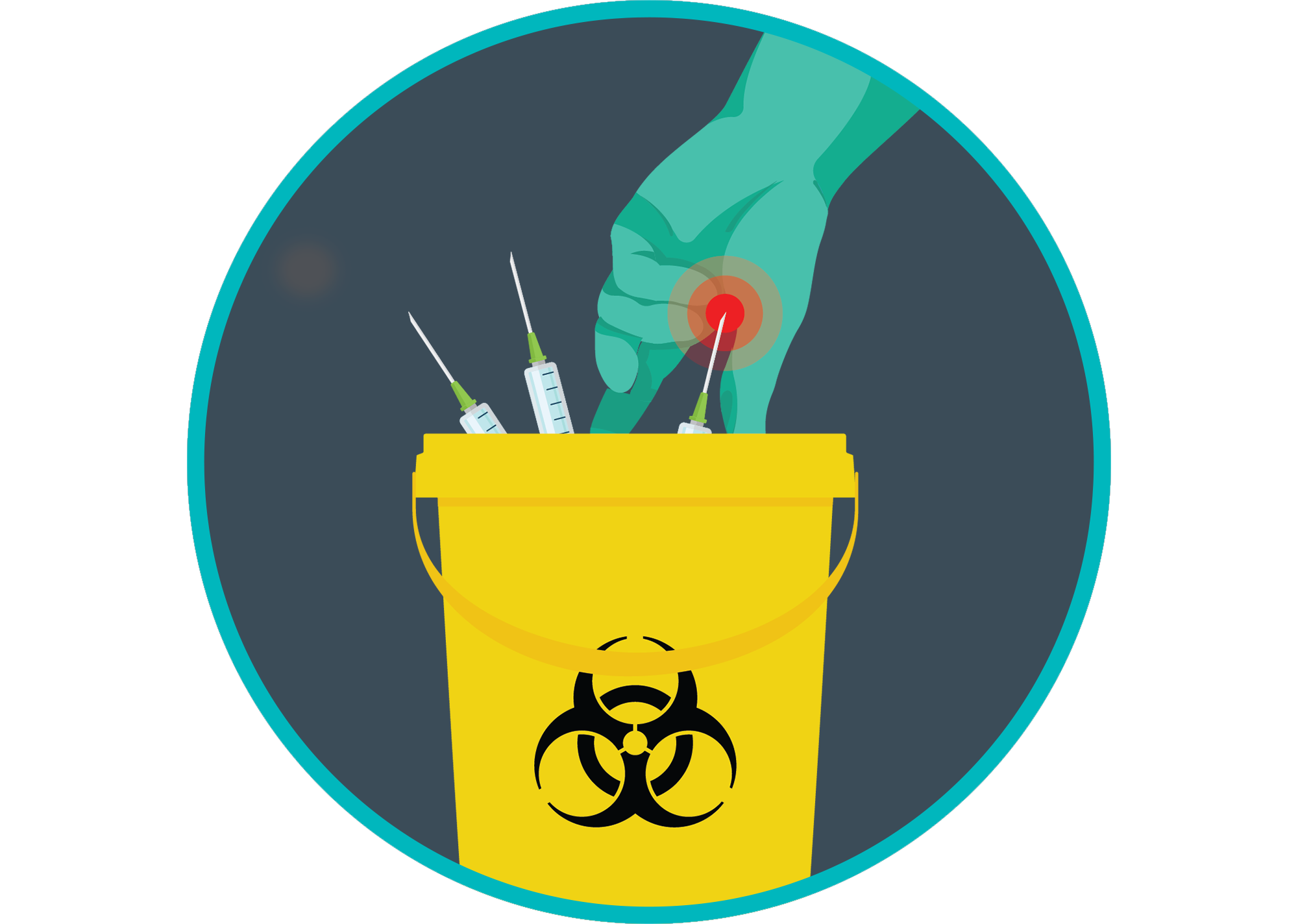
6. Ignoring Damaged or Unsafe Disposal Equipment
Using outdated, cracked, structurally compromised, or sub-standard sharps containers undermines an organization’s entire safety infrastructure.
The Risk Mechanics
Cheap or aging sharps containers can degrade over time due to UV exposure, harsh chemical disinfectants, or physical impacts. If a container develops structural cracks or lacks a drop-shield mechanism, needles can protrude through the walls or fall back out of the entry slot.
Furthermore, containers that lack clear fill-line indicators make it difficult for staff to see when the bin has reached its safe capacity, leading to overfilling and accidental pricks at the container opening.
Best Practice
Procure only premium, puncture-resistant containers that meet international performance standards, such as ASTM F2132 for puncture resistance or ISO 23907 specifications.
Incorporate daily or weekly hardware inspections into environmental safety checklists. Any container showing signs of discoloration, stress fracturing, or faulty locking mechanisms must be decommissioned and replaced immediately.
7. Inadequate Staff Training
The procurement of premium safety hardware yields diminishing returns if the personnel operating it lack comprehensive, ongoing competency education. High clinical turnover, reliance on temporary agency staff, and evolving medical technologies mean that safety training cannot be a static, “one-and-done” orientation checkbox.
Training Should Include:
- Standard sharps handling procedures: Hands-on validation of safety-engineered devices and exact point-of-use container operations.
- Emergency response after needlestick injuries: Immediate localized first aid (washing the site with soap and water), immediate notification protocols, and rapid access to post-exposure prophylaxis (PEP) within the critical early-hour windows.
- Waste segregation requirements: Detailed instruction on differentiating between general trash, biohazardous fluid waste, and sharps waste to maximize safety and reduce unnecessary disposal costs.
- Infection prevention protocols: Deep dives into how systemic compliance shields the facility from bloodborne pathogens and cross-contamination vectors.
- Incident reporting procedures: Non-punitive, transparent reporting structures that encourage staff to log near-misses so management can optimize workflows.

How Healthcare Facilities Can Reduce Sharps Injuries
Achieving a sustainable drop in occupational exposure requires transitioning from reactive measures to a proactive, institution-wide safety culture. Hospital administrators, procurement executives, and distribution partners can significantly drive down needlestick injury prevention failures by implementing a structured framework.
*Standardizing Sharps Disposal Procedures
Eliminate confusion by standardizing safety hardware across all departments. Utilizing identical, highly intuitive sharps containers across an entire hospital system ensures that floating staff or cross-departmental teams encounter predictable safety interfaces, reducing cognitive errors during disposal.
*Providing Regular Competency Training
Move beyond passive video modules. Conduct hands-on, peer-led competency assessments on the clinical floor. Validate that employees can fluidly engage safety shields one-handed and recognize container fill limits under real-world pressures.
*Monitoring Injury Trends
Treat every sharps incident as a systemic data point. Maintain a detailed, OSHA-compliant sharps injury log that tracks the exact device type, location, department, and work shift where the injury occurred. Analyzing this data helps administrators identify localized risk clusters and allocate resources effectively.
*Performing Routine Safety Audits
Empower infection control committees and safety officers to conduct unannounced, routine audits of waste containment zones. These audits should check for properly mounted containers, verify that fill lines are not exceeded, and ensure that no non-sharps items are cluttering containment bins.
*Encouraging Immediate Incident Reporting
A resilient safety culture relies on transparency. Eliminate any punitive stigma associated with reporting a needlestick injury.
Ensure staff feel supported when reporting incidents immediately, allowing for swift administration of post-exposure prophylaxis (PEP) and accurate root-cause analyses that protect the wider team.
*Continuously Improving Workplace Safety Culture
Incentivize safety milestones and establish open communication channels where frontline nurses, technologists, and environmental services staff can directly recommend improvements to waste disposal setups. When frontline clinicians are actively involved in evaluating and selecting safety hardware, compliance rates rise significantly.
Frequently Asked Questions
*What is the biggest cause of sharps injuries in healthcare?
The primary driver of sharps injuries is the failure to use or properly activate safety-engineered devices, combined with delayed disposal at the point of use.
A significant portion of injuries occur immediately after a procedure but before disposal, often when a contaminated sharp is temporarily placed on an unstable surface or left unattended on a bedside tray.
*Why should used needles be disposed of immediately?
Immediate disposal drastically minimizes the time a contaminated sharp remains exposed to the clinical environment.
Leaving a needle down even temporarily increases the risk of it being obscured by other medical supplies, accidentally brushed against by a colleague, or encountered by environmental cleaning crews who are unaware of the hazard.
*Who is at risk from improper sharps disposal?
While frontline doctors and nurses incur the highest volume of injuries during patient care, downstream workers—including environmental services staff, laundry handlers, waste transport personnel, and utility engineers—face severe risks when contaminated needles are improperly discarded in standard trash lines or soft biohazard bags.
*How can hospitals reduce needlestick injuries?
Hospitals can substantially lower injury rates by combining engineering controls with a strong safety culture.
Key steps include procuring high-quality, puncture-resistant sharps containers, enforcing point-of-use disposal, placing containment hardware within arm’s reach of every clinical workspace, and conducting continuous, hands-on staff training.
خاتمة
Maximizing healthcare worker safety demands absolute precision, rigorous policy enforcement, and a refusal to compromise on medical procurement standards. By systematically eliminating common disposal mistakes—such as recapping needles, delaying disposal, and improper waste segregation—medical laboratories and hospitals can significantly reduce workplace injuries while insulating themselves from steep regulatory fines and escalating liability costs.
Protecting your frontline staff requires providing them with top-tier, compliant engineering controls. Partnering with a dedicated manufacturer like BiosafePro ensures your facility is equipped with medical-grade, heavily vetted sharps containment systems designed to withstand demanding clinical workflows.
Prioritizing safe disposal infrastructures safeguards your workforce, secures institutional compliance, and elevates the standard of care across your entire organization.