By BiosafePro Technical Editorial Team | Biomedical Waste Management Specialists
BiosafePro is a specialized medical waste equipment manufacturer dedicated to environmental decontamination technology, high-temperature steam sterilization, microwave disinfection, and chemical treatment systems for healthcare facilities, laboratories, and regional waste management operators worldwide.
Microwave medical waste treatment requires internal moisture within waste loads to convert electromagnetic energy (2450 MHz) into thermal energy (95℃ to 100℃). Heterogeneous waste streams—varying in moisture content (10%–80%), bulk density (80–400 kg/m³), plastic proportions (20%–60%), and particle size—directly dictate volumetric throughput, pre-shredding requirements, auxiliary steam injection needs, and pathogen inactivation efficiency (Source: WHO Healthcare Waste Management Guidelines, 2014).
Why Waste Composition Matters in Microwave Treatment
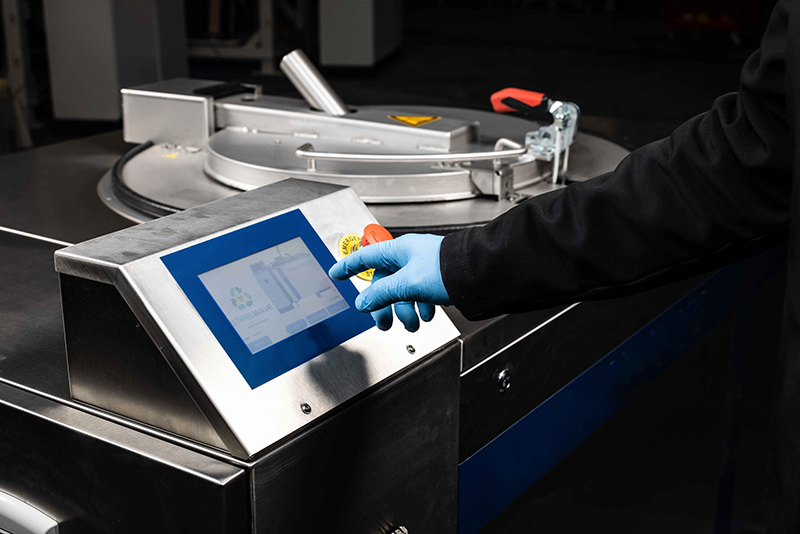
The performance, energy efficiency, and microbial inactivation efficacy of any medical waste microwave treatment process depend directly on the physical, chemical, and thermal properties of the incoming waste stream. Unlike traditional autoclaves that transfer heat externally via saturated steam pressure, a medical waste microwave treatment equipment setup relies on dielectric heating. Microwave energy (typically operating at 2450 MHz) excites dipolar molecules—primarily water—within the waste material, causing rapid friction and volumetric heating (Source: US EPA Medical Waste Response Technical Bulletin).
Because types of medical waste vary significantly across hospital departments, the load composition dictates heating rates and process parameters. This makes the composition of the treatment load important for several reasons:
- Different waste materials contain different amounts of moisture
Dielectric absorption requires polar water molecules; dry polymers (such as polypropylene syringes) do not absorb microwave radiation efficiently without moisture carriers.
- Dense or bulky materials can affect how evenly heat reaches the entire load
High-density waste compacts under load weight, creating thermal conduction barriers and cold spots.
- Dry materials may require additional water or steam
If input moisture falls below 15%, dielectric heating efficiency drops, necessitating automated steam or water injection.
- Large pieces may need shredding to improve mixing and distribute energy more evenly
Particle size reduction ensures uniform moisture dispersion and eliminates microwave shadowing effects.
- Segregate certain hazardous materials rather than placing them in a conventional microwave treatment process
Volatile chemical residues, low-level radioactive items, anatomical waste, and heavy metals must be excluded to prevent hazardous off-gassing and equipment corrosion.
Understanding these medical waste characteristics allows engineering teams to optimize medical waste microwave treatment system process equipment and applications for stable continuous operation.
Moisture Content: One of the Most Important Composition Factors
Moisture is the primary dielectric medium in infectious medical waste treatment. When exposure to 2450 MHz radiation occurs, water molecules align with the alternating electric field millions of times per second, generating friction that rapidly elevates core temperatures to 95℃–100℃ at ambient pressure (Source: UNEP Compendium of Technologies for Treatment of Healthcare Waste).
For example, a load containing:
- contaminated textiles,
- absorbent materials,
- blood-contaminated items, and
- wet clinical waste
Exhibits a high moisture fraction (50%–80%), ensuring rapid coupling with microwave fields. Conversely, dry surgical drapes and un-rinsed plastic labware may contain less than 10% moisture, absorbing negligible energy and risking surface scorching or structural melting if untreated by auxiliary moisture systems.
For equipment buyers, the important question is not simply “How much waste can the machine process per hour?”
It is: What moisture range can the system reliably handle, and how does it compensate when the incoming waste is too dry?
Advanced engineering solutions, such as BiosafePro microwave treatment technology, integrate automated moisture control loops to ensure consistent energy delivery across shifting moisture baselines.
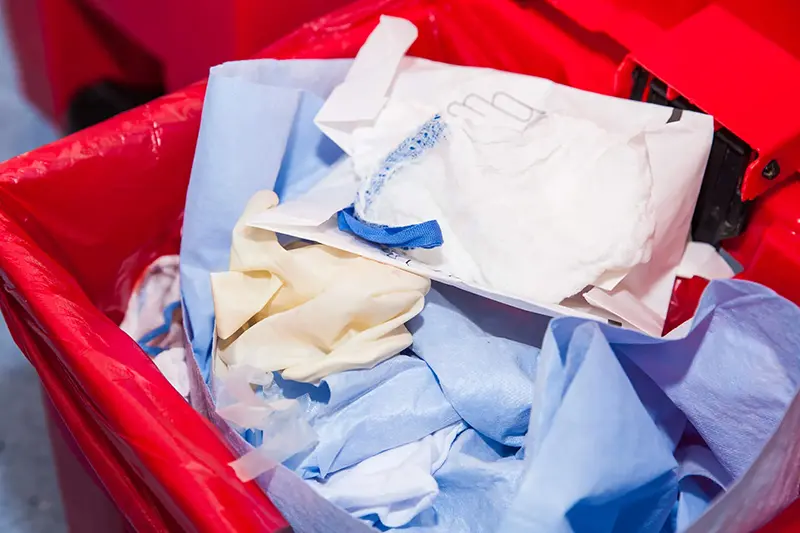
Plastic, Textiles, Sharps and Other Materials Do Not Behave the Same Way
Varying waste composition profiles alter microwave field propagation, heat distribution, and mechanical shredding loads.
Plastic-Rich Waste
Plastics comprise 20%–60% of modern healthcare waste streams (Source: Healthcare Without Harm Europe Report). Polypropylene (PP), polyethylene (PE), and polyvinyl chloride (PVC) have extremely low dielectric loss factors (tanδ < 0.001). Under pure medical waste microwave radiation without moisture, dry plastics remain cool until localized heat transfers from adjacent wet waste. If unmanaged, high localized temperatures (>160℃) can melt polymers, coating the internal shredder blades and microwave chamber walls.
Textiles and Absorbent Materials
Cotton gauze, cellulose drapes, and fluid-saturated bedding hold moisture within fibrous matrices. They absorb microwave energy efficiently, acting as localized thermal reservoirs that release steam into surrounding drier fractions. However, high concentrations of absorbent items increase overall medical waste density when saturated, increasing shredder torque requirements.
Sharps
Rigid plastic syringes, stainless steel needles, scalpels, and glass vials constitute 10%–15% of infectious waste streams. Metal items reflect microwave radiation. While dispersed stainless steel needles do not cause destructive arcing when submerged in humid, shredded matrices, large metallic objects can damage shredder teeth and cause electrical arcing within the chamber. Pre-shredding sharps into sub-15 mm fragments is vital for process safety and mechanical longevity.
Waste Density and Particle Size Can Affect Treatment Uniformity
Bulk medical waste density typically ranges from 80 kg/m³ for loose plastic packaging to over 400 kg/m³ for compacted clinical fluids and sharps containers (Source: WHO Safe Management of Wastes). High-density zones attenuate microwave energy faster within the outer 5 – 10 cm layer, creating central cold spots if the load is not continuously agitated or pre-shredded.
Pre-shredding waste to a uniform particle size (10 – 15 mm) increases the total surface area, balances bulk density, and allows steam generated from moist particles to permeate dry plastic fragments evenly.
When evaluating medical waste treatment technologies, a simple nameplate capacity metric is insufficient. A better evaluation asks:
- What waste composition was used to establish the rated capacity?
- Is the capacity based on loose or compacted waste?
- Is shredding required before treatment?
- What particle size does the system expect?
- How is moisture distributed through mixed waste?
- Is the rated capacity still achievable with a high proportion of dense materials?
Understanding how system capacity varies based on density and composition ensures accurate sizing for institutional projects. Buyers comparing facility layouts can consult our guide on centralized vs. on-site medical waste microwave treatment to assess operational models.
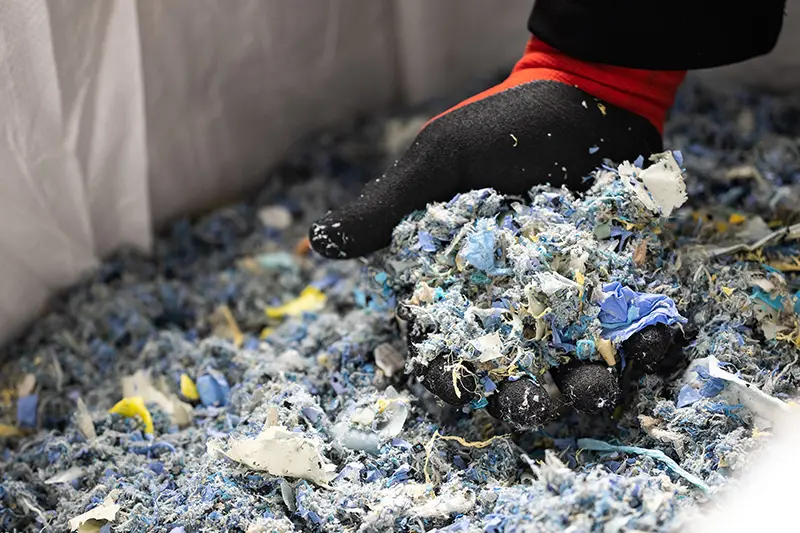
Mixed Medical Waste Creates a More Complicated Treatment Load
Clinical waste generated in healthcare facilities is rarely uniform. The actual waste stream can change according to:
- department (e.g., dialyzer tubing from Nephrology vs. dressing pads from Surgery),
- clinical activity (e.g., peak surgical schedules vs. outpatient consultations),
- waste segregation practices (e.g., efficacy of sorting general municipal waste from regulated medical waste),
- facility size (e.g., 500-bed tertiary hospital vs. specialized clinic),
- operating schedule, and
- seasonal workload (e.g., surge in respiratory clinic waste during winter).
To select the correct infectious waste treatment system, facility managers and procurement engineers should establish a comprehensive pre-purchase waste profile:
| Waste Characteristic | Why It Matters |
| نوع النفايات | Determines whether the material is suitable for the process (e.g., excluding cytostatics/radiologicals). |
| Moisture Content | Influences dielectric absorption, heat generation rates, and auxiliary steam needs. |
| Material Composition | Dictates melting points, plastic-to-textile ratios, and microwave loss characteristics. |
| Bulk Density | Affects volumetric loading limits, heat penetration depth, and internal mixer torque limits. |
| Particle Size | Influences thermal distribution, moisture transfer, and steam penetration uniformity. |
| Sharps Content | Affects pre-shredder blade steel grading, cutter geometry, and maintenance schedules. |
| Daily Quantity | Determines operational batch counts, hopper sizing, and system throughput (kg/h). |
| Waste Variability | Helps determine whether automated process adjustments (steam/water dosing) are needed. |
Waste Composition Can Change the Pretreatment Requirements
Effective medical waste microwave sterilization requires robust pretreatment configurations. Because raw medical waste contains rigid containers, flexible textiles, and metallic sharps, direct microwave exposure without preconditioning results in uneven thermal profiles and potential pathogen survival.
The correct configuration depends on:
- the waste types,
- the proportion of sharps,
- expected particle size,
- microwave chamber design,
- whether shredding occurs before or after treatment, and
- local regulatory requirements (e.g., STAATT Level IV microbial inactivation standards requiring 6-log10 reduction of Bacillus atrophaeus spores).
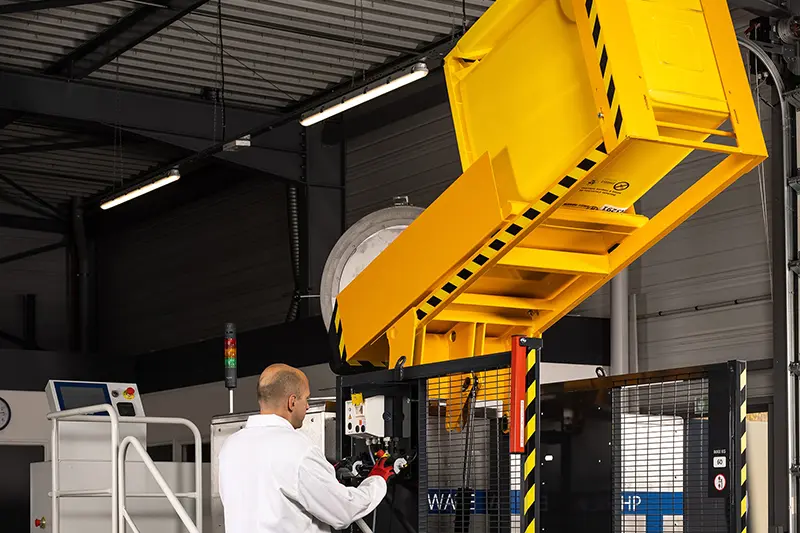
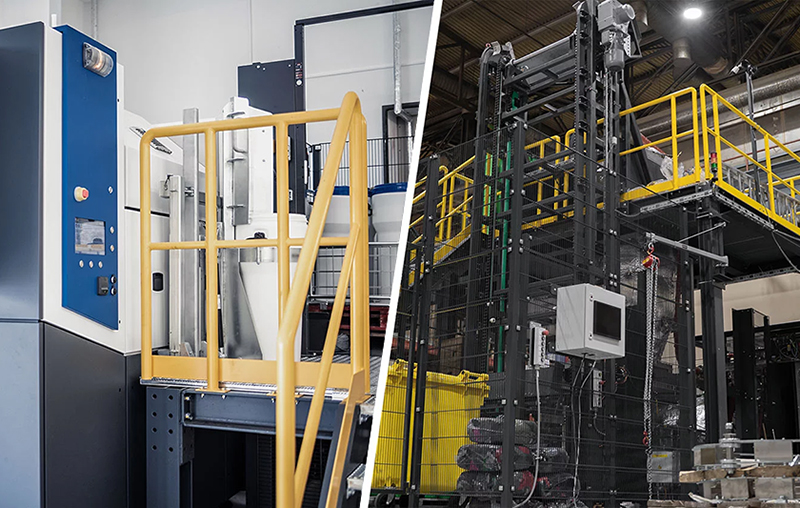
A suitable medical waste microwave treatment system may include several integrated stages, such as:
Waste Loading → Pretreatment/Shredding → Moisture Adjustment → Microwave Treatment → Cooling/Holding → Post-Treatment Disposal
For a detailed analysis of equipment verification metrics, review our breakdown on how to evaluate the performance of medical waste microwave equipment.
Some Waste Should Not Be Treated in a Standard Microwave System
While microwave medical waste treatment is effective for infectious waste, laboratory cultures, anatomical waste (where permitted), sharps, and diagnostic plasticware, certain waste streams are strictly incompatible (Source: WHO Safe Management of Wastes from Health-Care Activities).
Regulatory Exclusion Standards:
- Pathological / Large Anatomical Waste: High mass and liquid volume require extended incineration; standard shredders and microwave penetration profiles are not designed for large tissue masses.
- Cytotoxic & Pharmaceutical Waste: Genotoxic drugs, chemotherapy agents, and active pharmaceuticals require high-temperature thermal destruction (>1100℃) to break down chemical bonds; microwave thermal levels (100℃) are insufficient.
- Volatile Chemical Waste: Solvents, disinfectants, and mercury-containing devices gasify under microwave heating, creating toxic emissions or explosion hazards.
- Radioactive Waste: Requires specialized decay storage and containment; non-burn/non-incineration thermal methods do not neutralize radioisotopes.
Only after this screening question is answered can the supplier properly evaluate:
- treatment capacity,
- pretreatment requirements,
- chamber configuration,
- shredding specifications,
- moisture addition systems,
- filtration (HEPA / Carbon),
- loading system automation, and
- post-treatment handling.
This is much more useful than selecting a machine based only on a nominal kg/h figure.
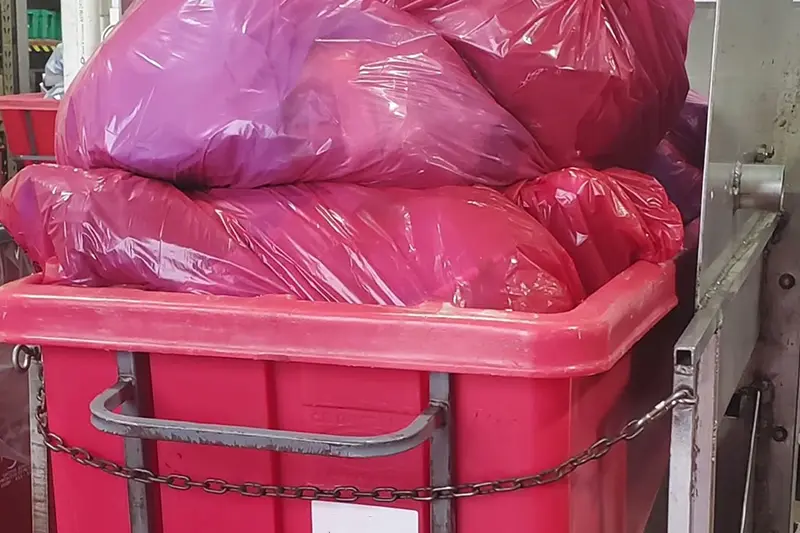
How to Match the Microwave System to the Actual Waste Stream
Procurement teams, hospital engineers, and waste management distributors should follow a four-step framework when selecting a microwave medical waste treatment equipment solution:
Step 1: Analyze the Waste Composition
Conduct a 7-to-14-day waste audit across all generating departments. Quantify the percentages of plastics, textiles, liquids, sharps, and paper/cardboard in the waste stream.
Step 2: Measure Key Physical Characteristics
Determine the average bulk density (kg/m³) and moisture baseline (% weight). Identify peak operational shifts to establish maximum hourly throughput requirements (kg/h).
Step 3: Define the Required Treatment Configuration
Determine whether pre-shredding is required for high-sharps waste streams, verify if automated steam/water injection is needed for dry inputs, and confirm exhaust air filtration requirements (e.g., 0.2 µm HEPA filtration with bio-filter units).
Step 4: Compare Complete Systems
Evaluate competing systems on total cost of ownership (TCO), energy consumption per kilogram processed (kWh/kg), shredder blade life, maintenance cycles, and compliance with microbial validation standards (6-log10 reduction).
What Does This Mean When Purchasing a Medical Waste Microwave Treatment System?
Selecting the right system requires looking beyond baseline hourly throughput numbers. A system rated for 500 kg/h using moist textile waste may process only 300 kg/h when loaded with dry, un-shredded rigid plastics.
Hospital procurement committees and distributors must demand validated test data based on waste profiles that match their actual waste streams. Ensuring the equipment includes robust pre-shredding, active microwave power management, and automated moisture dosing guarantees long-term compliance, lower energy consumption, and operational reliability.
Frequently Asked Questions
Q: Is a higher-capacity microwave system always better?
A: Not necessarily. Sizing a system solely on peak volume can lead to inefficient operation during low-volume periods. Microwave generators operate at optimal electrical efficiency under steady design loads. Oversized units running under-capacity consume excess standby power and increase thermal cycle wear. Match unit capacity to average daily volume while accounting for realistic waste density.
Q: Is microwave treatment suitable for centralized medical waste facilities?
A: Yes. High-capacity continuous or semi-continuous medical waste microwave treatment systems are widely deployed in regional treatment centers. They offer significant volume reduction (up to 80%–90%), eliminate steam boiler installations, produce no liquid effluent when properly configured, and lower carbon footprints compared to traditional incineration or large autoclaves (Source: UNEP Environmental Technology Center).
Q: What happens if medical waste has a high moisture content?
A: High moisture content (>70%) increases the thermal mass of the load, requiring more microwave energy and longer cycle times to reach the target disinfection temperature (95℃–100℃). However, it poses no process failure risk, as excess moisture generates steam that aids in uniform thermal transfer throughout the chamber.
Q: What happens if the medical waste is too dry for microwave treatment?
A: Dry waste (<15% moisture) cannot efficiently absorb 2450 MHz microwave energy. This can lead to localized hotspots, melting of rigid polymers, carbonization, and potential thermal degradation of components without achieving uniform microbial inactivation. Systems with integrated moisture sensors automatically inject steam or water spray to correct low moisture levels.
Q: Can a microwave medical waste treatment system be customized for a specific waste composition?
A: Yes. Manufacturers like BiosafePro engineer systems with customized shredder tooth configurations, variable-frequency drive (VFD) mixer motors, adjustable microwave magnetron arrays, and tailored steam injection cycles to handle high-sharps, high-plastic, or variable moisture waste streams.
About BiosafePro
Founded in 2012, BiosafePro is a specialized manufacturer of medical waste microwave treatment systems, waste shredding equipment, and integrated clinical infection control solutions. Holding ISO 13485:2016, ISO 9001, and CE certifications, BiosafePro engineers environment-friendly medical waste treatment machinery exported to over 45 countries across Europe, the Middle East, Southeast Asia, and Latin America.
Looking to optimize your hospital’s waste treatment process or upgrade your regional facility equipment? Contact BiosafePro’s Application Engineering Team today to request a customized waste profile analysis and system configuration proposal for your project.
References
- World Health Organization (WHO): Safe management of wastes from health-care activities, 2nd Edition, 2014.
- ISO 13485:2016: Medical devices — Quality management systems — Requirements for regulatory purposes.
- US Environmental Protection Agency (US EPA): Medical Waste Treatment Technologies Technical Bulletin.
- United Nations Environment Programme (UNEP): Compendium of Technologies for Treatment/Destruction of Healthcare Waste, 2012.