

The Importance of Medical Waste Management
Proper medical waste management is a critical component of safe operations for hospitals and clinics worldwide. It is not only a matter of hygiene, but also a fundamental requirement for safety assurance and legal compliance. Any lapse in this process can result in serious harm to healthcare workers and surrounding communities. Hospitals rely on essential supplies to fulfill this responsibility, and among them, the medical waste bag is one of the most basic and indispensable consumables.
Medical waste bags serve as the primary containment for potentially hazardous materials from the very beginning of the waste generation process, typically within hospital wards or clinical settings. If a bag fails or is used incorrectly, the safety of the entire waste management system can be immediately compromised.
For Hospitals:
Infection Control: Appropriate medical waste bags help isolate and seal pathogens and other hazardous agents present in medical waste.
Staff Protection: Using the correct hospital waste bag significantly reduces the risk of occupational accidents during waste handling, such as cuts, fluid splashes, or unintended exposure affecting doctors, nurses, and sanitation staff.
Regulatory Compliance: Employing medical waste bags that meet required standards is essential to avoid fines, penalties, and legal liabilities.
Accident Prevention: Failures of waste bags—such as tearing, leakage, or use of the wrong bag type—are often the starting point of medical waste–related safety incidents.
For Distributors:
For distributors supplying hospitals and clinics, medical waste bags represent a strategically important product category:
- Recurring Demand:Medical waste bags are continuously consumed and replaced, creating stable and repeat purchasing behavior with high reorder frequency.
- Regulatory Constraints:The quality and safety characteristics of medical waste bags are strictly regulated by law.
- Scalability:Demand is consistent and large-scale, making this product line suitable for efficient portfolio expansion.
Hospitals procuring waste bags place strong emphasis on several key factors: reliable supply without delays, complete and up-to-date compliance documentation proving conformity to standards, and consistent quality across production batches. When safety and compliance are at risk, low pricing alone is rarely the decisive factor.
Trends in 2026:
The importance of correct medical waste bag usage continues to increase. Healthcare institutions worldwide are now scrutinizing products more carefully than ever. There is a growing demand for medical waste bags with clear third-party verification and certification, as well as hospital waste bags specifically designed for clinical environments.
Types of Medical Waste Bags (Color Coding)
The color of a medical waste bag is far more than an aesthetic choice. It functions as an internationally recognized “regulatory language” that ensures waste is correctly identified and safely handled throughout the disposal process.
Internationally Accepted Color Coding Logic
Globally, drawing on guidance from the World Health Organization (WHO), the European Union, and various national practices, a broadly accepted color coding framework exists:
- Yellow Bags:Used for infectious medical waste. This is the most common color for infectious medical waste bags, including waste contaminated with blood, body fluids, or excreta.
- Red Bags:Typically used for waste requiring heightened caution or special handling. This may include certain highly infectious waste, radioactive waste (where regulations permit), or containers associated with sharps management.
- Black or Dark-Colored Bags:Primarily used for general, non-infectious medical waste. This category usually does not contain hazardous materials and may be handled similarly to municipal solid waste, such as office waste or food packaging.
- Blue / White / Transparent Bags:Used for specific waste categories. Common applications include:
- Blue or White: Disposal of expired pharmaceuticals or chemical waste.
- Transparent or Clear: Waste requiring visible identification of contents, or collection of specific recyclable materials.
National and Regional Variations in Color Definitions
It is important to recognize that the international framework serves only as a baseline. Specific color definitions and regulatory requirements may vary significantly between countries or regions.
Examples of Differences:
Europe vs. the Middle East vs. Africa:
Definitions for “highly infectious” waste associated with red bags may differ. Some regions use purple bags for particular waste categories. In certain markets, the use of black bags may be restricted or more narrowly defined.
Common Mistakes Made by Distributors:
Assuming that a single color coding rule applies universally across all international markets.
Procuring or selling medical waste bags based on prior assumptions without verifying current local regulations in the target market.
Failing to keep up with regulatory updates, resulting in non-compliant products.

Material Options (HDPE / LDPE / PP)
Selecting the appropriate material for a medical waste bag is one of the most critical decisions in procurement. Material choice directly affects safety performance, suitability for specific waste types, and total cost of use throughout the waste handling process.
Characteristics of HDPE Medical Waste Bags
Key Features:
Good material strength, lighter weight, and relatively stable cost control.
Typical Applications:
Used as outer bags for sharp containers to prevent secondary contamination.
Suitable for lightweight, dry, or low-moisture waste.
Consideraciones:
Very thin HDPE bags are more prone to tearing in high-moisture or liquid-heavy environments. When selecting HDPE medical waste bags, thickness specifications must be evaluated in relation to the actual waste type.
Characteristics of LDPE Medical Waste Bags
Key Features:
High flexibility and toughness, with a softer texture compared to strength-oriented materials.
Typical Applications:
Disposal of wet waste, such as blood-contaminated gauze or fluid-soaked materials.
A balanced option between safety performance and procurement cost.
Cost vs. Practicality:
Although the initial unit price of LDPE medical waste bags is generally higher than HDPE options, the reduced risk of leakage helps avoid secondary cleanup costs and incident-related expenses, making the overall cost more reasonable.
PP Material Bags
More Limited Applications:
- Rarely used as primary containers for infectious waste.
- More commonly applied as internal liners to reduce abrasion and prevent puncture.
- Occasionally used in specialized waste collection scenarios within factories or laboratories.
International Standards (CE, ISO, EN)
For hospitals and suppliers, the standards documentation accompanying a medical waste bag is critically important for a simple reason: it provides far more reliable proof of safety and compliance than visual inspection alone. In the field of medical waste management and disposal, standards documentation is not a “value-added feature,” but a foundational requirement for avoiding penalties and protecting both personnel and the community.
Key International Standards and Their Practical Significance
CE: Indicates that the medical waste bag meets the fundamental safety requirements for market access within the European Union. This marking is a mandatory “entry pass” for products sold in European markets.
ISO: These certifications demonstrate that the manufacturer of the hospital waste bag operates under a stable and controlled quality management system. Their core value includes:
- Ensuring consistent quality of medical waste bags produced at different times (batch consistency).
- Reducing the risk of unexpected bag failure caused by quality variation, such as inconsistent thickness or fluctuating strength.
- Addressing end-user concerns that “the current batch is worse than the previous one.”
EN Standards (such as EN 13592): These standards are highly practical and require manufacturers to conduct defined physical performance tests, including:
- Load capacity testing (tensile strength): Verifies that a fully loaded medical waste bag will not tear easily.
- Drop resistance testing: Assesses whether the bag ruptures after being dropped from a specified height.
- Puncture resistance testing: Uses sharp objects to test whether the bag leaks or releases contents.
Key Focus Areas During Audits
Performance: Do the documents confirm that the medical waste bag has passed tensile, drop, and puncture resistance tests? Do these results meet the regulatory requirements of the specific region?
Traceability: Do the documents clearly identify which production batches, materials, and processes were used? If a problem arises later, can the cause be traced accurately?
Document-to-Product Match: Do the certificates correspond to the exact model of medical waste bag currently being sold and used?
Credibility: Are the certificates issued by reputable and independent third-party organizations, and are they still within their validity period?
Common Risk Points
Mismatch Between Documents and Products: Certificates may be complete and valid, but the certified product may not be the same model as the medical waste bag being procured.
Private Labeling Risks: Extra caution is required when one company manufactures the hospital waste bag and another company sells it under a different brand.
Document Validity: Most standards certificates have defined expiration periods.
Translation and Interpretation Errors: Inaccurate translations or misunderstandings of certificate content can directly affect safe usage and regulatory compliance.
Key Features to Evaluate
When procuring a medical waste bag, functional details beyond basic specifications directly determine safety during real-world use. The following four aspects are of greatest concern to hospital staff and waste handling personnel.
Leak Resistance
Why It Matters:
Bag rupture or leakage leads to contamination spread, increased cleanup workload, and higher accident risk.
Two Common Sealing Methods:
Bottom-sealed bags (heat-sealed base):
Generally lower in price, but when used for liquid-heavy waste, thin materials or frequent movement may cause seam failure and leakage.
Side-sealed bags (multi-layer fused edges):
Offer greater overall stability and superior leak resistance. Particularly suitable for transporting liquid-rich waste, such as operating room waste, though priced slightly higher.
Load Capacity and Durability
Common Real-World Issue:
A hospital waste bag labeled with a “10 kg load capacity” may rupture after being filled with only 5 kg of wet contaminated gauze.
Root Causes:
Laboratory “flat pull” test results do not reflect dynamic stresses during actual lifting, impact, or stacking.
Irregular waste shapes, such as items with sharp edges, apply uneven pressure to the bag surface.
Recommended Practice:
Use standards as a baseline, but do not rely solely on compliance claims. Conduct trial loading with actual hospital waste and simulate transport conditions before large-scale adoption.
Label Clarity and Print Durability
Two Common Safety Hazards:
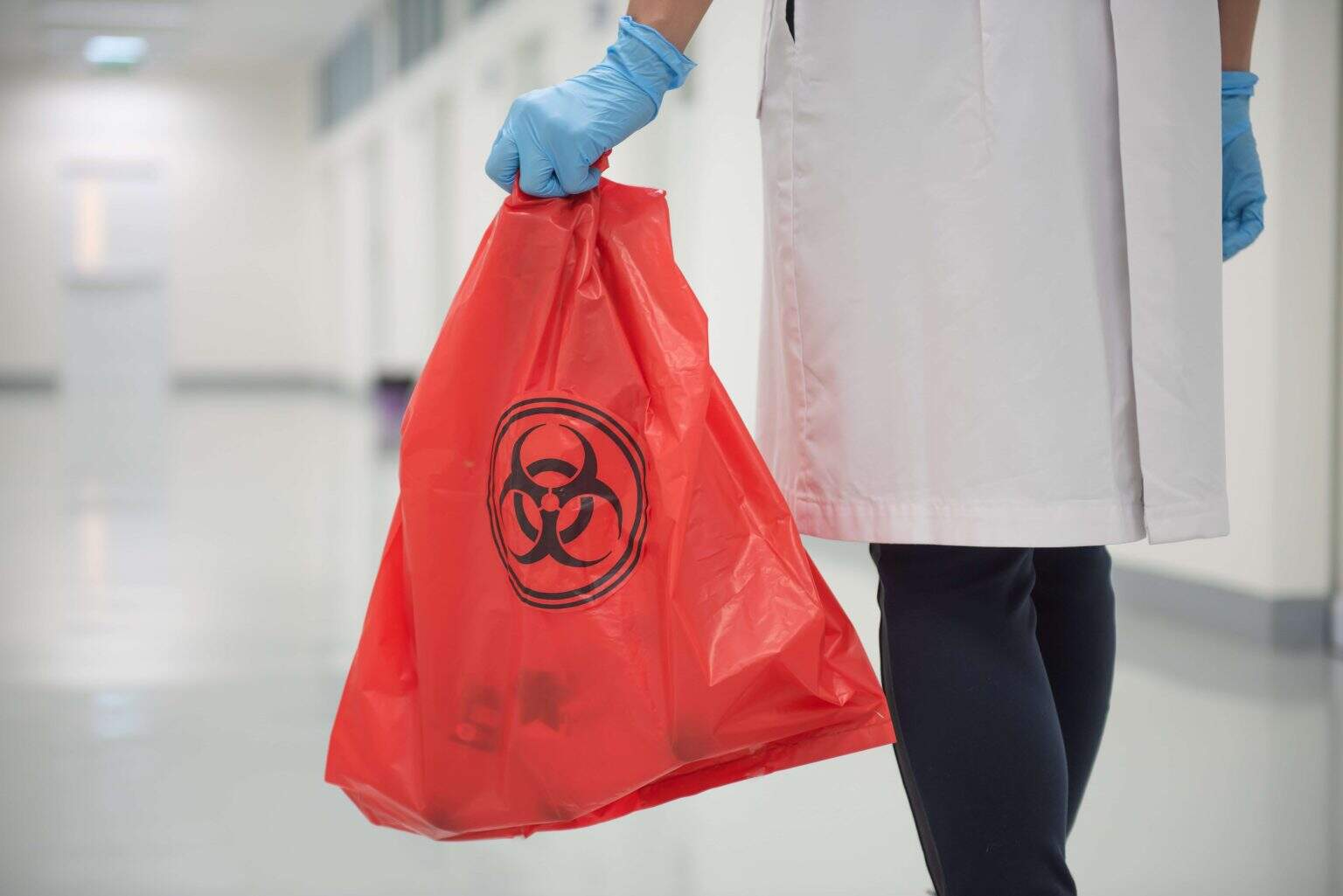
Unclear biohazard markings: If symbols are too small or printing fades, operators may fail to recognize infection risks.
Incomplete labeling:
- Missing department or waste category identification.
- Lack of multilingual warnings in international hospitals, such as the absence of Arabic text in Middle Eastern regions.
Required Measures:
Markings must withstand handling friction, with clear colors and fonts, and provide multilingual information indicating waste type and disposal requirements.
Compatibility with Existing Hospital Waste Processes
A medical waste bag cannot function independently and must integrate smoothly with upstream and downstream systems:
- Size compatibility with bins and transport carts:Bag dimensions must match hospital containers to prevent excessive sagging, tearing, or underfilling.
- Material compatibility with treatment methods:
- Incineration is widely used, requiring materials that do not release harmful gases at high temperatures.
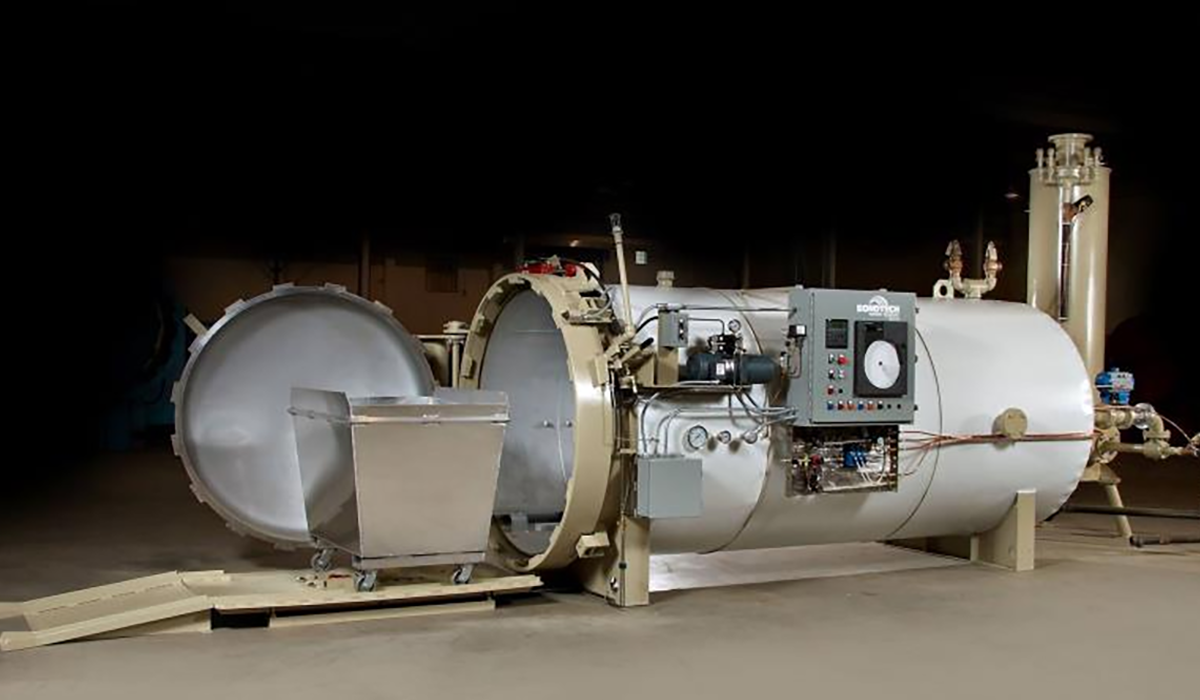
- High-temperature steam sterilization requires specially designed bags resistant to autoclave conditions, as standard plastic bags may melt.
Supplier Selection Criteria
The core objective in selecting a medical waste bag supplier is to establish a long-term compliant partnership whose value extends far beyond a single transaction. Evaluation should focus on sustained compliance capability, process understanding, and risk control.
Key Supplier Capabilities
1. Regulatory Compliance
Ensure full lifecycle compliance with regulatory updates in target markets, such as revised EU CE requirements or new testing items under Middle Eastern GSO standards.
Proactively provide regulatory change alerts and updated certification records.
2. Customization Support
Ability to produce non-standard hospital waste bags adapted to specific waste cart dimensions.
Provision of multilingual biohazard printing solutions.
Material formulation adjustments based on treatment methods, such as resistance to 121°C steam sterilization.
3. Process Understanding
Clear differentiation between high-liquid surgical waste requirements and general non-clinical waste applications.
Familiarity with incinerator emission standards and material melting point limitations.
Common Procurement Pitfalls
Inconsistent Sample and Bulk Quality
After initial samples pass testing, subsequent batches may experience a 15% drop in tensile strength due to raw material variation, triggering leakage risks.
Mitigation: Require third-party test reports covering consecutive production batches over at least three months.
Expired Certifications Not Synchronized
Failure to track ISO certificate renewal cycles can result in expired documentation during audits.
Mitigation: Establish a quarterly certificate validity review mechanism and include penalty clauses in contracts.
Insufficient Customization Capability
Distributors unable to respond to hospital waste cart dimension changes may force manual bag modifications, increasing rupture risk.
Mitigation: Conduct customization response stress testing prior to cooperation, such as requiring sample development within 72 hours.

BiosafePro Product Overview
BiosafePro provides standardized and customized consumable solutions for global medical waste management systems, primarily addressing three core needs: comprehensive regulatory adaptability, supply chain stability, and coverage of complex operational scenarios.
Core Dimensions of Product Positioning
Multi-Regulatory Framework Compatibility
Product development is pre-aligned with certification pathways including EU CE, Middle East GSO, and country-specific medical waste regulations across Southeast Asia. Through adjustments in raw material formulations and manufacturing processes, a single production line is capable of delivering compliant medical waste bags across multiple regions.
Scenario-Based Configuration
- Color Systems:Aligned with WHO medical waste classification guidelines (infectious, pathological, sharps).
- Thickness Gradients:Layered thickness design ranging from 0.04 mm to 0.12 mm, suitable for applications from general wards to high-liquid surgical environments.
- Material Options:From standard HDPE solutions to high-temperature-resistant LDPE hospital waste bags capable of withstanding 121°C steam sterilization.
Full Lifecycle Supply Capability
Distributed warehousing networks established in the Middle East, Europe, and Southeast Asia support hospitals and distributors in maintaining dynamic 90-day inventory balance, mitigating supply disruption risks caused by geopolitical factors or public health emergencies.
Differentiated Implementation Pathways
Compliance-First Approach
During new market entry, localized regulatory testing—such as Saudi SFDA biocompatibility testing—is completed in advance to ensure market access without delays.
Flexible Customization Chain
- Size Adjustment:Non-standard hospital waste bag dimensions can be sampled within 48 hours.
- Printing Protocols:Dual-language biohazard labeling is supported, with a base package covering six official United Nations working languages.
- Packaging Units:Packaging configurations are adapted to customer logistics requirements, including anti-compression cartons or palletized transport solutions.
Project-Based Collaboration
For government tenders or hospital group procurement projects, integrated service modules are provided, covering standard product supply, customized development, and medical waste process optimization recommendations.
Conclusión
Medical waste bags are fundamental components of the healthcare safety system. Their compliance status and supply stability directly affect hospital infection control performance and operational continuity risk levels.
For Hospital Decision-Makers
The compliance status of currently used medical waste bags determines the cost and outcome of unannounced audits. Hospitals must verify whether their suppliers maintain dynamic regulatory tracking systems in target markets, eliminating cascading liability risks caused by packaging failures.
For Distributors
This product category represents a critical touchpoint for strengthening long-term relationships with downstream healthcare institutions. Only by selecting partners with sustained compliance assurance can distributors build trust-based supply chains and avoid reputational damage resulting from product recalls.
Action Recommendations
Before the next procurement cycle, it is recommended to initiate the following evaluation steps:
- Compliance Penetration Audit:Review supplier certification update records and corresponding product change documentation from the past 18 months.
- Supply Stress Testing:Simulate extreme scenarios, such as logistics disruptions caused by geopolitical conflicts, to verify the feasibility of contingency plans.
- Customization Response Validation:Submit non-standard hospital waste bag requirements (e.g., anti-leak surgical waste bags) to assess supplier engineering response speed.
For region-specific compliance gap analysis or customized validation pathways, application parameters may be submitted. BiosafePro will provide an actionable evaluation framework within 24 hours (excluding sales proposals).