

By BiosafePro Editorial Team | Biomedical Waste Management Specialists
BiosafePro is a professional manufacturer and global supplier of medical waste management solutions, including a full range of sharps disposal containers certified to international standards. Our team works directly with hospitals, laboratories, distributors, and procurement officers across more than 30 countries.
For hospitals, clinical laboratories, and medical distributors, sharps containers are essential infection control supplies that must be continuously available. A shortage of regulated biohazard disposal units can halt clinical workflows, jeopardize staff safety, and violate national healthcare sanitation mandates. However, long procurement cycles, unstable suppliers, unexpected shortages, and volatile shipping timelines frequently disrupt daily healthcare operations.
Managing medical devices supply chain risk requires moving beyond simple price comparisons. When sourcing critical biohazard management equipment, choosing the right sharps container manufacturer is not only about unit cost or basic product quality. A truly reliable overseas medical supplier must offer verified production capacity, flexible ordering options, comprehensive compliance support, and resilient long-term supply solutions.
This guide breaks down the core causes of supply chain vulnerability and outlines actionable strategies for importing medical supplies without risking institutional downtime.
Why Sharps Container Supply Chain Disruptions Happen
Supply chain bottlenecks rarely occur due to a macro-level lack of global plastic manufacturing. Instead, healthcare supply chain disruption usually stems from localized operational friction, inadequate supplier forecasting, and poor procurement strategy execution.
1. Long Production and Procurement Lead Times
Some procurement teams evaluate suppliers primarily on initial price quotes, overlooking production scheduling, raw material stocking, and lead time reliability. When institutional demand spikes, an under-prepared sharps container vendor may struggle to fulfill urgent orders.
Common pain points experienced by procurement teams include:
- Excessive Post-Order Lead Times: Manufacturers taking 60 to 90 days just to clear production queues before shipment.
- Peak Season Queue Delays: Unannounced production delays during peak manufacturing seasons or factory maintenance windows.
- Uncontrollable Freight Cycles: Extended transit times, port congestion, and unexpected customs holds during international transit.
- Inability to Scale: Factory inability to absorb sudden order surges or emergency hospital buffer replenishment.
To prevent operational paralysis, buyers require suppliers with active buffer inventory, dedicated production lines, and proactive stock-planning capabilities.
2. Dependence on a Single Supplier
A major vulnerability in medical supply chain management is single-source dependency. Many distributors and hospital groups rely exclusively on one supplier without a qualified secondary partner or alternative product line.
When a primary vendor encounters raw material shortages, labor interruptions, or regulatory holds, single-sourced buyers face immediate stockouts, project delays, and soaring emergency purchasing costs. To build supply chain resilience, organizations must partner with manufacturers capable of broad model coverage, rapid OEM production, and customizable product lines.
3. Inconsistent Product Specifications
Inconsistencies across production batches create significant operational disruption for healthcare networks and multi-site distributors. Minor variances between shipments can undermine compliance and clinical workflow:
| Feature | Variation Impact | Operational Risk |
| Capacity & Footprint | Unit doesn’t fit existing wall mounts/trolleys | Staff forced to alter disposal habits; safety hazards |
| Material Grade | Sub-standard polypropylene thickness | Increased risk of wall puncture and biohazard leaks |
| Lid Locking Mechanism | Variations in permanent closure mechanisms | Inspection failure under biohazard transport laws |
| Labeling & Markings | Inconsistent OSHA / Biohazard symbols | Regulatory fines and customs clearance holds |
Pro Tip for Sourcing Executives: Consistency is crucial for multi-facility healthcare providers. Standardizing specifications across all deliveries simplifies inventory management and mitigates procedural risks. Clinical audits in hospital settings, such as research published in SN Comprehensive Clinical Medicine, show that non-compliant or overfilled containers directly correlate with heightened needlestick injuries (NSIs), emphasizing the operational necessity of strict size and spec consistency. For detailed criteria on evaluating product parameters prior to purchase, review our insights on what buyers should know before choosing a sharps container.
What Should Buyers Evaluate Before Choosing a Sharps Container Supplier?
Selecting a reliable partner requires a thorough medical device supplier qualification process. Procurement teams should benchmark candidates against three critical operational pillars.
1. Production Capacity and Supply Ability
Rather than relying on generic statements about factory size, evaluate a vendor’s true output and operational elasticity:
- Verified Monthly Production Capability: Confirm the factory’s dedicated automated injection-molding capacity specifically allocated for puncture-resistant biohazard containers.
- Bulk Order Handling: Assess how the facility processes bulk sharps container orders alongside regular production runs without compromising lead times.
- Repeat Order Stability: Ensure raw material supply chains (such as high-density medical-grade polypropylene) are locked in to maintain consistent material quality across batches.
- Emergency Supply Support: Verify if the manufacturer holds contingency buffer stock to fulfill emergency replenishment requests within accelerated timeframes.
2. Compliance and Documentation Support
International medical procurement relies heavily on strict regulatory adherence. A qualified overseas medical supplier must provide complete, verifiable regulatory dossiers to ensure smooth customs clearance and compliance audits:
- Official Safety Standards: Verification of adherence to international standards such as ISO 23907-1:2019 (Sharps injury protection — Requirements and test methods — Part 1: Single-use sharps containers) and BS EN ISO 13485:2016 (Medical devices — Quality management systems).
- Testing Reports: Validated third-point puncture resistance tests, drop resistance testing (e.g., ASTM standards), and leak-proof seal verification reports.
- Regulatory Documentation: CE declarations of conformity, US FDA 510(k) clearances (where applicable), and complete Material Safety Data Sheets (MSDS).
For public healthcare tenders and hospital group purchasing organizations (GPOs), robust documentation directly dictates procurement approval speed. Substandard containment solutions can cause major compliance failures; for details on regulatory standards, consult our analysis on why some containers fail safety inspections.
3. OEM and Customization Capability
For distributors building proprietary brands or adapting to specific regional health authority regulations, flexible OEM capabilities are essential:
- Private Labeling & Printing: Custom biohazard labeling in local languages, tailored warning graphics, and brand logo integration.
- Customized Packaging: High-density nested packaging to maximize ocean container space and minimize landed freight costs for importing medical supplies.
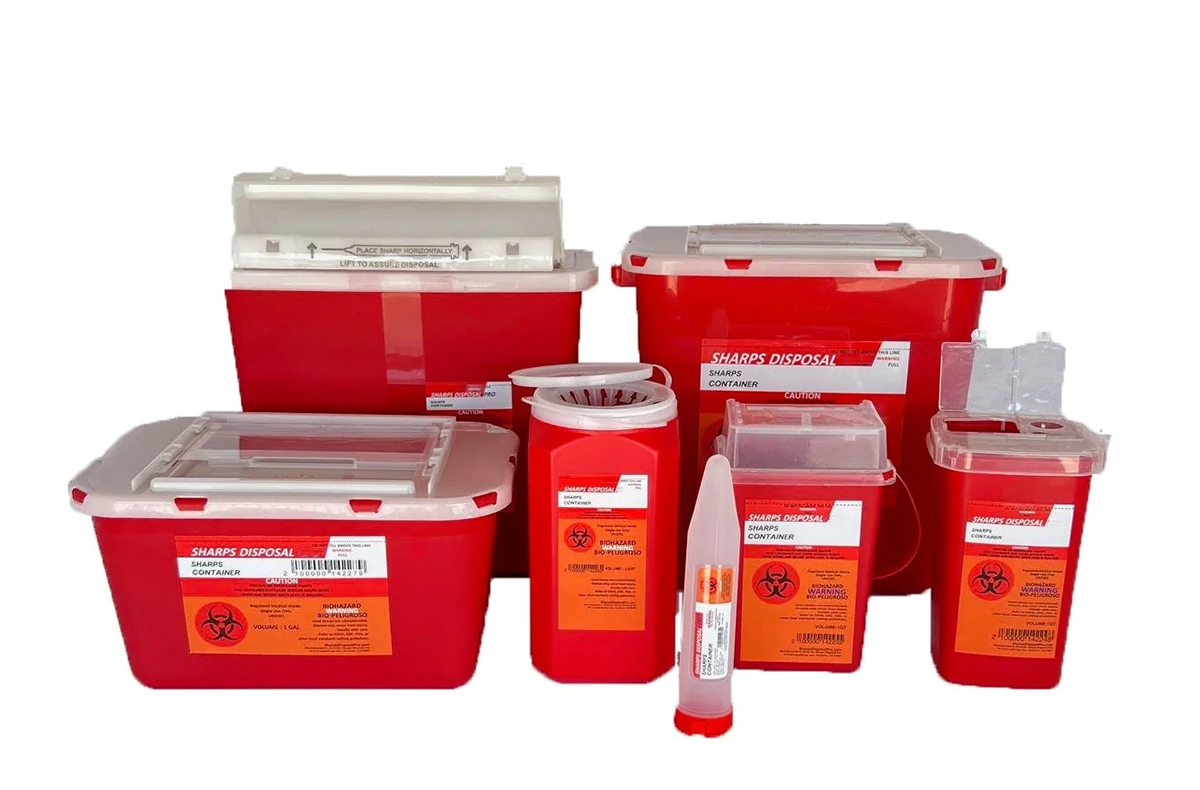
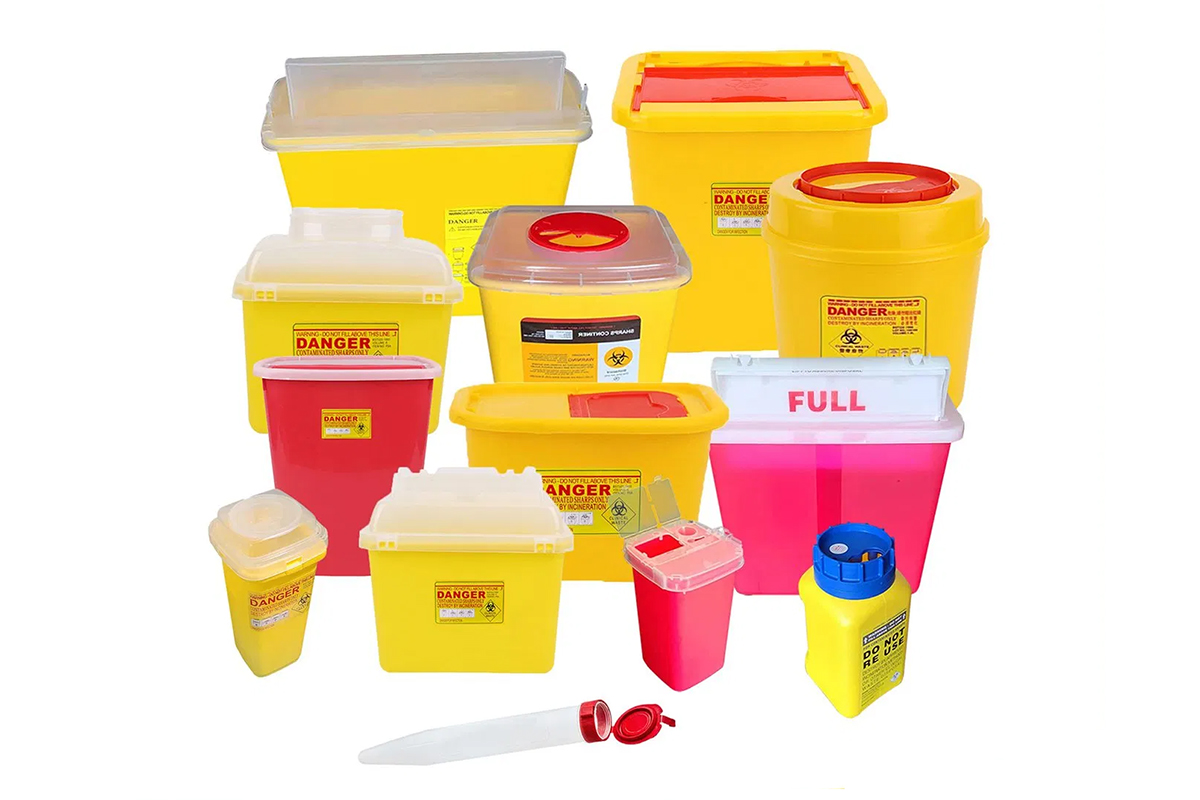
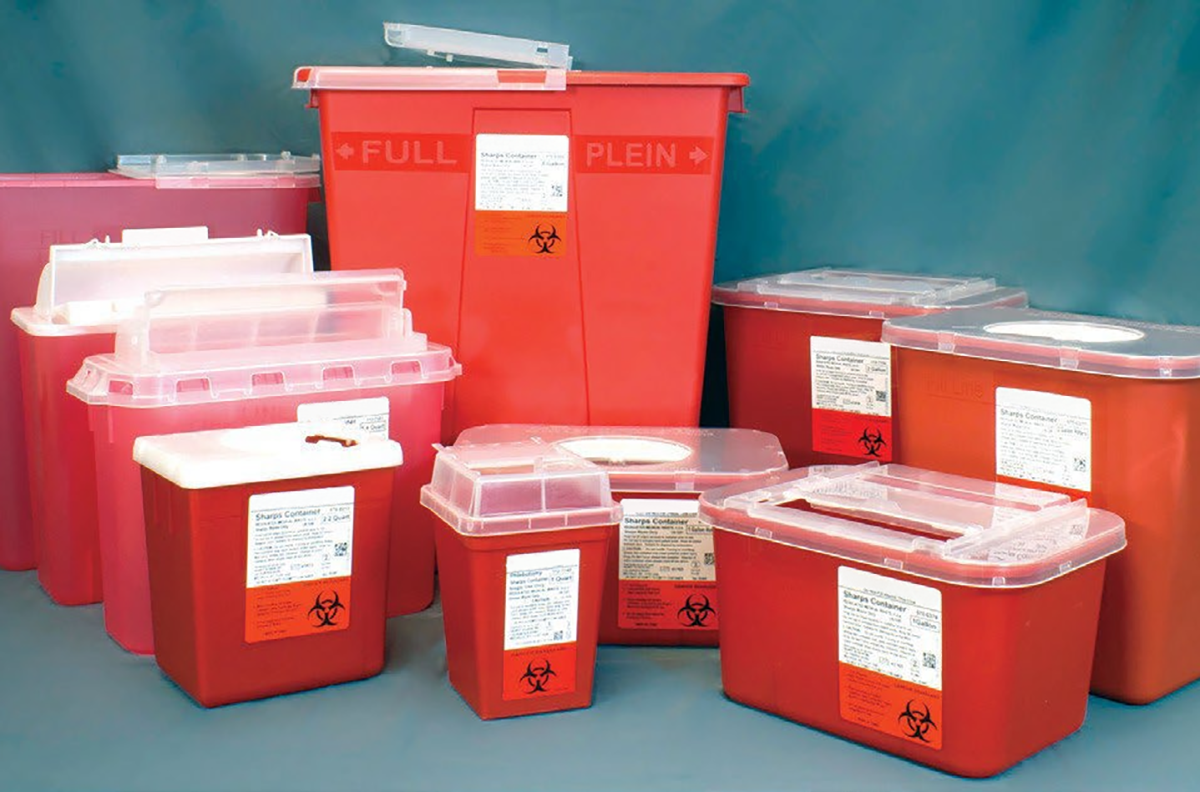
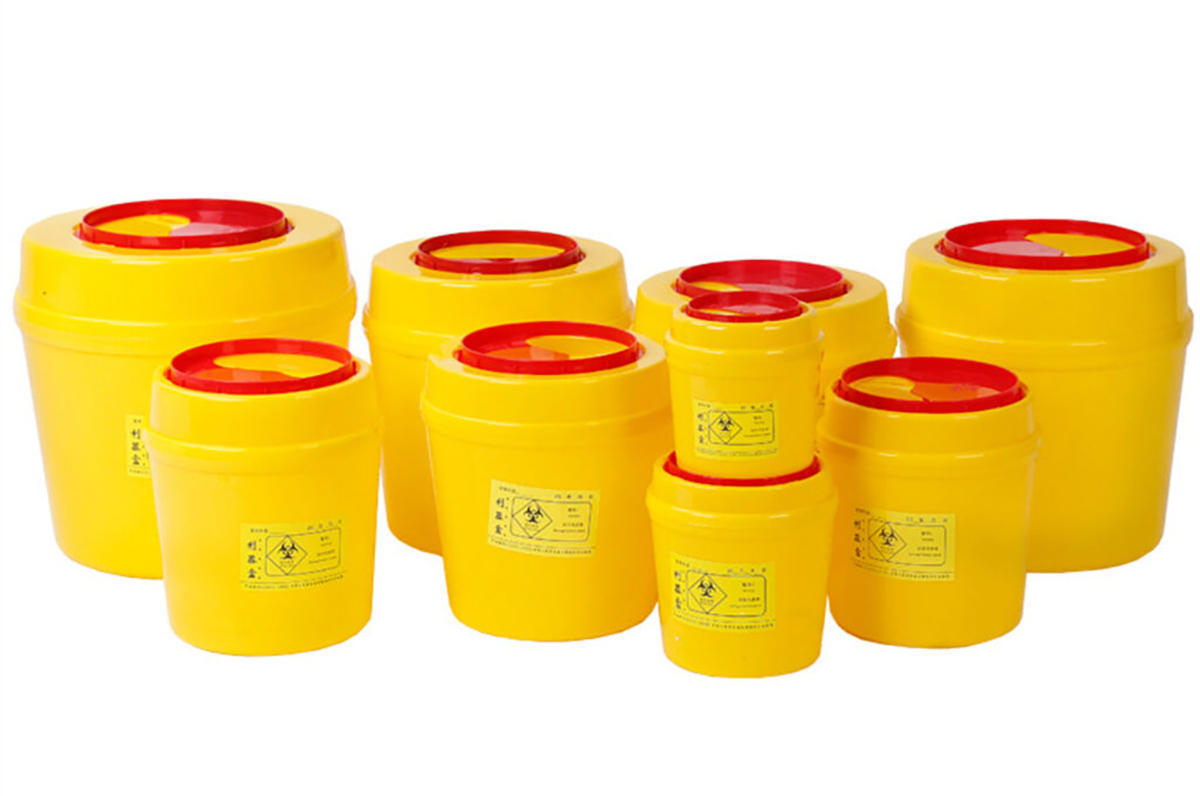
- Volume & Mounting Options: Access to diverse sizes (from 0.1-liter portable units to 30+ liter high-capacity clinical drums) compatible with standard mounting accessories.
How to Build a More Reliable Sharps Container Procurement Strategy
Preventing shortages requires shifting from reactive purchasing to a strategic medical supply chain management framework.
1. Forecast Demand and Maintain Safety Stock
Healthcare facilities cannot afford to run out of biohazard containment units. Operating at zero-inventory capacity invites operational disruption. Academic research published in the Journal of Hospital Infection demonstrates that container-associated sharps injuries account for up to 13% of all healthcare occupational exposures, underscoring how stockouts or forced reliance on substandard emergency alternatives immediately compromises workplace safety.
- Calculate Consumption Metrics: Establish baseline consumption rates per department or clinical facility, accounting for patient volume fluctuations and surgical trends.
- Maintain Safety Stock Offsite/Onsite: Implement a rolling 30-to-60-day safety stock cushion to absorb potential shipping delays or demand surges.
- Staggered Purchase Orders: Transition from sporadic single-batch orders to scheduled, annual contract releases with rolling delivery schedules.
2. Work With Suppliers That Support Long-Term Supply
A dependable supplier should actively help manage your inventory flow. Look for manufacturing partners that offer:
✓ Scheduled Production Reservations: Guaranteed factory slot allocations for recurring purchase orders.
✓ Flexible Minimum Order Quantities (MOQs): Options to mix container sizes within a single shipping container to balance inventory holding costs.
✓ Broader Product Portfolios: A single sourcing point for sharps disposal, safety lancets, and auxiliary waste accessories.
✓ Long-Term Price Lock Agreements: Contracts that insulate your procurement budget from short-term resin market volatility.
3. Choose a Supplier With Global Export Experience
Streamlining medical supplies sourcing requires an export partner that understands international logistics and medical device import requirements:
- Export Documentation Expertise: Error-free execution of Bills of Lading, Certificates of Origin, Form F/E, and customs declarations.
- Freight Forwarding Coordination: Established relationships with major ocean and air carriers to secure reliable vessel space during peak shipping cycles.
- Destination Market Compliance: Clear understanding of destination-specific regulations, ensuring imported products clear port health inspections without costly demurrage delays.
Overfilling or improper usage resulting from supply shortages poses severe operational and safety hazards. Learn more about these operational risks in our study on why overfilled sharps containers present a serious safety risk.
Practical Checklist: Medical Supplier Audit
When conducting a medical device supplier qualification, use this checklist to evaluate potential partners:
| Category | Audit Metric | Verification Status |
| Quality System | Valid ISO 13485 & ISO 9001 certifications | [ ] Verified |
| Product Standard | Compliance with ISO 23907-1 puncture & leak specifications | [ ] Verified |
| Production Capacity | Dedicated injection lines with batch traceability | [ ] Verified |
| Documentation | Full technical files, test reports, and MSDS available | [ ] Verified |
| Logistics | Experienced in FOB, CIF, DDP, and customs clearance support | [ ] Verified |
How BiosafePro Supports Reliable Sharps Container Supply
Navigating international supply risks is far easier with an experienced, quality-focused manufacturing partner. BiosafePro provides dependable medical procurement solutions designed to keep healthcare operations running smoothly.
Stable Supply for Diverse Healthcare Needs
BiosafePro manufactures a complete range of puncture-resistant biohazard disposal units tailored to modern hospital and laboratory requirements:
- Disposable Sharps Containers: Single-use units designed with safety-engineered drop-slot lids for clinical environments.
- Wall-Mounted & Trolley Solutions: High-efficiency containers designed to integrate seamlessly into hospital patient rooms and mobile carts.
- Diverse Capacity Options: Complete range from compact 0.5-liter units for home-care or emergency services to large 30-liter poly-drums for high-volume surgical suites.
Support for Distributors, Tenders, and OEM Partners
BiosafePro provides dedicated operational support for global procurement partners:
- For Distributors: Competitive bulk sharps container tier pricing, transparent lead times, long-term supply agreements, and consolidated container shipping options.
- For Hospital Projects & Government Tenders: Complete technical dossiers, ISO 23907 test certificates, sample support, and bid compliance documentation.
- For Private Label & OEM Clients: End-to-end customization, including localized label printing, custom color options, brand logo integration, and optimized outer box packaging.
By combining strict quality control with reliable production scheduling, BiosafePro helps distributors and healthcare systems secure their supply chains against unexpected disruptions.
Frequently Asked Questions
How can I choose a reliable sharps container supplier?
Evaluate potential partners based on verified ISO 13485 quality management systems, ISO 23907-1 product compliance, confirmed monthly production capacity, and documented export experience. A reliable vendor should readily provide third-party test reports, flexible MOQ options, and transparent lead time commitments.
How can suppliers reduce sharps container delivery delays?
Top manufacturers mitigate delays by maintaining raw material buffers (medical-grade polypropylene), utilizing automated injection molding lines, reserving ocean freight slots in advance, and holding emergency safety stocks for contract clients.
How can I avoid sharps container shortages during hospital operations?
Establish a 30-to-60-day buffer inventory, diversify supply streams with a qualified secondary OEM supplier, implement automated reorder triggers based on clinical usage trends, and work with vendors that support scheduled purchase order releases.
How long is the typical lead time for bulk sharps container orders?
Standard production lead times for bulk orders typically range from 15 to 30 days, depending on custom labeling and packaging requirements. Overseas ocean transit adds an additional 15 to 45 days depending on the destination port, making long-term supply planning essential.
Why is supplier location important when sourcing sharps containers internationally?
A supplier’s proximity to major international deep-water ports and established logistics hubs significantly impacts inland transport stability, container availability, and shipping timelines. Well-located manufacturers reduce transit risk and streamline overall landed costs.