

Why Certification Matters
In many markets, sacs pour déchets médicaux are not treated as ordinary garbage bags. When they are used to collect potentially infectious medical waste, they fall under the category of regulated healthcare products. This means that entering these markets—especially in Europe—requires officially recognized certification not as an option, but as a mandatory “passport” for market access.
The core value of certification lies in transforming a simple “bag” into a reliable “risk control tool.” Its importance is directly linked to several critical aspects:
- Market Access: Without certification that complies with the destination market’s regulatory requirements, products cannot be legally cleared through customs or sold.
- Liability Mitigation: Certified products indicate that material strength, sealing performance, and labeling meet established safety standards. This effectively helps hospital administrators reduce environmental liability risks related to cross-infection and accidental leakage, while also protecting importers from legal consequences arising from non-compliance.
- Operational Efficiency: Proper certification documentation significantly simplifies port customs clearance procedures and satisfies the basic qualification requirements in government or large healthcare institution procurement tenders.
- Trust Establishment: In high-risk departments such as intensive care units and operating rooms, purchasing decisions rely on verifiable safety standards. Certification provides this verifiability and forms the foundation for procurement confidence.
Therefore, fundamentally, selecting medical waste bags with compliant certification is a critical supply chain risk management decision. It verifies whether the product—from raw materials and production processes to labeling—truly meets stringent requirements for safety and traceability.
Key International Standards: CE, ISO, and EN
To evaluate a medical waste bag supplier China, it is essential to understand the relationship between several key international standards. Together, they form a comprehensive framework for product compliance and quality assurance.
CE Marking: Legal Authorization for the European Market
The CE marking is the statutory proof that a product complies with relevant European Union regulations concerning health, safety, and environmental protection. For medical waste bags, this generally involves compliance within the framework of European medical device regulations.
Obtaining CE marking is not a simple labeling exercise. It is a structured compliance process supported by technical documentation and, where applicable, assessment by a designated Notified Body. The core verification focuses on material safety, mechanical performance, labeling accuracy, and production traceability.
It is important to note that a valid CE mark must be supported by a manufacturer-issued Declaration of Conformity and a complete technical file. The presence of the CE symbol alone does not constitute compliance.
ISO 13485: Quality Management System Assurance
If CE marking addresses whether a product is compliant, ISO 13485 addresses whether a company can consistently and reliably produce compliant products. ISO 13485 is a quality management system standard specifically developed for the medical device industry.
Certification to ISO 13485 indicates that the supplier has established controlled production processes, traceable raw material sourcing, standardized risk management procedures, and systematic corrective and preventive actions.
For importers, selecting a supplier certified to ISO 13485 adds stability and reliability to long-term and large-volume procurement partnerships. It demonstrates that the supplier operates within a structured and audited quality framework rather than relying on ad hoc production practices.
EN Standards: Technical Benchmarks for Performance
EN (European Norm) standards provide the specific technical requirements that support CE marking. For medical waste bags, relevant EN standards define physical performance requirements, such as:
- Tear resistance and puncture resistance strength
- Load-bearing capacity under full load conditions
These tests ensure that the bags meet the strength requirements of daily hospital operations, particularly when handling sharp instruments or heavy waste materials.
In simple terms, CE marking represents legal market access authorization, ISO 13485 demonstrates sustained quality capability, and EN standards provide measurable technical criteria for durability and performance. Only by considering all three together can one comprehensively assess product compliance and supplier reliability when selecting a medical waste bag supplier China.
Labeling and Packaging Compliance
In the international trade of medical waste bags, negligence in labeling and packaging is one of the most common yet most preventable compliance risks. A fully compliant product may still be rejected during customs inspection or customer acceptance due to incomplete or incorrect labeling information.
A compliant medical waste bag label must clearly and permanently include the following core information:
- CE Marking: Displayed in the correct proportions and clearly visible in accordance with regulatory specifications.
- Manufacturer Information: Company name and contactable address.
- Traceability Identification: Production batch number or serial number, and date of manufacture.
- Product Specifications: Material, dimensions, thickness, and other relevant parameters.
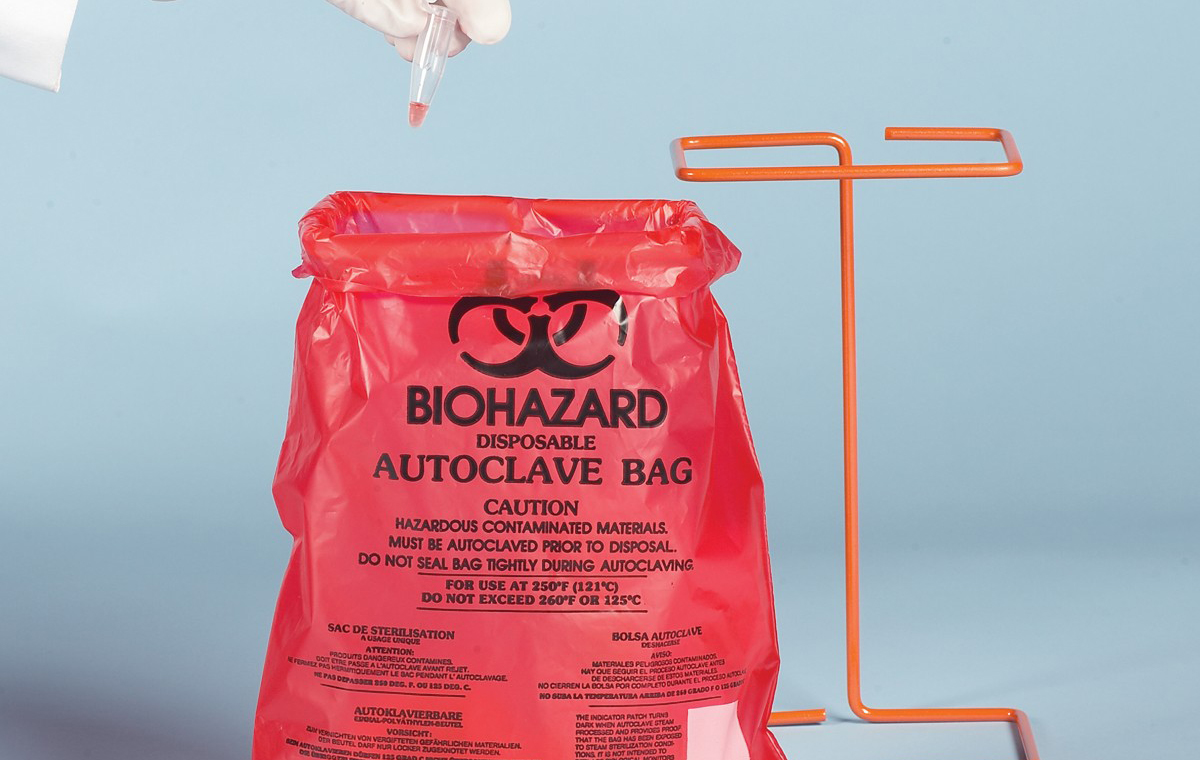
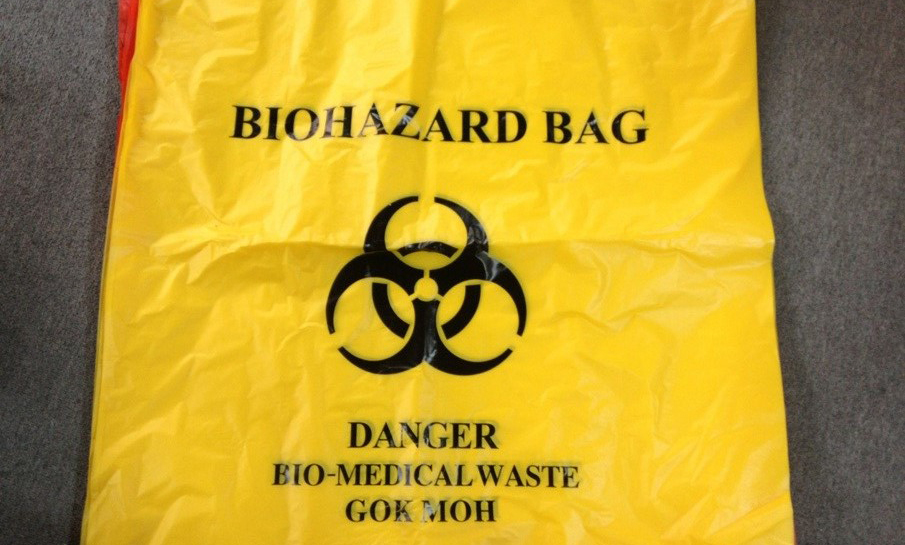
- Safety Symbols: Standardized biohazard symbol.
- Intended Use: Clear indication that the product is intended for the collection of medical waste.
- Language Requirements: For sales within the European Union, information must be provided in the official language of the target Member State.
In addition, outer packaging cartons must clearly indicate:
- Quantity per carton.
- Necessary storage conditions, such as “Avoid direct sunlight.”
- Temperature and humidity limitations, where applicable.
The critical point is that traceability information—such as batch numbers—serves as the bridge connecting the physical product to the manufacturer’s technical documentation. If such information is missing, reviewing authorities cannot verify the compliance of the specific batch, which may call into question the validity of the entire CE certification.
Therefore, labeling is not merely informational; it constitutes an integral part of legal responsibility and compliance evidence.
Importer Documentation Checklist
Before placing an order with a supplier, proactively requesting and verifying the following core documents is a critical step in managing risk and ensuring smooth customs clearance. This checklist serves as direct evidence for validating product quality and regulatory compliance when working with a medical waste bag supplier China.
Regulatory Compliance Documents
These documents function as the product’s “identity card” and “inspection report.” Their authenticity and validity period must be carefully verified:
- CE Certificate / Declaration of Conformity: A valid EU Declaration of Conformity is required. For higher-risk products, a CE certificate issued by a Notified Body may also be necessary.
- Quality Management System Certificate: A valid ISO 13485certification certificate held by the supplier.
- EN Standard Test Reports: Physical performance test reports (such as tear resistance, puncture resistance, and load testing) issued by qualified laboratories.
Technical Documentation
These documents provide detailed product instructions and safety-related information:
- Product Specification Sheet: Detailed parameters including size, thickness, color, and other specifications.
- Material Composition Declaration: Statement outlining the primary material components.
- Material Safety Data Sheet (MSDS): Essential technical documentation regarding safe handling and disposal of materials.
- Sterilization Validation Report (if applicable): If the product is claimed to be sterile, corresponding sterilization validation documentation must be provided.
Commercial and Logistics Documents
These are operational documents necessary for completing transactions and customs procedures:
- Commercial Invoice
- Packing List
- Certificate of Origin
Core Action Reminder:
Do not merely collect documents. As a responsible importer, you must actively verify:
① Whether all certificates are within their validity period;
② Whether the issuing bodies (especially Notified Bodies) are officially recognized by the European Union (verification can be conducted through official EU databases).
Missing or invalid documentation may result in goods being detained at the border, rendering the CE marking and all compliance efforts ineffective.
CE Marking Certification Process for Medical Waste Bags
For medical waste bags, obtaining CE marking is a systematic compliance procedure rather than a single test. The core process generally includes the following steps:
- Product Classification Definition
Under the European Union Medical Device Regulation (MDR), the product’s risk classification must be clearly defined. If the bag is declared for the collection and containment of infectious medical waste, it is typically classified as a Class I medical device.
- Risk Analysis and Assessment
In accordance with ISO 14971, risks associated with the product—such as rupture, leakage, or failure during handling—must be systematically identified, evaluated, and controlled.
- Technical Documentation Preparation
A comprehensive technical file must be created. This file includes product design information, performance data, material specifications, risk management documentation, labeling samples, and relevant test reports.
- Performance and Mechanical Testing
Based on applicable EN standards, accredited laboratories must conduct essential mechanical performance tests, such as puncture resistance, tear resistance, and load-bearing capacity.
- Quality System Requirements
The manufacturer must establish and maintain a quality management system appropriate to the product’s risk classification, typically aligned with ISO 13485 requirements.
- Declaration of Conformity
Upon completion of all assessments and verification activities, the manufacturer formally signs the EU Declaration of Conformity, declaring that the product complies with all applicable regulatory requirements.
- Affixing the CE Mark
The CE mark is affixed to the final product as the visible indication of regulatory compliance.
Critical Consideration: If a product claims a specific medical purpose—such as infection control—rather than functioning as a general-purpose garbage bag, the regulatory pathway becomes significantly more stringent. In such cases, deeper technical documentation and risk justification are required to support the intended use claim.
During evaluation, special attention should be given to the following high-risk areas, which must be thoroughly addressed in the technical file and risk management documentation:
- Mechanical rupture risk
- Leakage prevention performance
- Reliability in hazardous waste containment
- Material biological safety
The ultimate outcome of this process is the establishment of a complete, traceable technical dossier demonstrating that the product meets the essential safety and performance requirements of EU regulations from design through production.
BiosafePro Compliance System: Integrated and Reliable Assurance
To ensure that medical waste bags consistently and reliably comply with stringent international regulations, suppliers require more than a one-time certification. They need a structured compliance system that integrates regulatory control into every stage of production. The BiosafePro system is designed for this purpose, embedding compliance into the entire lifecycle—from raw materials to finished goods.
The system’s core pillars include:
- Certified Production
The entire manufacturing process operates under a certified ISO 13485 medical device quality management system. This ensures that production procedures are controlled, standardized, and consistently executed.
- Source Control
A qualified raw material supplier list is established. Critical raw materials undergo incoming inspection and batch locking to ensure traceability and prevent quality variability.
- Dual-Layer Verification Testing
In addition to rigorous internal quality control testing, periodic EN standard tests—such as tear resistance and puncture resistance—are conducted by EU-recognized third-party laboratories. This provides objective and externally validated compliance evidence.
- Full-Chain Traceability
Through integrated ERP and MES systems, digital linkage is established from raw material batch numbers and production orders to finished bag batch numbers and outer carton identification. This enables rapid traceability for any production lot.
- Dynamic Document Management
A secure digital document management system is used to centrally store and continuously update all technical documentation, certificates, and test reports. This ensures document version validity and immediate retrievability during audits or regulatory reviews.
- Periodic Audits
Planned internal audits, customer audits, and certification body re-audits are conducted regularly to maintain continuous compliance.
The integrated value of BiosafePro lies in transforming these individual compliance modules into a coordinated, real-time operational platform. For distributors and global buyers, this integration directly delivers the following critical outputs:
- Comprehensive Regulatory Documentation Package: Each batch is automatically associated with valid EU Declarations of Conformity, relevant test reports, and supporting certificates.
- Visible Quality Control Processes: Key quality control checkpoints and associated data records are accessible for review.
- Real-Time Production and Traceability Tracking: Authorized distributors can monitor production status and corresponding batch traceability information for their orders.
- Standardized Pre-Shipment Inspection Reports: Inspection reports generated before shipment confirm compliance of product specifications, packaging, and labeling.
Ultimately, the BiosafePro system transforms “compliance” from a static certificate into a dynamic, continuously verifiable capability embedded throughout the manufacturing process. This significantly reduces supply chain and regulatory risks for distributors operating in highly regulated markets such as the European Union.
In the article “Top Medical Waste Bag Supplier China for Global Buyers”, you can gain deeper insights into how to select a reliable medical waste bag supplier China and understand the key reasons for choosing BiosafePro.

Compliance-Driven Medical Waste Bag Solutions
In international trade, compliance is not optional; it is the legal foundation for entering markets and building long-term trust. Especially for products such as medical waste bags, certifications and documentation are not marketing tools, but essential credentials that safeguard your business security and ensure smooth operations.
When selecting a partner, look beyond the product itself and evaluate the compliance system behind it. A reliable supplier should be able to provide clear, transparent, and verifiable compliance evidence, ensuring that every batch you purchase meets the regulatory requirements of the target market.
BiosafePro Solution: Trusted One-Stop Compliance Support
We not only manufacture high-quality medical waste bags, but also provide comprehensive back-end support through the BiosafePro compliance system, ensuring that you can confidently meet regulatory requirements with ease.
Core documents and services you will receive include:
- Comprehensive regulatory documentation package: Valid EU Declaration of Conformity, technical file summary, and copies of key certificates provided with each shipment.
- Ongoing quality certification: Production under a valid ISO 13485 quality management system, with certification proof available.
- Up-to-date performance evidence: EN standard test reports issued by accredited laboratories.
- Clear labeling and documentation: Product labels compliant with applicable directives, along with detailed Technical Data Sheets (TDS).
- Full traceability: Batch traceability from raw materials to finished products, meeting audit requirements.
To ensure your project progresses smoothly, please request and verify the following from your supplier before making a final decision:
- Copy of the EU Declaration of Conformity (DoC)
- Copy of the ISO 13485 quality management system certificate
- Latest EN standard test report applicable to the product
- Detailed Technical Data Sheet (TDS)
Transparent documentation records and systematic compliance management are the most reliable guarantees for achieving efficient customs clearance, winning tender opportunities, and ultimately reducing operational risks in the international market.
BiosafePro is ready to provide the complete set of documentation listed above, along with detailed explanations. Contactez nous to obtain samples and copies of relevant certifications, and establish a solid compliance foundation for your next procurement.