


By BiosafePro Editorial Team | Biomedical Waste Management Specialists
With an extensive background in clinical equipment procurement, biohazardous containment logistics, and international regulatory compliance, BiosafePro provides authoritative solutions for hospitals, public health entities, and medical distributors globally.
Introduction
Managing healthcare waste management logistics remains one of the most operationally sensitive challenges facing hospital administrators, procurement officers, and biomedical waste contractors today. Every day, medical institutions generate substantial volumes of hazardous material. Yet, a critical operational bottleneck frequently occurs between point-of-generation internal collection and final off-site disposal: medical waste transport.
Relying on standard freight vehicles or unrated logistics units for transporting regulated waste introduces severe biosecurity risks, potential regulatory penalties, and significant liability. Procurement teams often struggle to balance regulatory compliance, worker safety, vehicle durability, and budget constraints.
A specialized véhicule de transfert de déchets médicaux is not merely a utility van; it is an engineered, mobile containment barrier designed specifically to mitigate cross-contamination, streamline high-frequency collection routes, and maintain strict infection control protocols throughout the entire transit lifecycle.
What Is a Medical Waste Transfer Vehicle?
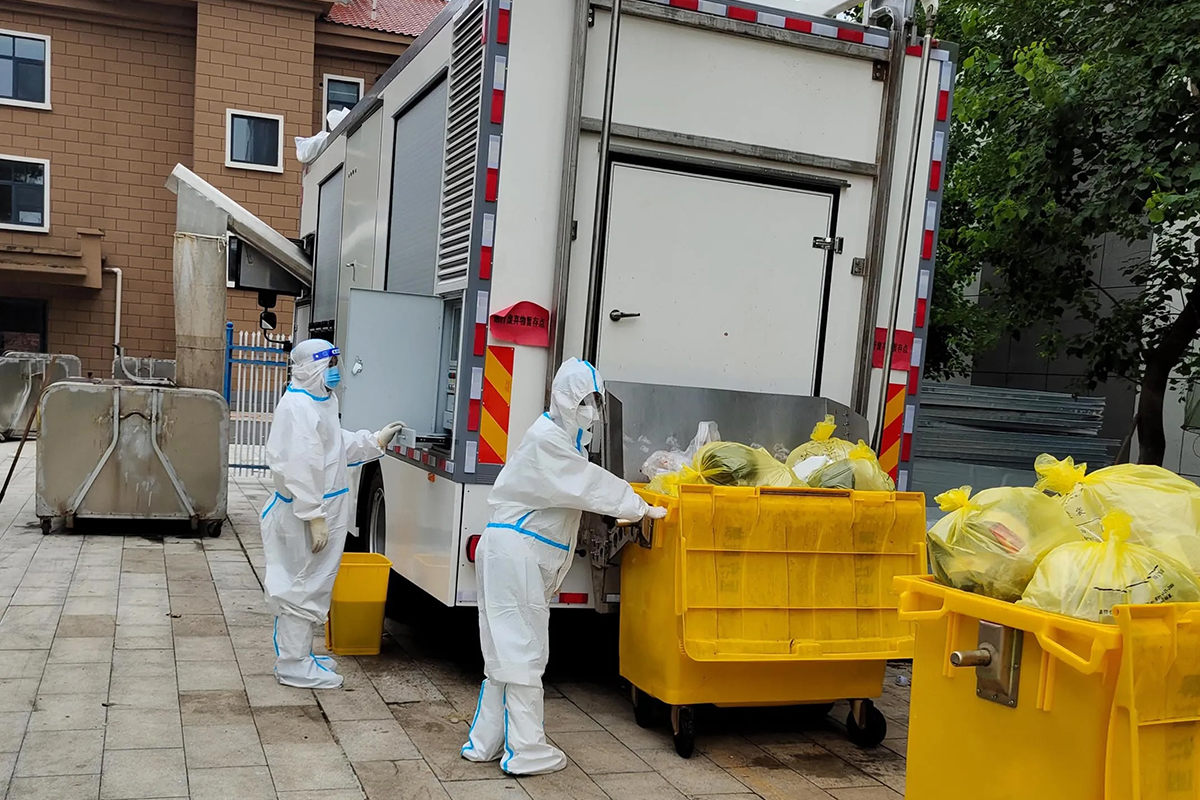
A medical waste transfer vehicle (commonly referred to as a medical waste truck) is a purpose-built logistics unit engineered specifically to collect, contain, and transport regulated clinical waste from healthcare environments to central treatment or storage facilities. Unlike conventional transport trucks, these units serve as active safety barriers against biological hazards.
Secure Medical Waste Containment
The primary objective of a medical waste transfer vehicle is to isolate hazardous materials completely from the external environment.
- Enclosed Cargo Compartments: Fully sealed, rigid bodies prevent windborne dispersion, pest intrusion, and unauthorized access to hazardous materials.
- Leak-Resistant Internal Structures: Seamless cargo linings and integrated spill-retention bunds ensure that liquids from ruptured bags remain fully contained within the vehicle.
- Protection Against Accidental Exposure: Reinforced locking mechanisms and impact-resistant walls protect drivers, handlers, and the public during transit or unexpected collisions.
Easy Cleaning and Disinfection
Because these vehicles encounter hazardous biological pathogens daily, their design must facilitate thorough and rapid decontamination. Important design considerations include:
- Corrosion-Resistant Materials: Stainless steel or heavy-duty fiberglass reinforced plastic (FRP) interiors withstand aggressive chemical disinfectants.
- Smooth Internal Surfaces: Coved interior corners eliminate sharp 90-degree angles where pathogens and organic debris can accumulate.
- Drainage Design: Dedicated, sealable floor drains allow washdown fluids to be collected safely into containment tanks during sanitation without leaking onto the ground.
- Easy Sanitation Procedures: High-pressure spray wash systems and chemical sprayers can be utilized without damaging vehicle systems or cargo compartments.
Safe Transportation Process
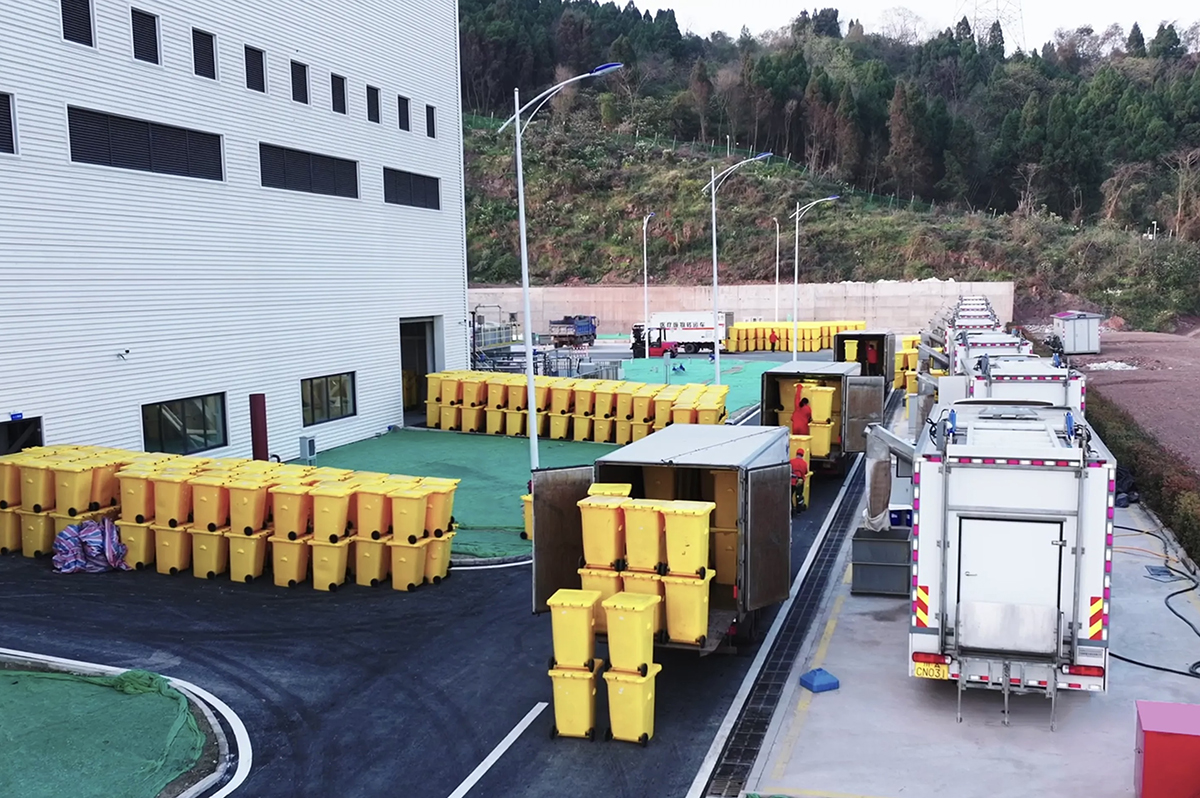
A professional medical waste vehicle helps maintain a controlled workflow: Hospital → Temporary Storage → Treatment Facility.
By standardizing this transit pipeline, healthcare facilities minimize:
- Manual handling risks by utilizing ergonomic loading layouts compatible with standardized waste carts.
- Cross-contamination possibility through sealed environmental separation.
- Transportation delays via dedicated, secure, and fleet-optimized transport logistics.
Why Are Medical Waste Transfer Vehicles Essential for Healthcare Facilities?
Understanding the critical necessity of specialized vehicles requires analyzing the daily operational output of modern clinical settings.
Reduce Infection Control Risks During Transportation
Healthcare institutions generate continuous streams of diverse hazardous outputs:
- Infectious Waste: Materials contaminated with blood, bodily fluids, or biological pathogens.
- Pathological Waste: Human tissues, organs, and anatomical fluids requiring specialized containment (see detailed categorizations in our guide on biohazardous waste examples).
- Laboratory Waste: High-titer cultures, stock strains, and contaminated diagnostic media.
- Contaminated Disposable Supplies: PPE, bandages, tubing, and single-use surgical instruments.
When transport processes lack specialized equipment, operational risks skyrocket, leading to catastrophic spillages, airborne pathogen release, direct contact exposure for drivers, and community environmental contamination. According to the World Health Organization (Safe management of wastes from health-care activities), improper handling during transit represents one of the primary vectors for secondary occupational exposure in public health logistics.
Improve Healthcare Waste Collection Efficiency
Modern hospital medical waste management involves complex internal and external logistics:
- Multi-department generation: Waste originates simultaneously from ICUs, operating theaters, laboratories, and outpatient clinics.
- Complex collection routes: Materials move from bedside bins to intermediate holding rooms, central storage yards, and external transport.
- High-frequency transportation: Highly regulated holding times mean waste must move promptly off-site.
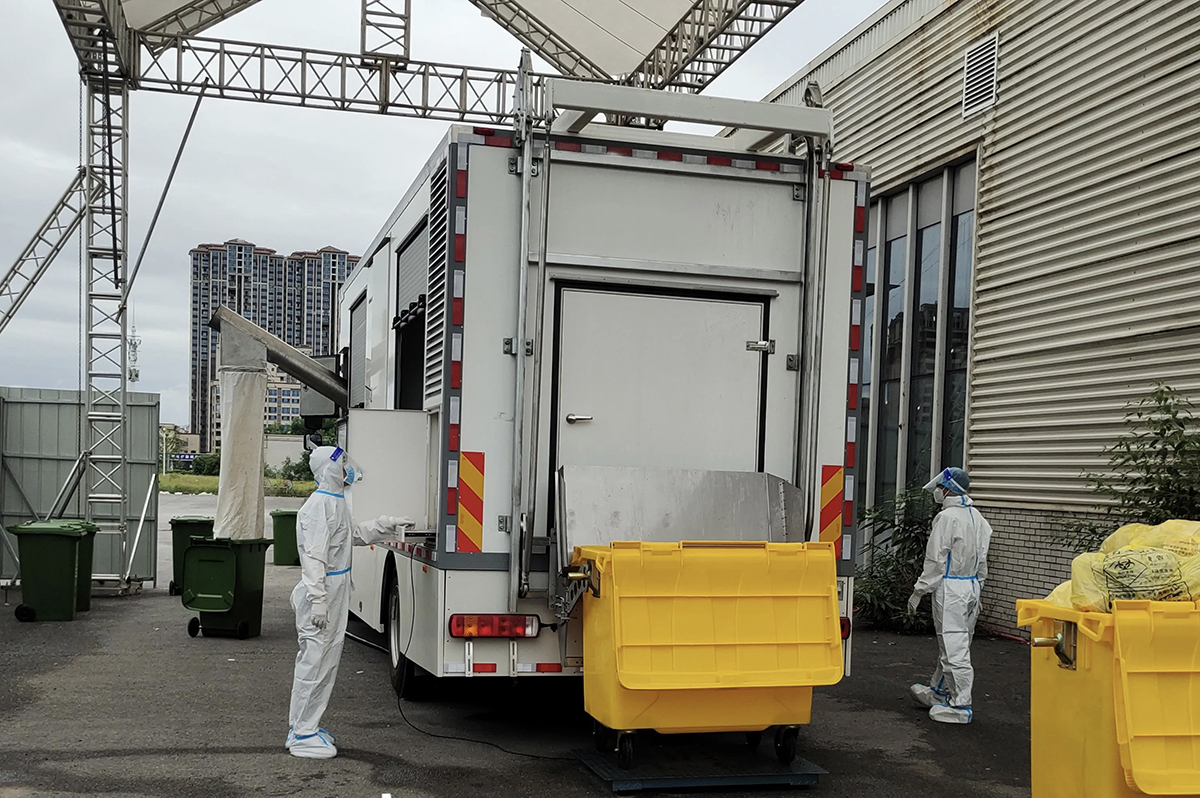
Specialized transfer vehicles optimize these operations by allowing route optimization, increasing loading efficiency with automated lifters or ramp systems, and drastically reducing unnecessary manual handling. This makes them indispensable for hospitals, clinics, laboratories, and third-party healthcare waste contractors.
Support Healthcare Waste Management Compliance
Procurement teams must evaluate compliance through a practical, risk-averse operational lens rather than just navigating dense regulatory text. Key considerations include:
- Enclosed Transportation System: Meeting international transport recommendations, such as the UN Recommendations on the Transport of Dangerous Goods (Class 6.2 Toxic and Infectious Substances).
- Proper Waste Containment: Ensuring structural integrity under dynamic vehicle loads to satisfy standards such as ISO 23907 for sharp object protection and containment.
- Cleaning and Maintenance Convenience: Fulfilling occupational health criteria, such as the OSHA 29 CFR 1910.1030 Bloodborne Pathogens Standard, regarding the prompt decontamination of equipment.
- Operational Safety: Protecting personnel from manual lifting strain and biohazard exposure.
What Features Should Buyers Consider When Choosing a Medical Waste Transfer Vehicle?
Selecting the correct vehicle requires balancing operational volume, route geography, safety features, and durability.
1. Vehicle Capacity and Application Requirements
- Small Clinics & Urban Labs: Require compact, maneuverable medical waste transport vans capable of navigating narrow streets and underground parking facilities while providing secure, segregated containment.
- Large Hospitals: Require medium-to-heavy capacity vehicles designed to handle continuous high-volume outputs (managing complex demands detailed in our article on hospital medical waste).
- Waste Contractors: Require large-capacity vehicles with high payload ratings, integrated fleet management tracking compatibility, and optimized axle-weight distribution when calculating the weight of regulated medical waste placed in transport containers.
2. Internal Structure and Material Selection
Purchasing decisions should never focus on upfront vehicle price alone; lifecycle maintenance and sanitation efficacy are paramount.
Buyers must thoroughly evaluate:
- Stainless Steel or FRP Linings: Essential for resisting chemical degradation from frequent chlorine or quaternary ammonium washdowns.
- Waterproof Cargo Compartments: Fully welded or seamless floor systems that trap liquid spills.
- Anti-Leakage Design: High-threshold rear sills and dual-door gasket seals that prevent liquid escape even during emergency braking.
- Easy-to-Clean Surfaces: Non-porous interior paneling that dries quickly and leaves no residual odors or bio-films.
3. Safety and Operational Design
Loading/Unloading Convenience: Integrated hydraulic tail-lifts, low loading thresholds, and internal tie-down tracks accommodate heavy waste bins seamlessly.
- Worker Protection: Separate driver cabins equipped with independent HVAC systems ensure cabin air remains isolated from the cargo area.
- Transportation Stability: Internal compartment dividers and load-securing bars prevent container shifting during transit.
- Maintenance Requirements: Readily accessible floor drainage valves, durable sealants, and standardized mechanical parts reduce downtime.
Medical Waste Transfer Vehicle vs Ordinary Transport Vehicle: What Is the Difference?
Attempting to transport hazardous clinical outputs in standard cargo vans compromises safety protocols. The comparison table below highlights these critical distinctions:
| Feature / Consideration | Specialized Medical Waste Transfer Vehicle | Ordinary Cargo Transport Vehicle |
| Primary Purpose | Dedicated healthcare waste management and biohazard transit | General cargo, logistics, and dry goods transportation |
| Cargo Containment | Fully sealed compartment with anti-leak bunds and biohazard locking mechanisms | Standard unsealed sheet metal cargo bed; prone to leaks |
| Infection Control & Sanitation | Seamless, corrosion-resistant interior with integrated floor drainage for chemical washdowns | Porous wood/metal floors that absorb fluids; difficult to disinfect |
| Air Separation | Sealed driver cabin with independent ventilation to protect operators | Shared cabin atmosphere or non-hermetic partitions |
| Compliance Readiness | Engineered to meet international clinical waste transportation requirements | Fails basic containment and biohazard transport standards |
| Safety Mechanisms | Integrated spill management, container tie-down systems, temperature controls | Lacks internal load securing for biomedical wheelie bins |
How Can Healthcare Facilities Source the Right Medical Waste Transfer Vehicle Supplier?
Selecting an experienced supplier is as crucial as choosing the correct vehicle specifications.
Choose a Supplier With Healthcare Industry Experience
Procurement teams should systematically evaluate suppliers based on:
- Product Customization Capability: Ability to tailor cargo dimensions, tail-lift capacities, and disinfection systems.
- Export Experience: Proven track record of delivering vehicles that meet destination-country road safety and environmental specifications.
- Technical Support: Provision of detailed operation manuals, spare parts availability, and engineering guidance.
- Documentation Support: Complete supply of certificates of origin, quality inspection reports, and material compliance data.
OEM and Customized Solutions
International markets present distinct operational challenges, including varying road widths, local waste collection workflows, and regional healthcare hazardous waste regulations. Professional OEM services allow suppliers to provide:
- Customized chassis dimensions and interior layouts.
- Private labeling and custom livery for institutional branding.
- Tailored payload and volumetric capacity solutions optimized for specific clinical networks (similar to those evaluated in our analysis of the top medical waste disposal companies).
Support for Government Projects and Tenders
A substantial portion of clinical waste disposal equipment procurement occurs through structured public sector tenders, government health ministry initiatives, and hospital expansion programs. A reliable supply partner supports distributor partners by providing:
- Comprehensive technical dossiers and schematic drawings.
- Detailed product specifications matching tender requirements.
- Competitive volume pricing structures and formal quotation preparation.
- Dedicated tender cooperation and authorization support.
Why Work With BiosafePro for Medical Waste Transportation Solutions?
BiosafePro provides end-to-end support for global healthcare systems, distributors, and municipal contractors seeking compliant medical waste transportation requirements solutions.
Medical Waste Transfer Vehicle Supply
We supply engineered, high-performance transfer vehicles configured specifically for diverse healthcare environments—from urban clinic chains to large multi-building hospital complexes. Our export-oriented supply solutions ensure seamless international logistics, full documentation, and robust build quality.
Distributor Cooperation
We actively partner with regional medical equipment distributors and healthcare logistics providers by offering:
- Robust bulk supply capabilities and flexible production scheduling.
- Strategic product portfolio expansion opportunities in healthcare environmental engineering.
- Dedicated marketing collateral, technical training, and market development support.
OEM & Project Support
Whether responding to government ministry tenders or executing private hospital expansion contracts, BiosafePro delivers:
- Tailored OEM configurations designed around local operational workflows.
- Complete engineering documentation, certifications, and compliance packages.
- Bidding partnership and dedicated technical tender support.
Frequently Asked Questions
Can medical waste transfer vehicles be customized?
Yes. Professional medical waste transfer vehicles can be fully customized based on chassis preference, cargo volume, payload capacity, internal lining materials (stainless steel vs. FRP), hydraulic tail-lift integration, and specialized interior storage racks or bin retention systems.
What industries use medical waste vehicles?
These vehicles are utilized across public and private hospitals, diagnostic and research laboratories, blood banks, veterinary clinics, centralized waste treatment centers, and commercial biomedical waste management contractors handling infectious medical waste.
How do I choose a medical waste transfer vehicle supplier?
Select a supplier with demonstrated healthcare industry expertise, robust OEM capabilities, international export certification, thorough technical documentation, and proven experience supporting tender processes and public sector projects.
Can suppliers support government medical waste projects?
Yes. Leading suppliers support government projects and tenders by providing formal authorization letters, comprehensive technical compliance documents, customized vehicle engineering specifications, and bid preparation support.