By BiosafePro Technical Editorial Team | Biomedical Waste Management Specialists
BiosafePro is a specialized medical waste equipment manufacturer dedicated to environmental decontamination technology, high-temperature steam sterilization, microwave disinfection, and chemical treatment systems for healthcare facilities, laboratories, and regional waste management operators worldwide.
Determining whether to deploy a centralized medical waste treatment facility or an on-site medical waste treatment system depends on three fundamental operational metrics: aggregate daily waste mass, logistics infrastructure, and facility physical footprint.
- Centralized Medical Waste Microwave Treatmentis financially and operationally optimal for regional waste management operators, municipal consortia, and hospital networks handling aggregated waste volumes exceeding 3,000 kg/day (Source: World Health Organization WHO, Safe management of wastes from health-care activities, 2nd ed.). It centralizes regulatory oversight, optimizes continuous high-throughput shredding and irradiation cycles, and reduces per-kilogram capital expenditure through economies of scale.
- On-Site Medical Waste Treatmentis superior for individual acute care hospitals, remote medical facilities, and specialized clinics generating between 50 kg/day and 2,500 kg/day (Source: US Environmental Protection Agency EPA, Medical Waste Regulations Framework). Operating on-site eliminates off-site hazardous waste transport costs—which frequently account for 30% to 50% of total off-site waste disposal expenditures for healthcare facilities (Source: UNEP, Compendium of Technologies for Treatment/Destruction of Healthcare Waste)—and removes chain-of-custody liability under “cradle-to-grave” environmental protection mandates.
- Core Disinfection Benchmark: Both centralized and decentralized configurations utilizing advanced medical waste microwave sterilizerunits achieve a minimum 106 reduction in Bacillus atrophaeus endospores, meeting international STAATT Level IV microbial inactivation standards at processing temperatures between 95℃ and 105℃ (Source: State Territorial Aids Medical Directors Council STAATT / ISO 11135:2014).
Centralized vs On-Site Medical Waste Microwave Treatment: Key Differences
Selecting the appropriate operational architecture requires evaluating specific engineering, spatial, and logistical parameters. The following matrix details the operational trade-offs between centralized regional treatment plant integration and localized hospital installation.
| Comparison Factor | Centralized Microwave Treatment | On-Site Microwave Treatment |
| Treatment location | Dedicated regional or municipal treatment facility | Hospital or other suitable healthcare facility |
| Waste sources | Multiple hospitals, clinics, or collection points | One facility or a defined local healthcare network |
| Equipment planning | Designed around aggregated waste volume | Designed around the waste generated at the installation site |
| Capacity requirements | Often requires higher throughput (>300 kg/h to 1,500+ kg/h) | Usually matched to local demand (20 kg/h to 300 kg/h) |
| Waste transportation | Collection and transport to the treatment center are required | Can reduce off-site transport of waste intended for on-site treatment |
| Facility requirements | Dedicated treatment plant and supporting infrastructure | Suitable installation space and site utilities |
| Operational management | Centralized process and maintenance management | Equipment operation and maintenance at individual sites |
| Procurement considerations | System capacity, feeding arrangements, material handling, and plant integration | Equipment footprint, batch or continuous operation, utilities, and local workflow |
When Is Centralized Medical Waste Microwave Treatment the Better Choice?
Higher Combined Waste Volume
Centralized processing facilities leverage high-capacity microwave treatment of medical waste systems to maximize thermal efficiency and operational throughput. When aggregated regional healthcare waste exceeds 3 metric tons per day, centralized systems achieve unit operational costs as low as $0.12 to $0.22 per kilogram, compared to $0.45 to $0.85 per kilogram for uncoordinated small-scale off-site disposal contracts (Source: UNEP, Global Waste Management Outlook). High-volume, continuous-feed microwave systems allow municipal authorities and commercial operators to amortize capital investments across multiple healthcare providers.
Centralized Equipment and Maintenance Management
Operating a single centralized medical waste treatment facility consolidates technical expertise, compliance reporting, and routine preventative maintenance under one dedicated management umbrella. Facilities running continuous-duty centralized medical waste microwave treatment equipment maintain higher operational uptime—frequently exceeding 95% annual availability (Source: European Environment Agency, Industrial Waste Treatment Benchmarks)—because dedicated biomedical engineers manage mechanical shredder blade rotations, magnetron calibration, and steam injection cycles full-time. This eliminates the burden on hospital maintenance staff whose primary mandate is facility building services.
Suitable for Regional Treatment Projects
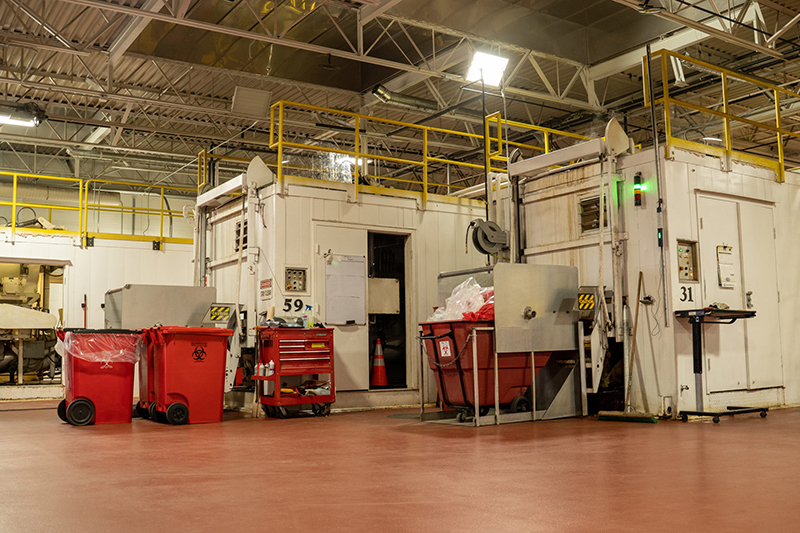
Regional healthcare initiatives involving multi-hospital networks benefit from unified processing centers. Standardizing a centralized medical waste microwave treatment system process and applications simplifies regulatory reporting, unifies biohazardous waste manifest tracking, and streamlines emissions monitoring under regional environmental protection frameworks. A centralized plant also allows operators to integrate heavy-duty automated loading, pre-shredding, and automated bin-washing equipment that would be cost-prohibitive for individual community hospitals.
“Microwave disinfection technology combined with internal mechanical shredding offers a non-incineration solution that reduces waste volume by up to 80% while achieving complete microbial inactivation. For regional waste consortia, centralizing this technology optimizes thermal efficiency and ensures strict adherence to STAATT Level IV criteria without generating hazardous dioxins or furans associated with legacy incineration.”
— Dr. Aris Thorne, Senior Healthcare Environmental Engineering Consultant, Global Environmental Sanitation White Paper.
When Is On-Site Medical Waste Microwave Treatment More Suitable?
Reducing Dependence on External Waste Collection
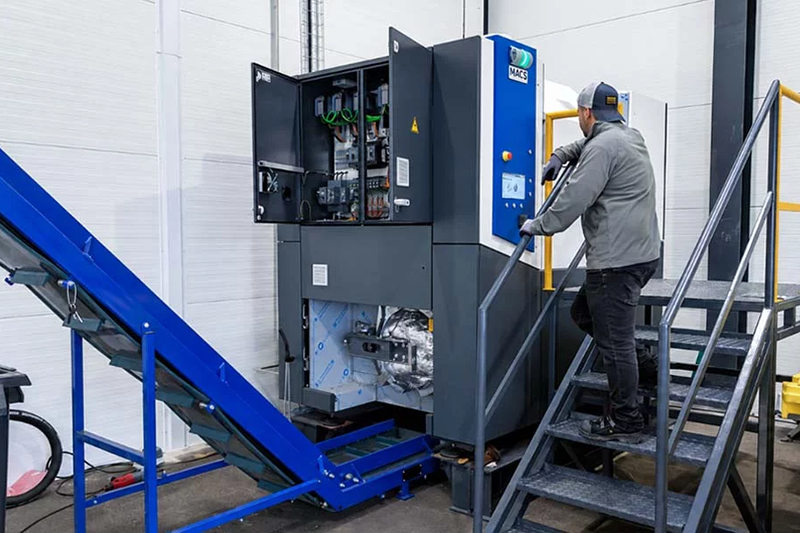
Deploying an on-site medical waste treatment unit grants hospitals direct control over their waste management workflow. Third-party collection services subject healthcare facilities to price volatility, municipal transport strikes, and strict storage duration limitations. The US Centers for Disease Control and Prevention (CDC) guidelines recommend that biohazardous waste stored at room temperature without active refrigeration should be treated within 48 hours to prevent microbial proliferation and volatile odor buildup (Source: CDC, Guidelines for Environmental Infection Control in Health-Care Facilities). On-site medical waste microwave disinfection allows immediate, point-of-generation treatment, turning hazardous infectious waste into unrecognizable, biologically inert municipal solid waste.
Matching Equipment to Local Waste Generation
On-site installations allow procurement officers to select a medical waste microwave sterilizer sized precisely to institutional needs. Acute care hospitals generate an average of 1.5 to 4.5 kg of medical waste per occupied bed per day, with infectious waste comprising approximately 15% to 25% of that total (Source: WHO Healthcare Waste Fact Sheet).
When evaluating advanced on-site technologie de traitement par micro-ondes, buyers must carefully assess key engineering parameters to ensure smooth integration into daily hospital workflows:
- Average vs. Peak Daily Generation: Average daily waste generation versus peak seasonal/epidemic surge volumes (typically requiring a 25% to 35% safety margin in capacity).
- Throughput Dynamics: Batch processing capacity (kg/batch) or continuous processing throughput (kg/hour).
- Duty Cycles: Available operating hours per day (e.g., single-shift 8 hours vs. dual-shift 16 hours) and required treatment frequency.
- Spatial Logistics: Physical installation footprint, ceiling height clearance, and equipment access pathways (including elevator weight ratings and doorway dimensions).
- Utility Connections: Electrical supply infrastructure (voltage, amperage, and peak power kW), clean water supply, drainage capacity, and negative-pressure ventilation requirements.
- Operational Scope: Maintenance clearance zones around magnetron assemblies and dedicated operator staffing ratios.
Keeping Treatment Closer to Waste Generation
In-house processing minimizes the risk of infectious disease transmission during transport through public corridors and municipal highways. Processing infectious waste directly within the facility reduces liability under local environmental protection frameworks. Once processed through a integrated microwave medical waste treatment equipment array—which combines mechanical shredding with 2,450 MHz frequency microwave irradiation—the volume of waste is reduced by 75% to 80%, and its mass is converted into non-hazardous regulated waste eligible for standard municipal landfill disposal or energy-from-waste conversion (Source: International Solid Waste Association ISWA, Alternative Waste Treatment Technologies Report).
How Should Buyers Compare Capacity, Space, and Equipment Configuration?
Compare Actual Processing Capacity
Selecting appropriate medical waste treatment capacity parameters requires distinguishing between theoretical mechanical limits and actual operational throughput. Procurement teams should mandate that equipment vendors disclose:
- Rated Capacity & Test Conditions: The rated throughput (kg/h or kg/batch) under defined density conditions (standard medical waste density averages 100 to 120 kg/m³).
- Throughput Metrics: Clear metrics defining whether processing capacity accounts for total cycle time (including pre-heating, loading, shredding, microwave exposure, cooling, and discharge).
- Cycle Durations: Expected cycle duration and actual net processing throughput under continuous daily operations.
- Waste Composition Parameters: Waste characteristics used to define rated capacity, including moisture content thresholds (ideally 10% to 20% internal moisture for optimal microwave energy absorption).
- Shift Performance: Planned daily operating hours (e.g., 8-hour, 16-hour, or 24-hour continuous run) and surge demand handling capability.
Evaluate the Complete System Configuration
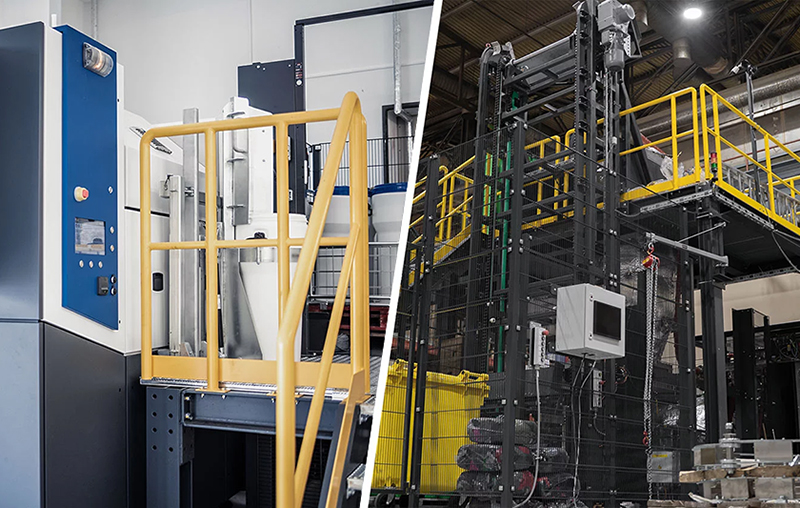
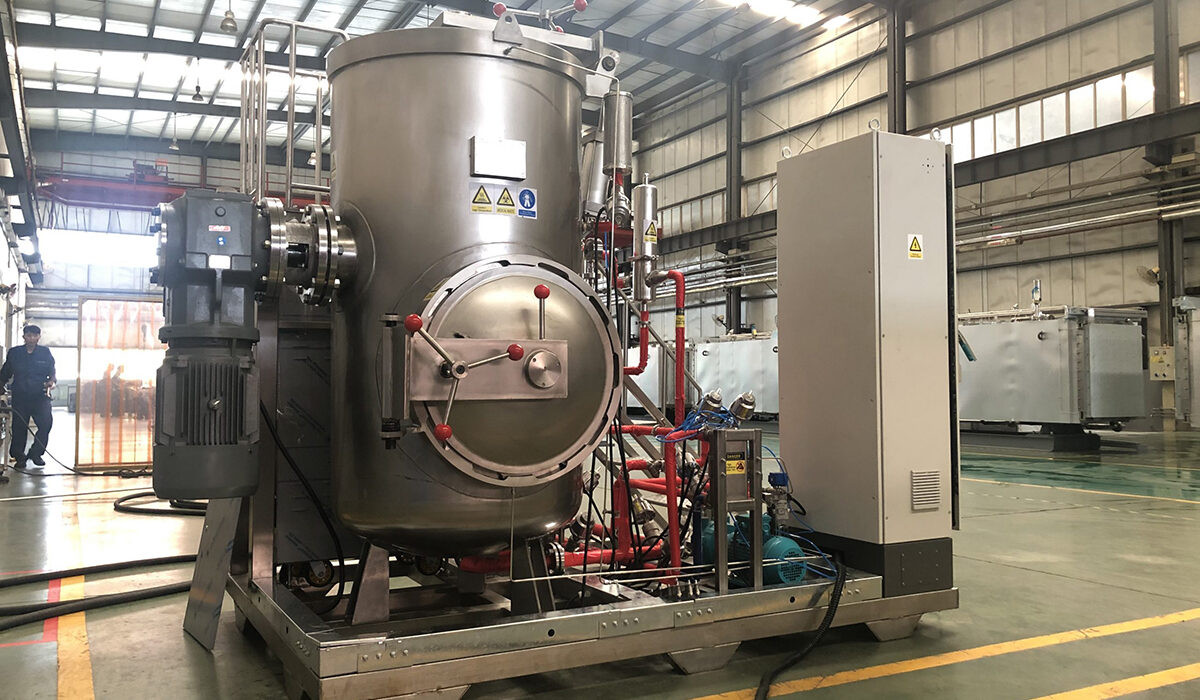
A reliable installation requires seamless integration between mechanical, thermal, and control sub-systems. Understanding the internal engineering components—such as those detailed in our structural guide on the main parts of a medical waste microwave sterilizer—is critical for technical evaluation.
Depending on the core technology selected, buyers must systematically evaluate:
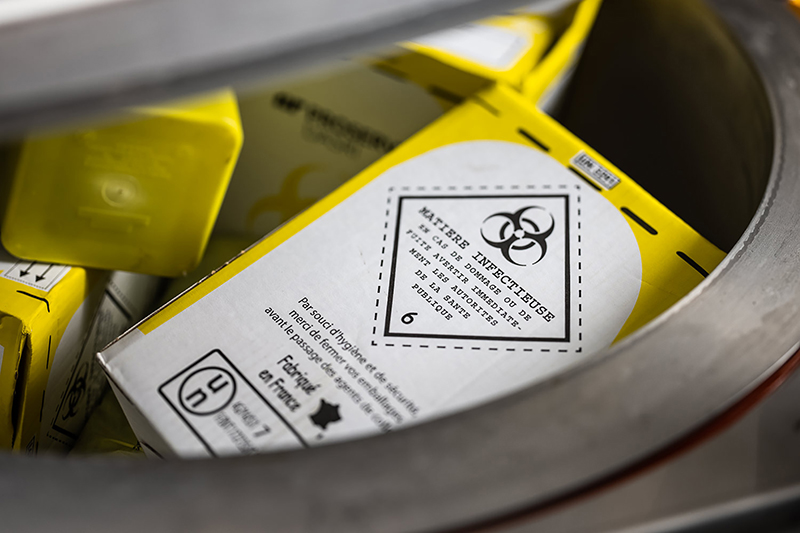
- Waste Feeding & Loading Systems: Automated bin lifters, sealed loading hoppers, and dual-door isolation airlocks to prevent bioaerosol escape.
- Shredding Machinery: Heavy-duty, low-speed, high-torque dual-shaft shredders featuring hardened alloy blades capable of processing sharps, heavy plastics, and fluid bags.
- Microwave Energy & Process Control: Magnetron generator arrays operating at 2,450 MHz ± 50 MHz, wave-guides, and temperature sensor arrays maintaining internal vessel temperatures at 95℃–105℃for minimum hold times of 30 to 45 minutes.
- Steam/Moisture Conditioning: Automated steam injection or moisture atomization units to ensure optimal dielectric heating of dry waste components.
- Discharge & Material Handling: Sealed discharge augers, screw conveyors, and compacted waste collection bins.
- Exhaust & Environmental Controls: HEPA filtration units (rated at 99.97% efficiency for 0.3-micron particles) coupled with activated carbon filtration systems for complete odor and aerosol containment (Source: EN 1822-1 European HEPA Standard).
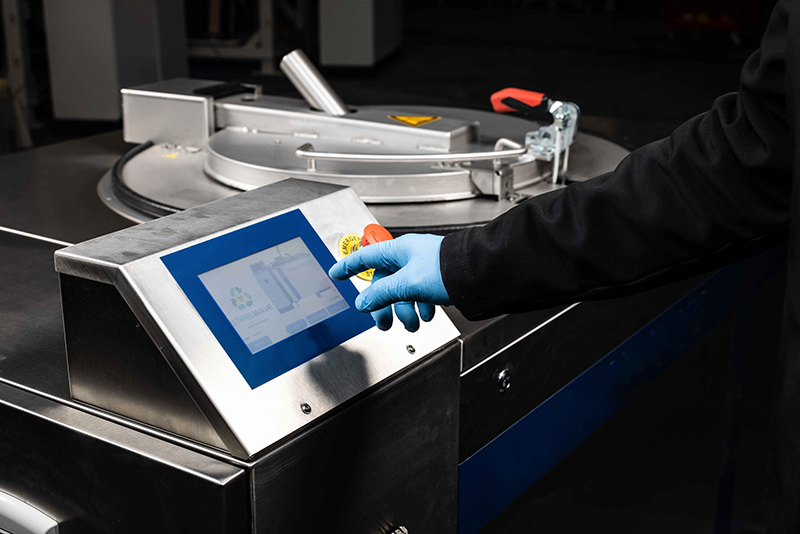
- Monitoring & Data Logging: Real-time PLC controllers with digital data logging for temperature, microwave power output, pressure, and operational cycle validation.
- Safety & Maintenance Interlocks: Emergency stop controls, door interlocks, microwave leakage suppression shields (maintaining radiation levels well below the safety limit of 5 mW/cm² at 5 cm per FDA 21 CFR 1030.10 standard), and accessible service panels.
Check Installation and Supporting Infrastructure
Space allocation and utility readiness directly affect commissioning timelines and capital costs. On-site units typically demand an equipment footprint ranging from 15 m² to 50 m², with overhead clearance of at least 3.5 to 4.5 meters for vertical bin lifters. Centralized plants require operational facilities spanning 500 m² to 2,000+ m², incorporating dedicated waste receiving bays, cold storage rooms maintained below 8℃, and post-treatment storage zones.
Electrical specifications are equally rigorous: on-site units typically require 30 kW to 90 kW of installed power (3-phase, 380V/415V, 50/60 Hz), whereas industrial centralized plants demand high-voltage power supplies exceeding 150 kW to 400 kW (Source: Electrical Installation Guide / IEC 60364).
Centralized vs On-Site Treatment: Which Has the Lower Total Cost?
Evaluating medical waste treatment cost requires analyzing total cost of ownership (TCO) across initial capital expenditures (CapEx) and long-term operational expenditures (OpEx).
| Cost Category | Centralized Treatment | On-Site Treatment |
| Initial investment | Treatment equipment, facility development, civil works, and supporting infrastructure | Equipment purchase, building retrofits, installation, and utility hookups |
| Transport | Collection vehicles, fuel, driver labor, hazardous transport insurance, and logistics planning | Significantly reduced off-site transport requirements for processed waste |
| Labor | Plant management staff, certified operators, collection drivers, and logistics handlers | Local equipment operators and internal facility maintenance personnel |
| Utilities | High-capacity industrial plant electricity, process water, and wastewater treatment | Site electricity, clean water supply, and standard facility drainage |
| Maintenance | Centralized equipment servicing, spare parts inventory, and plant maintenance | On-site preventative maintenance contracts and component replacement |
| Regulatory & validation costs | Regional environmental permits, plant emission testing, and industrial site licensing | Local hospital installation permits, annual bio-validation, and operator certification |
| Residual waste management | Bulk transport and disposal of shredded, disinfected residue in municipal landfills | Management and municipal landfill tipping fees for shredded, inert residue |
To establish an accurate operational financial model, procurement teams should evaluate both options over a 10-year service life horizon across three realistic operational scenarios:
- Low Utilization Scenario (40% Capacity): On-site systems incur higher fixed depreciation costs per kg, but avoid minimum volume penalty fees often imposed by off-site transport contractors. Centralized plants incur significant operational overhead losses due to underutilized plant infrastructure.
- Expected Utilization Scenario (75% Capacity): On-site systems typically achieve operational cost parity with transport services within 24 to 36 months, generating net savings of 20% to 35% over the remaining lifecycle. Centralized facilities achieve optimal per-ton unit economics.
- Growth Scenario (110% Capacity / Surge Demands): On-site systems manage volume surges via secondary operational shifts (extending from 8 to 16 hours/day) without additional capital investment. Centralized networks utilize modular expansion units or process redistribution across facility nodes.
How Can Buyers Select the Right Solution for Their Project?
Evaluating prospective solutions requires matching core project drivers against physical, financial, and regulatory constraints. Before finalizing procurement specifications, technical directors should review structured frameworks on how to evaluate the performance of medical waste microwave equipment.
| Project Situation | Option Worth Evaluating | Main Consideration |
| A regional operator serves multiple hospitals and clinics | Centralized microwave treatment | Combined throughput capacity, optimized collection routes, and plant processing scalability |
| A large healthcare facility generates a consistent volume of compatible waste | On-site microwave treatment | Local treatment capacity, physical footprint, utility integration, and operating schedule |
| Several remote facilities have limited access to treatment services | On-site or distributed treatment | Site feasibility, local regulatory authorization, maintenance support, and backup systems |
| A project expects substantial growth in waste volume | Centralized or modular treatment planning | System expandability, phased capital investment, and future capacity reserves |
| A public procurement project requires a complete treatment facility | Centralized system or integrated solution | Technical specification compliance, turnkey installation scope, and acceptance criteria |
Frequently Asked Questions
Q: Is centralized medical waste microwave treatment more cost-effective than on-site treatment?
Financial effectiveness depends on total waste volume and transport logistics. Centralized treatment achieves lower equipment capital cost per kilogram processed due to continuous high-throughput operations (>500 kg/h). However, when off-site waste transport, specialized refrigerated vehicles, fuel, and regulatory chain-of-custody tracking fees exceed $0.40/kg, installing an on-site medical waste treatment system frequently delivers a lower total cost of ownership with a typical payback period of 2 to 3 years (Source: Healthcare Financial Management Association HFMA).
Q: How do I select the capacity of a medical waste microwave treatment system?
Calculate system capacity by determining total peak daily infectious waste generation (kg/day) and dividing it by planned daily operating hours (e.g., 6 hours of actual running time in an 8-hour shift to allow for loading, warm-up, and daily maintenance). Add a 20% to 30% capacity reserve to accommodate seasonal volume fluctuations or emergency surges. Ensure vendor capacity claims state whether throughput is calculated before or after internal waste shredding and steam conditioning.
Q: Can one centralized microwave treatment facility serve multiple hospitals?
Yes. A centralized medical waste microwave treatment facility is designed to process aggregated biohazardous waste collected from multiple hospitals, outpatient centers, laboratories, and dental clinics. Waste is collected in compliant, sealed containers, transported in approved biohazard vehicles, and processed through high-capacity continuous microwave disinfection lines.
Q: Is on-site medical waste microwave treatment suitable for small hospitals and clinics?
Yes. Modern compact microwave medical waste treatment equipment is available in capacities as small as 20 kg/h to 50 kg/h, requiring less than 15 m² of utility space. These compact units allow small healthcare institutions to eliminate biohazardous waste risks on-site without requiring extensive civil engineering works or specialized high-voltage industrial utility connections.
Q: How Can Buyers Estimate the Required Capacity for a Centralized Medical Waste Microwave Treatment Plant?
To estimate required plant capacity, sum the licensed bed count of all participating regional hospitals, multiply by the average daily infectious waste generation rate per bed (typically 0.5 to 1.2 kg/bed/day for infectious waste streams), add estimated daily volume from regional outpatient clinics, and apply a 1.25 multiplier for 5-year regional growth. Divide this total daily mass by the facility’s target daily operating hours (e.g., 12 to 16 hours) to determine required continuous hourly processing throughput (kg/h).
About BiosafePro
Founded in 2008, BiosafePro is a specialized manufacturer of medical waste microwave treatment systems, medical waste microwave sterilizers, and integrated biohazardous waste processing equipment. Operating under certified ISO 9001:2015 and ISO 13485:2016 quality management frameworks, BiosafePro delivers CE-compliant, environmentally clean non-incineration waste treatment solutions. Our systems are deployed across more than 45 countries, supporting acute care hospitals, regional medical waste treatment plants, and public health infrastructure projects worldwide.
Ready to evaluate the optimal waste treatment solution for your facility or project? Contact BiosafePro’s Engineering Team today for a customized site assessment, capacity calculation, and detailed technical proposal.
References
- World Health Organization (WHO): Safe management of wastes from health-care activities, 2nd Edition.
- ISO 13485:2016: Medical devices — Quality management systems — Requirements for regulatory purposes.
- STAATT (State Territorial Aids Medical Directors Council): Technical Information Report for Medical Waste Disinfection Technologies (Level IV Microbial Inactivation Standards).
- US Environmental Protection Agency (EPA): Title 40 CFR Part 60 — Subpart Ec—Standards of Performance for New Stationary Sources: Hospital/Medical/Infectious Waste Incinerators.
- EN 1822-1:2019: High efficiency air filters (EPA, HEPA and ULPA) — Part 1: Classification, performance testing, marking.
- FDA 21 CFR 1030.10: Performance Standards for Microwave ovens.
- UN Environment Programme (UNEP): Compendium of Technologies for Treatment / Destruction of Healthcare Waste.