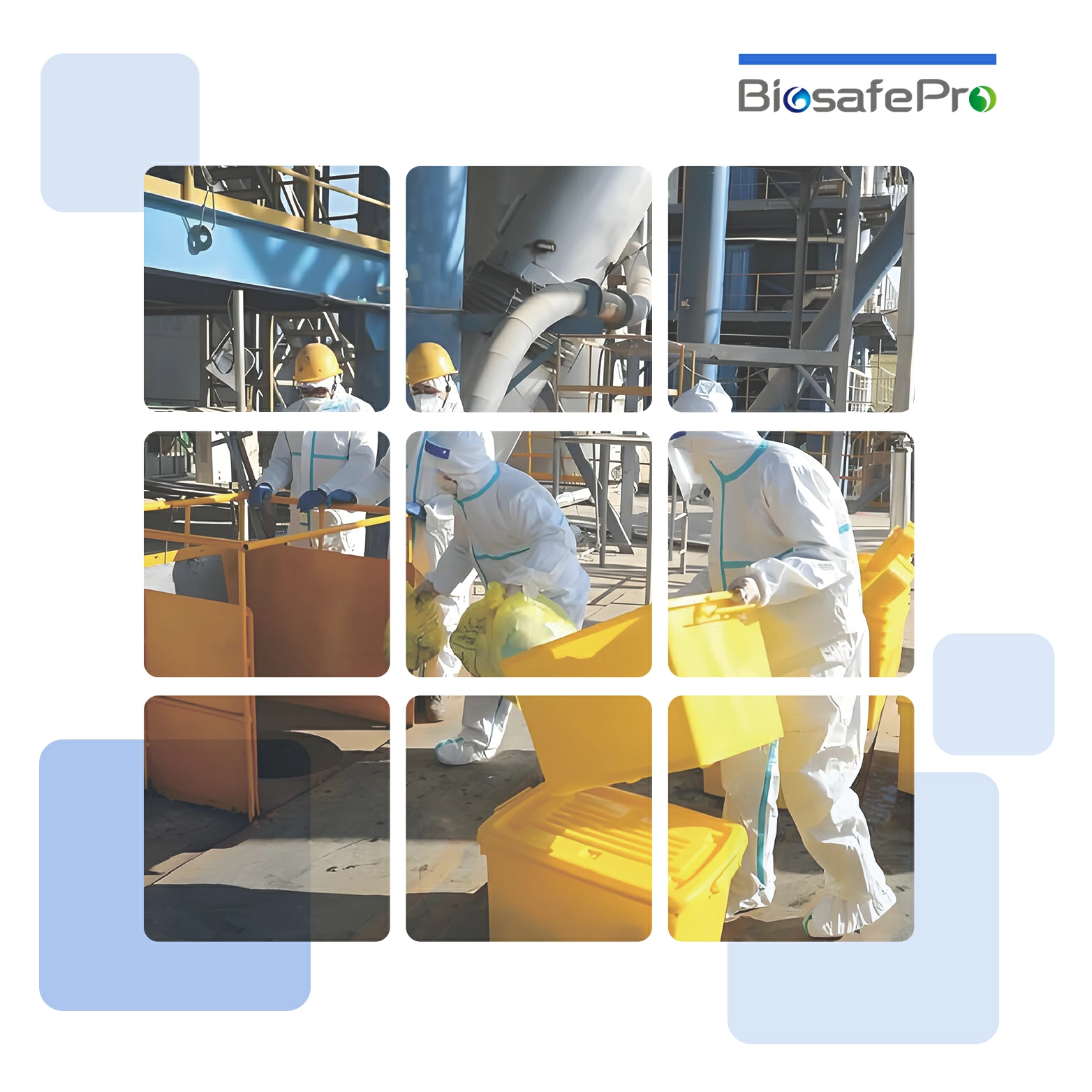


Hospitals have several options for disposing of medical waste, depending on the volume and type generated. Some hospitals have both on-site and off-site disposal options. However, before waste is transported away from the generator’s property, it must first be treated in order to reduce or remove the infectious potential.
Incineration and autoclaving (also known as steam sterilization) are the two primary options for pre-treatment of or destruction in hospitals. Each has its pros and cons. The type of medical waste will determine which option is right for you.

Waste Treatment: Autoclave versus Incineration
Incineration and autoclaving are two common methods for disposing of medical waste generated in hospitals.
Incineration is the process of burning medical waste under controlled conditions.
Some hospital has on-site technology and equipment for incineration. Some don’t. The volume of medical waste that is transported to a landfill, or other disposal site by a company that removes medical waste can be reduced. This can save thousands of dollars.
Pre-treatment reduces the volume of medical waste that is sent to landfills as non-infectious waste or decontaminated waste. It also removes or reduces any potentially infectious material found in a variety medical waste streams generated by hospitals. Certain types of waste may be required to be incinerated off-site by state regulations. Some states do not allow incineration depending on the volume due to pollution and air quality concerns.
Steam is used to sterilize medical waste.
The autoclave is a closed chamber system which uses steam or heat to kill microorganisms and sterilize certain types of medical waste. In hospital environments, autoclaving is used to sterilize medical equipment and tools. Sharps are also commonly used.
The autoclave will expose and treat medical waste at extremely high temperatures depending on its size and the amount that needs to be sterilized. Some hospitals have autoclaves while others do not. The size of hospital autoclaves can range from 100 liters to more than 4,000 liters.
There are a variety of other medical waste treatment options that can be applied to certain categories of medical waste, such as:
- Chemical– Non-incinerated chemical treatments for medical wastes are limited to liquids and chemicals, especially those generated in laboratory environments.
- Microwaving is also known as a treatment used to disinfect infectious wastes and sharps waste.
- Thermal – Used for infectious wastes and sharps, but not recommended for pathological or hazardous waste.
Hospital Waste Segregation
Be aware of the laws in your state on medical waste disposal and segregation, both on and off site. Biosafepro is here to help you with healthcare waste management and clarification.
The Environmental Protection Agency provides a variety of fact sheets about hospital, medical and infectious waste incinerators. The focus is on reducing pollutants and optimizing efficiency, while also ensuring emissions. The EPA, for example, has strict guidelines on adherence to Section 129 of the Clean Air Act and solid waste combustion guidelines. It also has implementation plans for hospitals.
The EPA provides guidelines on emissions standards and hazardous waste incinerators.
The EPA has recommended a cradle to grave system for hazardous waste management, from the point where it is generated to its final disposal or dispensation. This cycle covers not only the segregation and transportation of hazardous waste but also treatment, disposal, and recycling options.
What about the clinical waste?
Many healthcare professionals use the term clinical waste, but are surprised to learn that it has no specific meaning. Clinical waste is not interchangeable with regulated medical waste. It is often used colloquially to describe any waste that comes from a medical setting. However, the term clinical waste does not appear in the United States’ standard waste management vocabulary.
Generators to Blame for Cradle to Grave Approach
Hazardous waste generators are subject to specific regulations. There are industry specific details on very small quantity genertos (VSQs), Small Quantity Generators (SQGs), or Large Quantity generators.
These regulations are not only a matter for ethical and moral responsibility, but they are also law! The penalties for non-compliance are severe.
According to the EPA for example, a small-quantity generator must comply not only with hazardous waste manifest requirements but also manage their hazardous waste containers or tanks based on 40 CFR SS262.16 b)(2)(3).
Some exceptions apply. The volume of hazardous waste that can be accumulated by a large quantity generator is not limited, but must be managed according to 40 CFR SS262.17(a)(1)-(4). The hazardous waste manifest and land disposal restrictions also apply.
The Resource Conservation and Recovery Act is a federal program that all states must comply with. Healthcare waste generators need to be aware of the fact that state regulations and categories may differ from those set forth by the federal government, and they are often stricter.
Cost-Effective Hospital Waste Management Solutions
Biosafepro offers solutions for hospital-based healthcare waste segregation and disposal, including:
- Sharps disposal
- Pathological waste disposal
- Hazardous waste disposal in accordance with the RCRA guidelines
- Trace Chemotherapy Waste and Bulk Chemotherapy Disposal
- Waste disposal of pharmaceuticals (non-hazardous, RCRA hazardous)
- Waste optimization can save money and increase workplace safety while reducing waste.
- Waste Audits and customized education programs for facilities
Hospital Waste Compliance will help you save money and protect your employees while promoting a healthy environment. We have partnered with leading clinical brands in the US, including Stanford University, Rush University, and Advent Health. This has helped us navigate the complex hospital waste management process and achieve safety, cost, and environmental results. Contact Biosafepro for all of your healthcare waste disposal concerns.