


By BiosafePro Editorial Team | Biomedical Waste Management Specialists
With an extensive background in clinical equipment procurement, biohazardous containment logistics, and international regulatory compliance, BiosafePro provides authoritative solutions for hospitals, public health entities, and medical distributors globally.
أ مركبة نقل النفايات الطبية is a specialized transport unit engineered to safely move hazardous, biohazardous, and infectious bio-waste from healthcare generation and intermediate storage points to off-site processing or disposal facilities.
Unlike conventional logistics transport, a medical waste truck is a mobile bio-containment system designed to satisfy strict international public health guidelines, preventing environmental contamination and occupational exposure during intermediate transit.
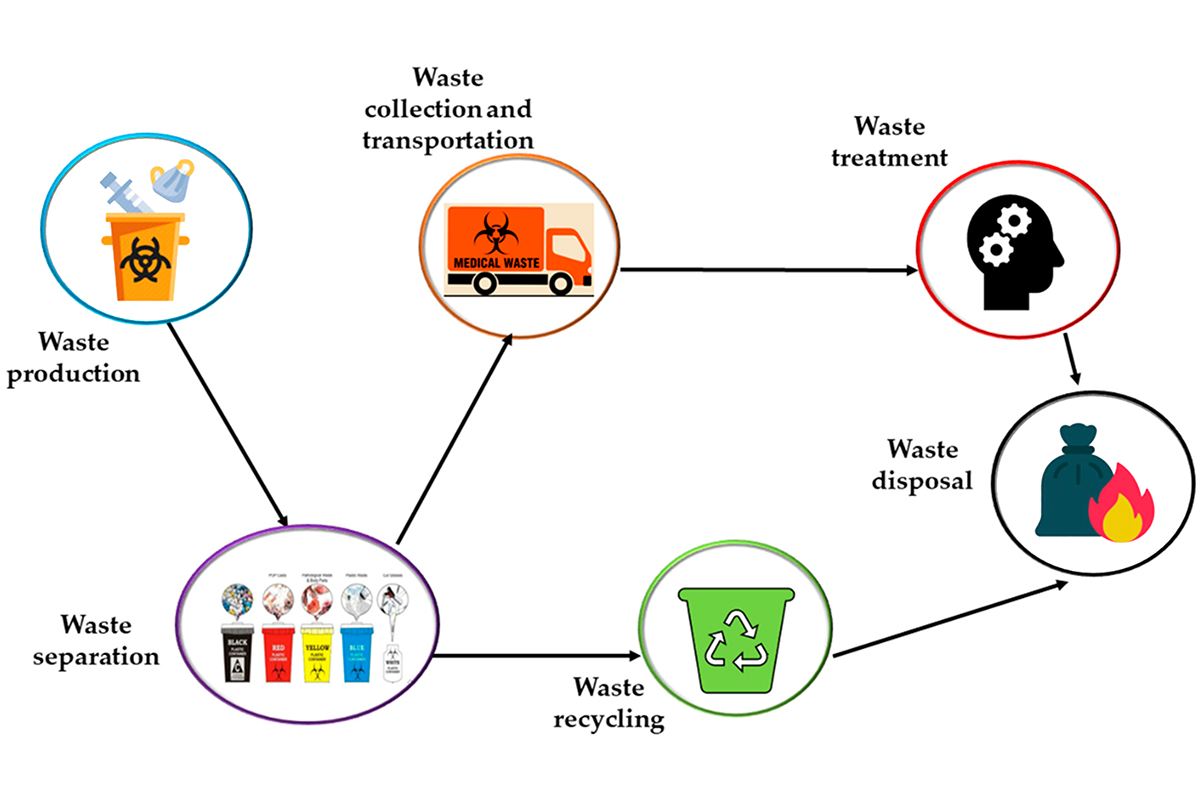
Within a complete healthcare waste management system, the transfer stage bridges internal hospital collection and regional high-capacity processing. It occupies a critical position in the operational lifecycle:
Collection → Storage → Transfer → Treatment → Final Disposal
Without a dedicated, compliant transfer link, the integrity of the entire medical waste management system breaks down, posing severe regulatory, environmental, and biosecurity risks.
Medical Waste Does Not Go Directly from Collection to Treatment
In real-world hospital operations, infectious refuse rarely moves straight from the patient bedside to an incinerator or autoclave. Healthcare waste management inside a hospital or clinic operates on a synchronized schedule designed to isolate hazardous materials as quickly as possible.
Every day, medical facilities generate tons of biohazardous waste, sharps, pathological remains, and pharmaceutical residues. According to medical waste statistics from the World Health Organization (WHO), roughly 15% of the total waste generated by healthcare activities is considered hazardous material that may be infectious, toxic, or radioactive (WHO Healthcare Waste Fact Sheet).
- Daily Generation: Wards, ICUs, laboratories, and operating rooms produce waste continuously.
- Internal Collection: Housekeeping staff collect waste using color-coded bags, rigid sharps containers, and leak-proof collection carts.
- Temporary Storage: Collected waste is stored in a designated, temperature-controlled, secure waste storage room within the hospital complex to await pickup.
- Centralized Transfer: The transfer vehicle collects bulk volume from one or multiple medical facilities.
- Treatment & Disposal: The vehicle transports the payload to a regional centralized facility for rendering, autoclaving, or incineration.
The transfer stage is where a medical waste transfer vehicle becomes essential. It is the crucial physical conduit that converts isolated internal waste streams into an organized, off-site logistics chain.
Where Does the Medical Waste Transfer Vehicle Fit?
To understand why this unit is indispensable, it helps to analyze its exact functional placement within the physical infrastructure of healthcare waste management:
Medical Waste Collection
↓
Bins / Bags / Collection Carts
↓
تخزين النفايات
↓
مركبة نقل النفايات الطبية
↓
Treatment Equipment
↓
التخلص النهائي
The vehicle does not replace collection equipment or treatment equipment. Its role is to connect them.
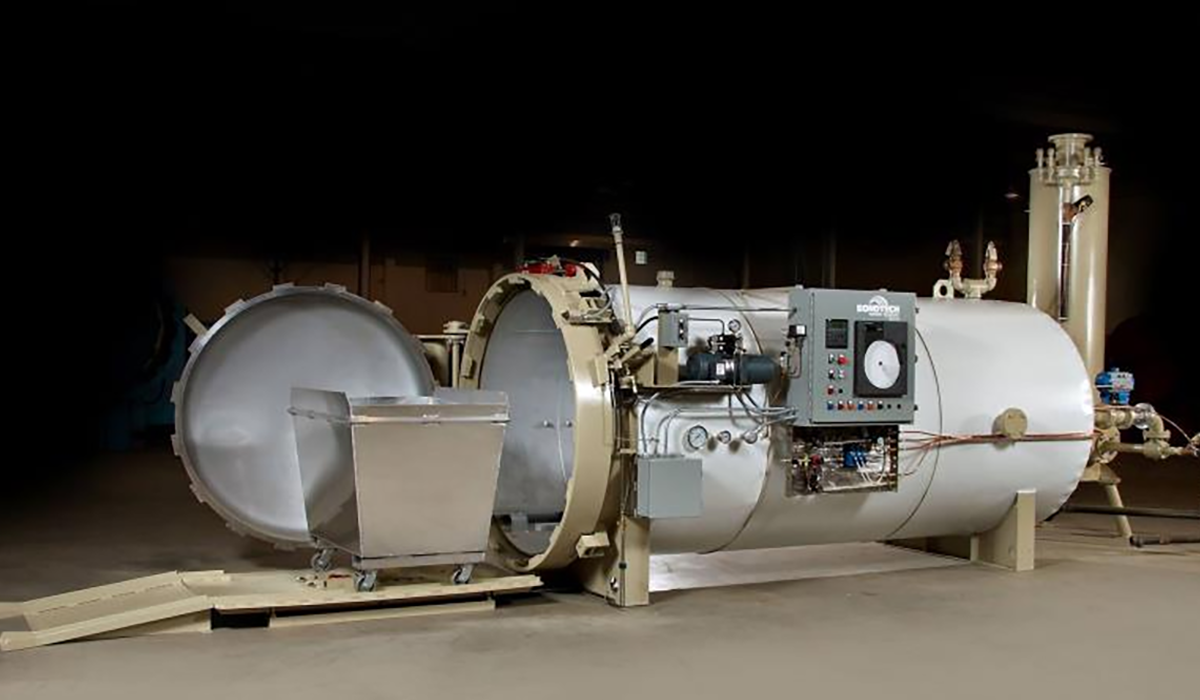
While collection carts handle intra-facility movement (hallways and elevators) and medical waste treatment equipment (autoclaves, incinerators, shredders) neutralizes pathogens, the medical waste transport vehicle handles the external, public-road logistics link.
In modern urban and regional health networks, treatment plants are rarely built inside hospital grounds due to zoning laws, emissions constraints, and space limitations. Therefore, safe medical waste transportation over public infrastructure is mandatory to keep hospitals functioning without exceeding onsite storage limits or violating local medical waste regulations.
For a detailed breakdown of how these specialized vehicles function within clinical environments, explore our guide on what is a medical waste transfer vehicle and why it is essential for healthcare facilities.
What Happens If the Transportation Step Is Poorly Planned?
When procurement teams or medical waste companies evaluate a project, they often focus heavily on treatment technologies (autoclaves versus incinerators) while overlooking transport logistics. Poorly planned medical waste collection and transfer logistics introduce operational bottlenecks, budget overruns, and severe legal liabilities.
Key Procurement & Operational Pain Points
- Too many collection trips: Utilizing under-capacity vehicles forces operators to make multiple small runs per day, causing excessive fuel consumption, vehicle wear, and inflated labor costs.
- Insufficient vehicle capacity: Unexpected waste spikes lead to hazardous waste overflowing from hospital storage rooms while waiting for pickup.
- Difficult loading and unloading: Vehicles lacking automated hydraulic tail-lifts or ergonomic floor heights slow down operations and increase worker fatigue and injury risks.
- Leakage during transportation: Substandard cargo boxes lacking sealed containment or liquid retention bunds can drop contaminated fluids onto public roads, triggering catastrophic health violations.
- Difficult cleaning after use: Cargo bays designed without smooth, non-porous stainless steel interior walls or floor drains accumulate organic matter, creating persistent odors and dangerous bacterial harbors.
- Poor compatibility with waste containers: If the vehicle cargo dimensions do not align with standardized wheelie bins, roll-off containers, or hazardous waste boxes, manual handling increases significantly.
- Inefficient connection with the treatment facility: Long loading delays at the receiving dock disrupt the operational throughput of the medical waste disposal plant.
The problem is not always the vehicle itself. In many projects, the real problem is a mismatch between the vehicle and the waste management workflow.
What Should a Medical Waste Transfer Vehicle Match?
A medical waste truck cannot be purchased as an off-the-shelf commercial van without custom technical alignment. To ensure smooth operations, technical specifications must precisely match project realities:
| Project Requirement | Vehicle Consideration |
| Daily waste volume | Vehicle capacity: Payload volume ($m^3$) and weight rating (Tonnage) calculated against peak daily generation rates. |
| Multiple collection points | Loading efficiency: Automated tail-lifts, side doors, and optimized cargo configurations for fast multi-stop pickups. |
| Long-distance transportation | Vehicle configuration: Chassis durability, engine power, cab ergonomics, and integrated refrigeration units for long haul journeys. |
| Different waste containers | Container compatibility: Interior dimensions matched to standard 120L/240L/660L/770L wheelie bins, rigid boxes, or bulk totes. |
| Frequent cleaning | Easy-to-clean cargo area: Hermetically sealed, seamless stainless-steel or fiberglass interiors with integrated wash-down drainage ports. |
| Centralized treatment | Transportation capacity & route: Scheduling algorithms aligned with processing plant operating hours and tipping platform designs. |
| Local regulations | Identification & compliance requirements: UN hazard signage, GPS tracking, temperature logging, and regional transit compliance (UN Recommendations on the Transport of Dangerous Goods). |
To review specific vehicle specifications, interior lining options, and refrigeration capabilities, read our technical breakdown on medical waste transfer vehicles explained: functions, features, and applications.
Medical Waste Management Is a System, Not a Single Product
To achieve true biological safety and economic sustainability, decision-makers must view healthcare waste management as an integrated ecosystem where every hardware component relies on the adjacent link:
- Collection Link: Color-coded hazardous waste bags, puncture-proof sharps boxes, and heavy-duty hospital transport carts isolate waste at the point of origin.
- Storage Link: Temperature-controlled, lockable, and bio-secure waste holding stations maintain containment prior to off-site transport.
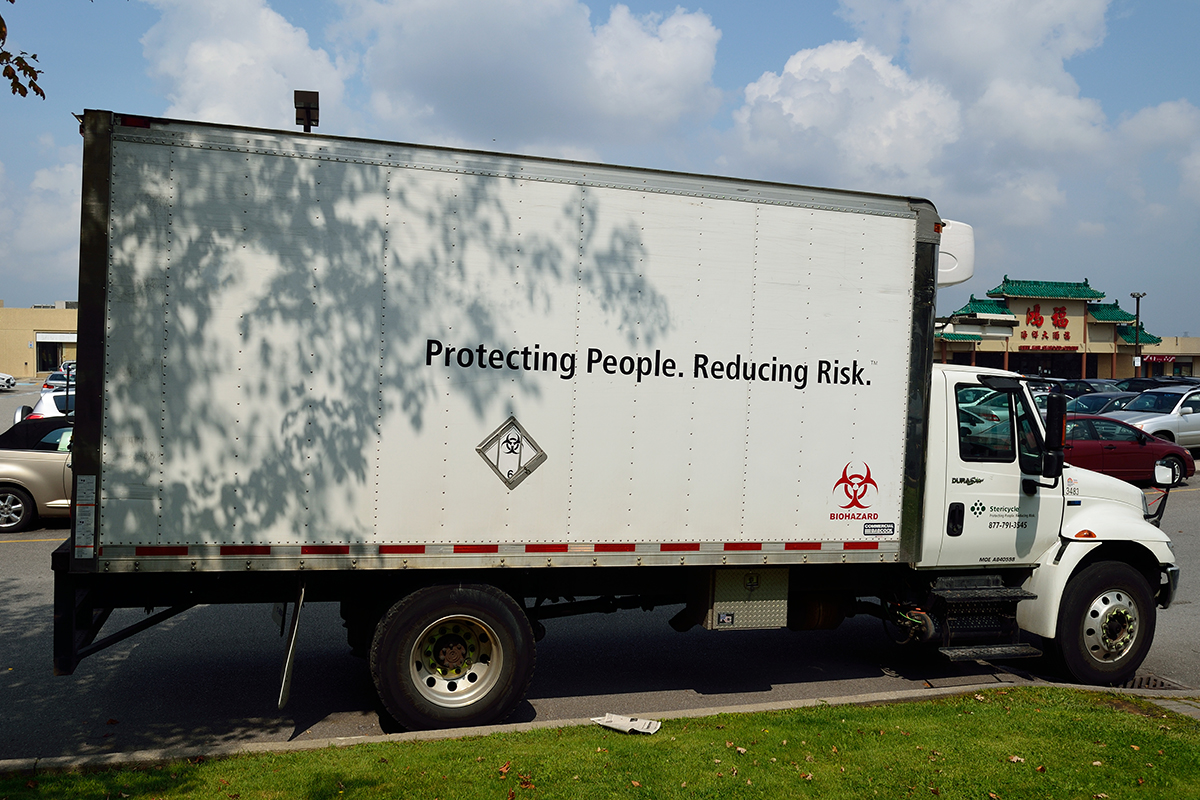
- Transportation Link: The medical waste transfer vehicle acts as the secure mobile bridge, maintaining cold-chain conditions (typically below 8°C–10°C for long hauls) and leak-proof containment across public roadways.
- Treatment Link: High-capacity autoclaves, microwave disinfection units, or medical waste incinerators neutralize bio-burdens and pathogens to non-infectious levels.
- Final Disposal Link: Shredders reduce waste volume for final tipping into municipal sanitary landfills or ash recycling units.
Medical Waste Transfer Vehicle = Transportation Link
Isolating any single piece of medical waste management equipment without considering the overall workflow leads to systemic failure. A high-throughput treatment plant is useless if the transfer fleet cannot deliver waste fast enough, and an advanced collection system fails if waste spoils in transit due to un-refrigerated transport.
Choosing the Vehicle Based on the Project
When preparing tenders, hospital expansions, or regional waste management bids, avoid generic procurement checklists.
Before Ordering a Medical Waste Transfer Vehicle, Confirm These 6 Points:
- How much medical waste is generated daily?
Calculate both average daily volume and maximum surge capacity across all serviced facilities.
- How many collection points are involved?
Determine whether the truck will service a single mega-hospital or run a multi-stop route across dozens of urban clinics.
- How far is the treatment facility?
Transport distances over 1–2 hours generally necessitate active refrigeration units to stop bacterial growth and odor release during transit.
- What containers are being used?
Verify dimensions of bins, pallets, or biohazard boxes to ensure maximum volumetric loading efficiency inside the cargo box.
- How frequently will the vehicle operate?
Continuous 24/7 operating schedules require heavy-duty commercial chassis and dual-redundant cooling systems.
- What local transportation requirements apply?
Verify regional hazardous material transit laws, vehicle identification plating, GPS tracking requirements, and emergency spill-kit mandates.
Key Takeaway: A vehicle should be specified based on the workflow, not simply on its advertised capacity.
Medical Waste Transfer Vehicle + Treatment Equipment: Building a Complete Solution
For hospital authorities, EPC contractors, and medical equipment distributors, procuring medical waste management equipment piece-by-piece from isolated vendors creates severe integration risks.
When building or upgrading a medical waste disposal infrastructure, matching equipment specifications across the entire chain ensures seamless operational efficiency:
- Collection & Storage Equipment: Color-coded bins, bio-containment boxes, and hospital storage room infrastructure aligned with transfer loading dimensions.
- Medical Waste Transfer Vehicles: Custom-fitted cargo bodies with hydraulic lifters, refrigeration systems, UV disinfection lamps, and liquid-retention basins.
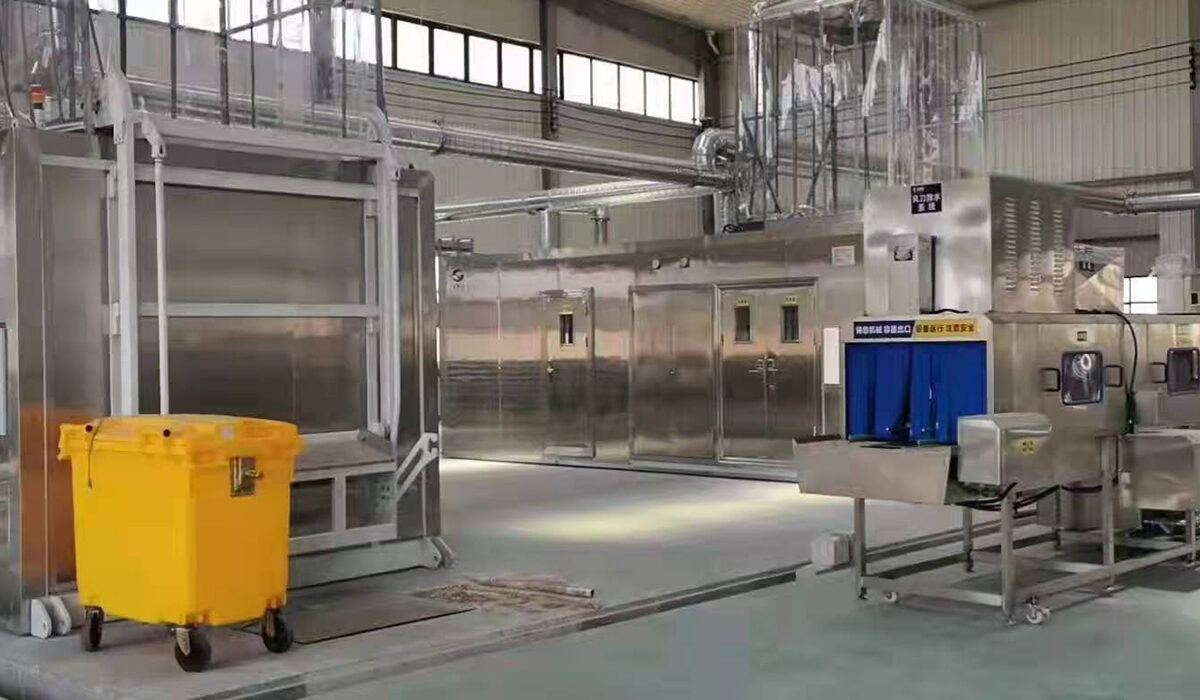
- Medical Waste Treatment Equipment: Autoclaves with integrated shredders, microwave disinfection systems, and heavy-duty incinerators engineered to match incoming vehicle payload batches.
- Multi-Product Sourcing: Complete clinical and waste infrastructure procurement managed under a single unified engineering oversight.
To understand how internal hospital waste streams originate and how facilities optimize their internal logistics, see our comprehensive analysis on managing hospital medical waste.
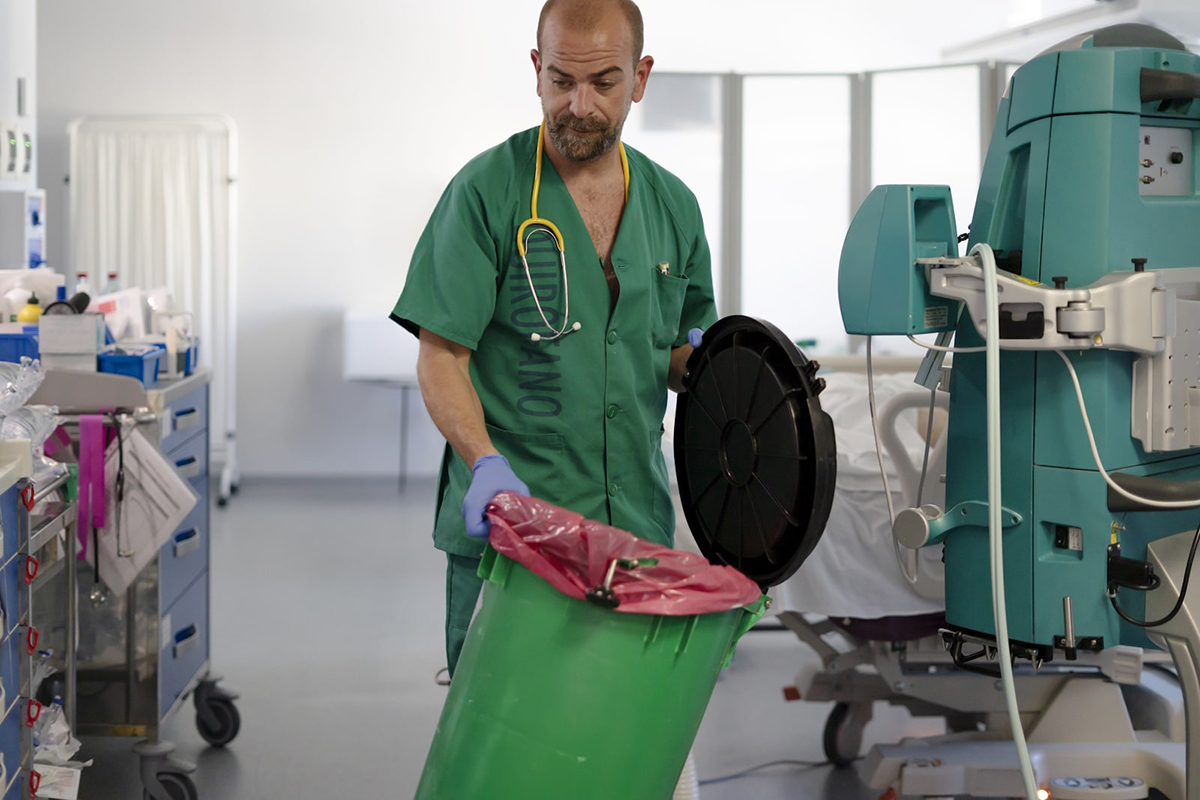
Why Buy Medical Waste Management Equipment Through One Supply Channel?
For global healthcare distributors, B2B procurement managers, and government tender board members, consolidating medical waste management procurement under a single specialized partner like BiosafePro provides distinct strategic and commercial advantages.
Specification Matching
A single supply partner guarantees that internal collection carts fit the vehicle’s hydraulic lifter mechanisms, and that vehicle unloading dimensions perfectly match the tipping hoppers of treatment autoclaves or incinerators.
Multi-Product Procurement
Eliminate the administrative burden and shipping friction of managing separate contracts with chassis manufacturers, refrigeration builders, bin producers, and treatment equipment vendors.
OEM & Project Customization
BiosafePro provides tailored OEM configurations designed around local market demands, including custom right-hand/left-hand drive chassis, specific climate-control refrigeration units, custom paint/livery, and specialized compliance signage required by national environmental protection agencies.
Comprehensive Tender Support
B2B procurement and public hospital tenders require exhaustive documentation. BiosafePro supports distributors and contractors with complete technical datasheets, CAD dimensional drawings, CE/ISO compliance certificates, regulatory documentation, and competitive factory-direct price structuring.
Reliable Distributor Supply
Establish a long-term supply chain relationship backed by spare parts availability, engineering support, and scalable manufacturing output designed to support regional healthcare distribution networks.
BiosafePro supports medical waste management projects globally with product sourcing, equipment matching, OEM cooperation, tender support, and distributor supply. Contact our technical engineering team today to configure a complete, compliant system for your next healthcare project.
Frequently Asked Questions (FAQ)
What is the difference between a medical waste transfer vehicle and a regular truck?
A medical waste transfer vehicle is specifically engineered for hazardous bio-containment. Unlike a standard cargo truck, it features a fully sealed, leak-proof cargo compartment constructed from non-porous, corrosion-resistant materials (such as 304/316 stainless steel or heavy-duty fiberglass). It incorporates automated UV-C disinfection lamps, temperature-controlled refrigeration systems to stop waste degradation, liquid retention drainage basins, safety containment locks, and official international hazard signage compliant with regional bio-transportation laws.
How do I choose the right medical waste transfer vehicle capacity?
Selecting vehicle capacity requires analyzing four variables: total daily waste volume (m3 or Tonnage), geographic distance to the medical waste treatment facility, route frequency, and the physical footprint of the waste containers used (e.g., standard 240L or 660L wheelie bins). It is best practice to select a payload capacity that accommodates peak generation periods (such as seasonal clinical surges) while allowing ergonomic loading without exceeding gross vehicle weight ratings (GVWR).
What equipment is needed for a complete medical waste management system?
A fully compliant medical waste management system requires equipment across five operational stages:
- Collection: Color-coded waste bins, puncture-proof sharps boxes, and biohazard transport carts.
- Storage: Refrigerated, secure holding room equipment and containment bins.
- Transportation: Dedicated, leak-proof medical waste transfer vehicles equipped with temperature regulation.
- Treatment: Medical waste treatment equipment such as high-temperature autoclaves, microwave shredding systems, or incinerators.
- Final Disposal: Heavy-duty shredders, ash compactors, and sanitary landfill disposal systems.
Can a supplier provide both medical waste transportation and treatment equipment?
Yes. Turnkey healthcare partners like BiosafePro supply integrated solutions spanning collection carts, specialized medical waste transfer vehicles, intermediate storage hardware, and high-capacity medical waste treatment equipment (autoclaves and incinerators). Sourcing through a single unified channel ensures that physical hardware interfaces match perfectly, simplifying procurement, warranty support, and technical deployment.