


By BiosafePro Editorial Team | Biomedical Waste Management Specialists
With an extensive background in clinical equipment procurement, biohazardous containment logistics, and international regulatory compliance, BiosafePro provides authoritative solutions for hospitals, public health entities, and medical distributors globally.
مقدمة
When medical waste is transported from points of generation—such as hospitals, clinics, diagnostic laboratories, and emergency care centers—to centralized off-site treatment facilities, the transportation vehicle serves as far more than a simple logistics asset. In the realm of biohazard containment, a medical waste transport vehicle acts as a mobile primary and secondary barrier designed to prevent environmental contamination, eliminate pathogen dissemination, protect public health, and maintain strict compliance with international hazardous transport regulations.
Transporting biohazardous materials presents unique physical, biological, and regulatory challenges. Vehicles must simultaneously ensure fully enclosed transportation, liquid leak resistance, easy interior disinfection, optimal loading efficiency, and appropriate payload capacity across varied municipal and regional collection routes.
This is precisely why hospital procurement officers, clinical laboratory managers, waste management contractors, and medical distributors evaluating a medical waste truck cannot base their purchasing decisions solely on chassis size or gross vehicle weight rating (GVWR). A thorough procurement evaluation must analyze whether the vehicle’s structural engineering fits biohazardous containment standards, whether its technical configurations align with local environmental and transport regulations, and whether the manufacturing partner can supply medical waste transfer vehicle solutions tailored to specific project tenders.
This guide provides an authoritative overview of medical waste transfer vehicles—explaining their core operational functions, essential technical features, key healthcare applications, practical buyer evaluation frameworks, and tender quotation requirements. For a broader foundational overview of transport safety equipment, you can also consult our comprehensive guide on what is a medical waste transfer vehicle and why it is essential for healthcare facilities.
What Does a Medical Waste Vehicle Do?
In modern municipal and commercial healthcare logistics, a specialized medical waste transport vehicle operates across three core functional stages: collection, secure transportation, and centralized transfer.
Medical Waste Collection
For regional waste management operators, sizing and configuring a medical waste truck requires integrating vehicle engineering with logistics data. Fleet planners must evaluate vehicle capacity against key operational metrics:
- Number of collection points: Balancing high-stop urban routes against long-haul rural facility networks.
- Waste generation volume: Accounting for seasonal healthcare fluctuations and emergency volume spikes.
- Collection frequency: Aligning bin capacities with required turnover rates to prevent waste decay at clinical sites.
- Average transportation distance: Determining necessary fuel range, engine efficiency, and driver ergonomics.
- Daily operating hours: Engineering cargo compartments and chassis components for continuous, heavy-duty duty cycles.
As highlighted in global healthcare environmental studies, efficient collection routing directly reduces fuel consumption and minimizes biological degradation risk during transit (see research on medical waste management logistics in the Journal of Cleaner Production).
Secure Transportation
During the transport phase, the vehicle functions as a mobile containment unit designed to mitigate biological, chemical, and physical hazards:
- Biological Control: Maintaining temperature stability inside the cargo box. Under international guidelines (such as WHO’s Safe Management of Wastes from Health-Care Activities, 2nd Edition), infectious waste stored or transported for more than 48 to 72 hours should be refrigerated at temperatures between 3°C and 8°C to arrest bacterial proliferation and odor formation.
- Physical Control: Utilizing heavy-duty interior tie-down tracks (E-track systems) and cargo barrier netting to secure rolling waste containers and pallets, preventing shifting, tipping, or container rupture during sudden braking or cornering.
- Chemical & Liquid Control: Incorporating a liquid-tight floor pan with an integrated sump basin to collect any leachate from compromised waste bags.
Centralized Transfer
At the disposal or treatment facility, the medical waste vehicle completes the custody transfer chain. Facilitating clean, controlled transfer involves:
- Standardized Dock Heights: Aligning vehicle bed height with standard hospital and treatment plant loading ramps.
- Automated Self-Disinfection: Activating built-in ultraviolet-C (UV-C) sterilization lamps or chemical misting systems immediately after cargo discharge to sanitize the interior body before returning to public roads.
- Logistics Compliance Tracking: Integrating GPS tracking, electronic seal verification, and digital weigh-scale integration to document chain of custody for regulatory agencies.
To learn more about the broader ecosystem of specialized service providers operating these fleets, see our industry review of top medical waste disposal companies.
Key Features to Look for in a Medical Waste Transfer Vehicle
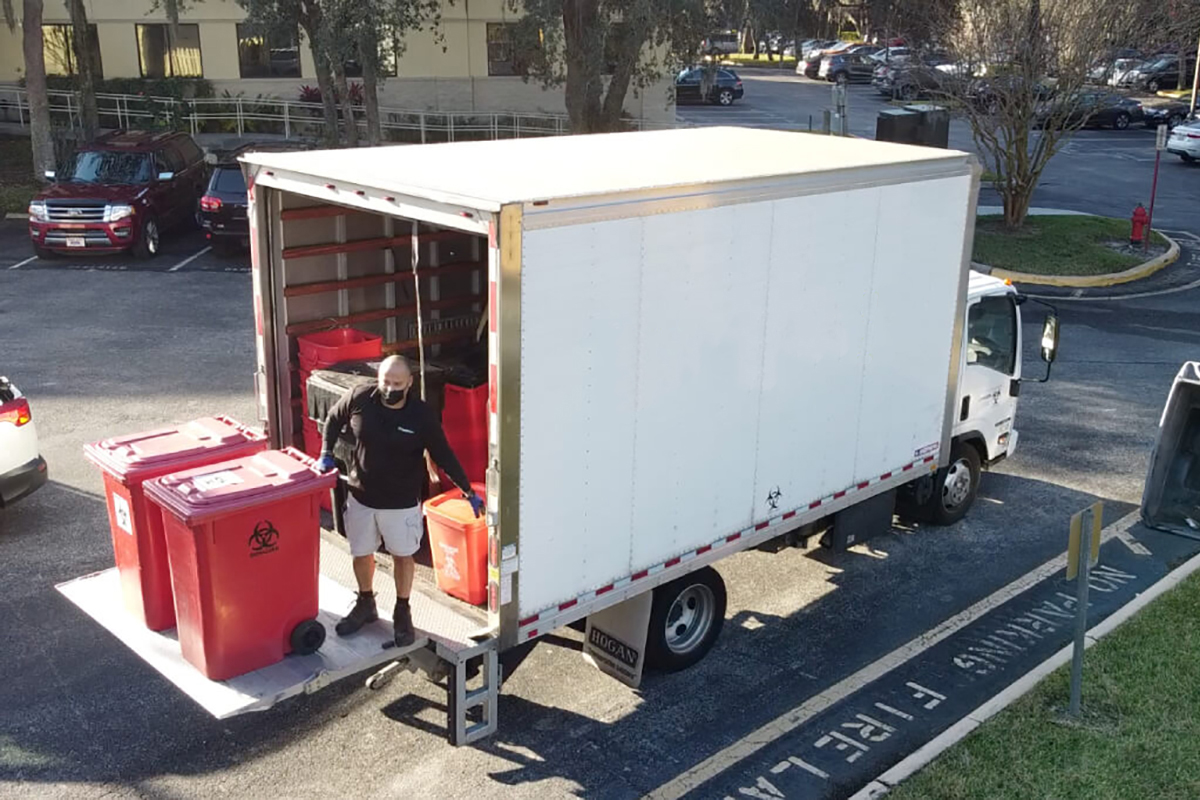
Selecting an optimal medical waste transport vehicle requires detailed technical evaluation of cargo body engineering, sanitation systems, loading arrangements, and chassis payload ratings.
Enclosed Cargo Compartment
The cargo box forms the core safety barrier of any medical waste truck. Buyers must rigorously inspect the following construction details:
- Cargo body construction: High-density polyurethane foam sandwich panels clad with exterior fiberglass-reinforced plastic (FRP) or color-coated steel offer excellent thermal insulation and structural rigidity.
- Door sealing: Heavy-duty, multi-lip EPDM gasket seals around all rear and side doors prevent air leakage and water ingress.
- Internal surface design: Seamless, weld-sealed internal walls made of 304 stainless steel or marine-grade aluminum prevent dirt accumulation and withstand aggressive disinfectants.
- Cleaning accessibility: Rounded interior floor-to-wall corners (coved corners) eliminate 90-degree crevices where liquid or debris could collect.
- Loading and unloading configuration: Dual rear doors opening to 270 degrees with safety latch locks ensure unobstructed access at loading docks.
Leak-Resistant Interior
Liquid spills from punctured blood bags or unsealed IV containers represent a primary hazard during transit. Essential leak-prevention configurations include:
- Sealed floor structure: A continuous, fully welded stainless steel or checkered aluminum floor pan with a raised perimeter lip (typically 100mm to 150mm high) creates a liquid-retaining tub.
- Easy-to-clean internal surfaces: Non-porous, corrosion-resistant metals that do not degrade when exposed to chlorine bleach, quaternary ammonium compounds, or peracetic acid.
- Drainage and sump arrangement: A recessed collection sump at the rear of the cargo bed fitted with a secure ball-valve discharge port, allowing operators to drain and sanitize liquid runoff at designated treatment wash bays.
- Protection against liquid leakage: Compliance with US DOT 49 CFR § 173.197 and international hazardous transport guidelines mandating secondary liquid containment.
Easy Loading and Unloading
Loading efficiency directly impacts driver safety and route productivity. Procurement officers should evaluate:
- Rear loading vs. side loading: Rear doors are ideal for dock loading and hydraulic tailgate operations; side doors offer convenient access for smaller clinic stops without opening the entire compartment.
- Door dimensions: Clear width and height clearance matching standard 240-liter, 360-liter, or 660-liter plastic waste wheelie bins.
- Container compatibility: Internal dimensions optimized for standard ISO pallets, roll cages, or modular plastic biohazard tote boxes.
- Manual or assisted loading arrangements: Integrated hydraulic tail lifts (500 kg to 1500 kg rating) with roll-stop gates to enable a single operator to load heavy waste containers safely.
Appropriate Vehicle Capacity
Vehicle payload and cargo volume must match operational density:
- Light-Duty Vehicles (1.5 – 3.5 tons GVWR): Compact box vans optimized for urban clinic routes, tight streets, and low-clearance underground hospital bays.
- Medium-Duty Trucks (4.5 – 10 tons GVWR): The industry workhorse for regional hospital networks, offering 15 to 30 m³ of cargo volume.
- Heavy-Duty Trucks & Semi-Trailers (12 – 26+ tons GVWR): Specialized large-volume transfer vehicles designed for long-distance transit between regional transfer stations and centralized incinerators.
Easy-to-Clean Cargo Area
Sanitation is mandatory after every unloading cycle. When comparing manufacturers, buyers should request specifications on:
- Interior material durability: Resistance to chemical corrosion, impact, and high-pressure hot water washing (up to 80°C / 100 bar).
- Floor structure: Anti-slip textured surfaces (checkered plate or quartz-embedded resin) that maintain grip when wet while remaining easy to wash down.
- Wall construction: Flush-mounted internal light fixtures, flush-fit cargo rails, and smooth surface joints.
- Disinfection systems: Integrated automatic disinfectant spray systems or overhead UV-C sterilization lamps controlled from the driver cab.
- Maintenance requirements: Ease of replacing door seals, drain valves, and interior liner panels over a 5 to 10-year service life.
Medical Waste Transfer Vehicle Applications
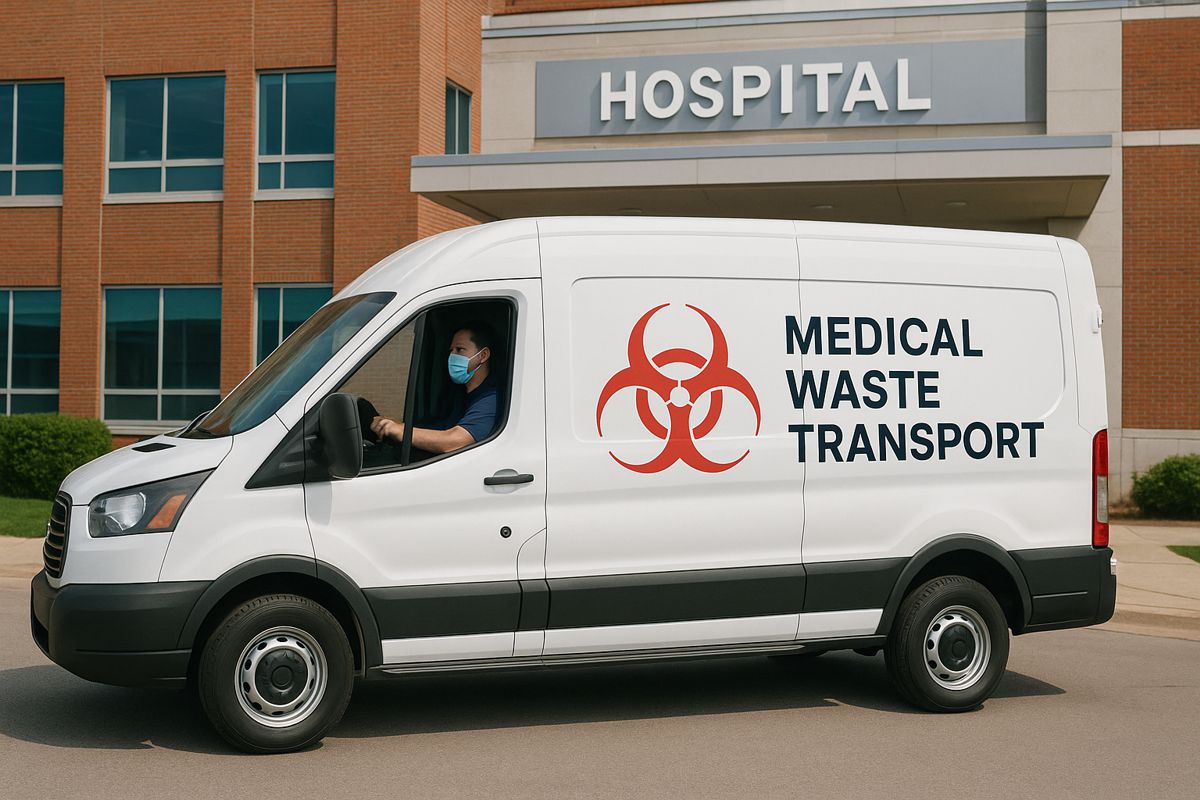
Different healthcare environments present distinct logistics requirements. A well-engineered medical waste transport vehicle fleet must adapt to these varying operational contexts.
Hospitals
Large acute care hospitals generate substantial daily quantities of infectious waste, pathological tissues, surgical sharps, and pharmaceutical residues. For hospital operations:
- Vehicles must interface with formal hospital loading bays and service yards.
- Cargo compartments are optimized for heavy 660L/770L wheelie bins or large roll cages.
- Rapid hydraulic loading and high payload capacities are required to minimize dock congestion.
For a detailed analysis of hospital-specific waste management requirements, explore our dedicated resource on hospital medical waste management.
Clinics and Small Healthcare Facilities
Outpatient clinics, dental offices, blood donation centers, and cosmetic surgery centers generate lower waste volumes per stop but require extensive multi-stop collection networks:
- Compact light-duty medical waste trucks or maneuverable box vans are essential for navigating tight urban streets and commercial parking garages.
- Side-access doors enable rapid pickup of smaller sharps containers and biohazard bags without exposing the main cargo area to sunlight or rain.
Laboratories
Diagnostic, biological research, and forensic laboratories produce hazardous biohazards, infectious cultures, and chemical waste streams:
- Secure internal partition walls allow segregation of infectious waste from hazardous chemical or pathological waste.
- Puncture-resistant interior wall liners prevent damage from rigid waste drums and chemical containers.
- Precise climate control prevents sample degradation or odor buildup during transport.
Centralized Medical Waste Treatment Projects
Commercial waste management contractors operating centralized treatment plants (incineration, autoclave, or microwave facilities) require dedicated heavy-duty fleets when they supply medical waste transfer vehicle fleets for regional government concessions.
Key project parameters include:
- Number of healthcare facilities served: Scaling fleet size to cover 50 to 500+ regional healthcare facilities.
- Daily collection volume: Managing aggregated daily throughputs from 5 tons to over 50 tons per day.
- Route distance: Covering long transport radii (100 km to 500+ km) connecting suburban facilities to remote treatment sites.
- Treatment facility capacity: Synchronizing vehicle arrival schedules with plant processing rates.
- Fleet configuration: Mix of light collection vans for city centers and heavy-duty refrigerated trucks for trunk line transport.
How to Choose the Right Medical Waste Vehicle
A practical evaluation framework covers five crucial operational parameters before finalizing vehicle specifications:
1. Waste Volume
Calculating peak daily waste generation prevents under-sizing or over-specifying vehicle capacity.
Required Payload (kg) = Daily Collection Volume (Liters) × Average Waste Density (kg/L) × Safety Factor (1.2)
- Infectious uncompacted waste average density: Approximately 0.12to 18 kg/L.
- Compaction note: Hazardous medical waste must never be mechanically compacted during transit due to the risk of rupturing bags, atomizing pathogens, or spraying infectious fluids.
2. Transportation Distance
- Short Hauls (< 50 km): Standard insulated box trucks with passive temperature control or standard UV disinfection are generally sufficient.
- Long Hauls (> 100 km) or Warm Climates: Integrated mechanical refrigeration units (maintaining 2°C to 8°C) are essential to comply with WHO guidelines, prevent waste putrefaction, and minimize bio-gas accumulation inside the sealed cargo body.
3. Collection Points
- High-density urban routes with 20+ daily clinic stops require agile vehicles with low step-in heights, side loading doors, and automated reversing cameras/sensors.
- Rural hospital networks connecting distant facilities require durable commercial chassis with heavy-duty suspension, high ground clearance, and robust diesel or electric powertrains.
4. Waste Packaging
Vehicle internal dimensions must directly correspond to the packaging method used across the facility network:
- Wheelie Bins (240L / 360L / 660L): Ensure clear internal height allows bin stacking (if using internal shelf systems) and sufficient floor area for bin securing locks.
- Cardboard Biohazard Boxes / Rigid Totes: Verify interior width accommodates standard pallet footprints (e.g., 1200mm × 1000mm Euro/ISO pallets) without wasted side gaps.
5. Local Requirements
Ensure total alignment with local health, environmental, and transportation ministry regulations:
- HAZMAT Licensing: Driver cab accommodations for hazardous materials documentation, fire extinguishers, emergency spill kits, and personal protective equipment (PPE) storage.
- Vehicle Labeling & Signage: Exterior panel space pre-configured for internationally mandated biohazard warning symbols, UN numbers (e.g., UN 3291), and emergency contact lettering.
- Emissions & Urban Access: Compliance with local vehicle emissions standards (e.g., Euro 6 / EPA Tier 4) or green-fleet mandates (electric/hybrid powertrains) for urban zero-emission zones.
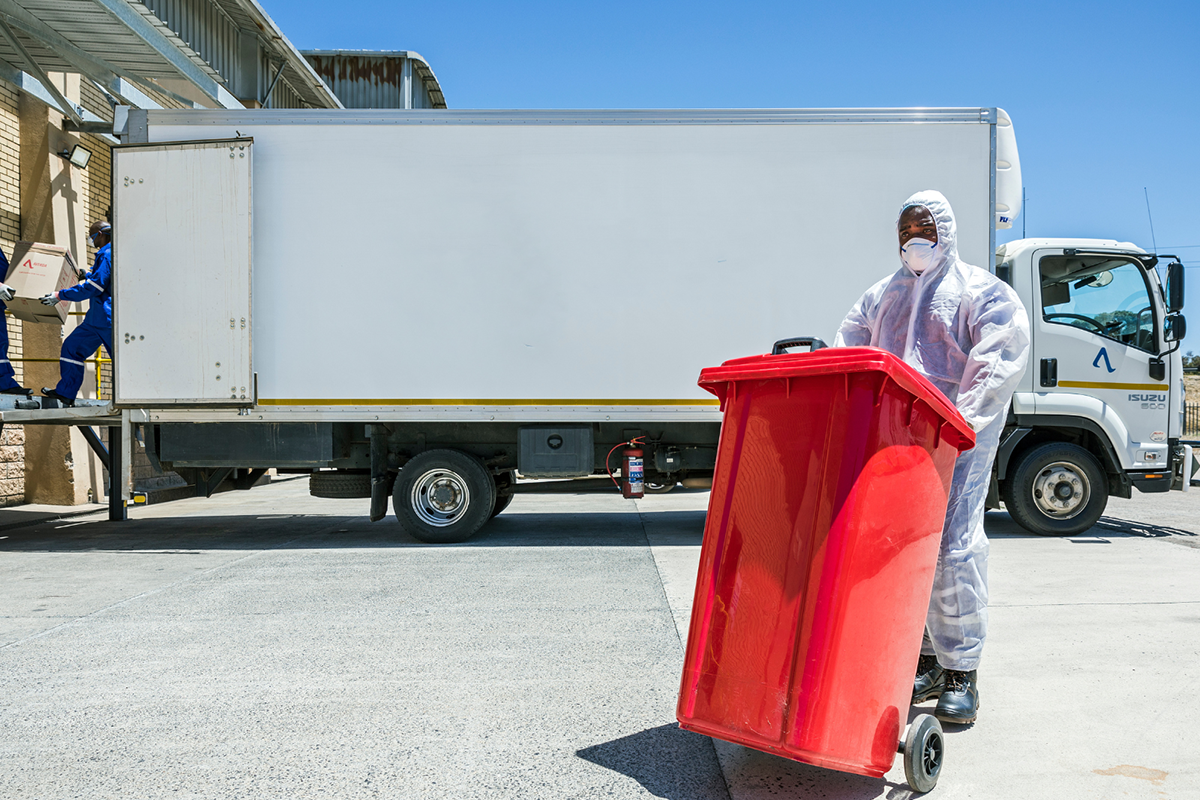
What Should Be Included in a Medical Waste Vehicle Quotation?
When sourcing a medical waste transport vehicle, hospital procurement committees and equipment distributors should require transparent, itemized technical quotations. A comprehensive technical specification avoids hidden costs and ensures structural compliance.
| Quotation Section | Essential Technical Parameters & Line Items |
| Vehicle Information | • Chassis brand/model (e.g., Isuzu, IVECO, Dongfeng, MAN) • Engine displacement, horsepower, and emissions rating • Drive configuration (4×2, 6×2, electric powertrain) • Overall vehicle dimensions (L × W × H) & Gross Vehicle Weight Rating (GVWR) • Net payload capacity (kg) & usable cargo volume (m³) |
| Cargo Body | • External dimensions & internal usable dimensions • Wall structural composition (Fiberglass / Polyurethane insulation density) • Interior lining material (e.g., 304 Stainless Steel, fully welded seam seal) • Floor construction (Anti-slip stainless steel pan with perimeter lip) • Door configuration (270° rear double doors, single side door, EPDM gasket seals) |
| Optional Equipment | • Refrigeration unit brand/capacity (Temp range: -5°C to +10°C) • Disinfection system (Automatic chemical mist sprayer / Overhead UV-C lamps) • Liquid collection sump with drain valve & tank capacity • Hand-washing station (Clean water tank, soap dispenser, waste catch bin) • Driver cab real-time temperature monitor, recorder, and GPS telematics |
| Commercial Information | • Minimum Order Quantity (MOQ) & production lead time • Structural & chassis warranty terms (e.g., 2 years / 100,000 km) • Spare parts kit inclusion (door seals, UV bulbs, filter elements) • Shipping options (Ro-Ro, Flat Rack, or Containerized knock-down delivery) • OEM customization options (paint color, logo branding, multi-language warning labels) |
Requiring suppliers to present quotations structured across these detailed categories allows procurement managers to perform rigorous side-by-side technical and commercial comparisons.
Medical Waste Vehicle Supply for Distributors and Tender Projects
As a specialized global manufacturer, we provide end-to-end supply chain and engineering support for international medical distributors, waste management contractors, and public sector health authorities.
OEM & Customization
We collaborate directly with healthcare clients and vehicle upfitters to customize body engineering according to local regulatory and operational requirements:
- Tailoring cargo dimensions to fit local chassis availability (Isuzu, Hino, Mercedes-Benz, Dongfeng, etc.).
- Applying custom exterior livery, biohazard graphics, and multi-language safety messaging.
- Engineering specialized internal shelving, bin hydraulic lifts, or multi-temperature dual-compartment layouts.
Distributor Supply
For medical equipment distributors expanding their biohazard management portfolios, we offer reliable supply channels:
- Competitive volume tier pricing for multi-unit fleet orders.
- Dedicated spare parts packages to support local aftermarket maintenance.
- Factory training and technical support for local dealer service teams.
Tender Support
Government healthcare tenders demand precise technical compliance and extensive documentation. We support partners bidding on public tenders by providing complete documentation packages:
- Comprehensive technical datasheets and CAD dimensional drawings.
- Factory Quality Management Certifications (ISO 9001, ISO 14001, ISO 13485).
- Detailed compliance cross-reference tables matching tender specifications.
- Certificate of Origin (COO) and international transport safety compliance documentation.
Project-Based Sourcing
Beyond vehicles, major medical waste concessions require integrated facility equipment. We deliver complete turnkey solution sourcing—combining a supply medical waste transfer vehicle fleet with on-site treatment systems, including medical waste incinerators, heavy-duty autoclaves, puncture-resistant sharps containers, and certified biohazard collection bags.
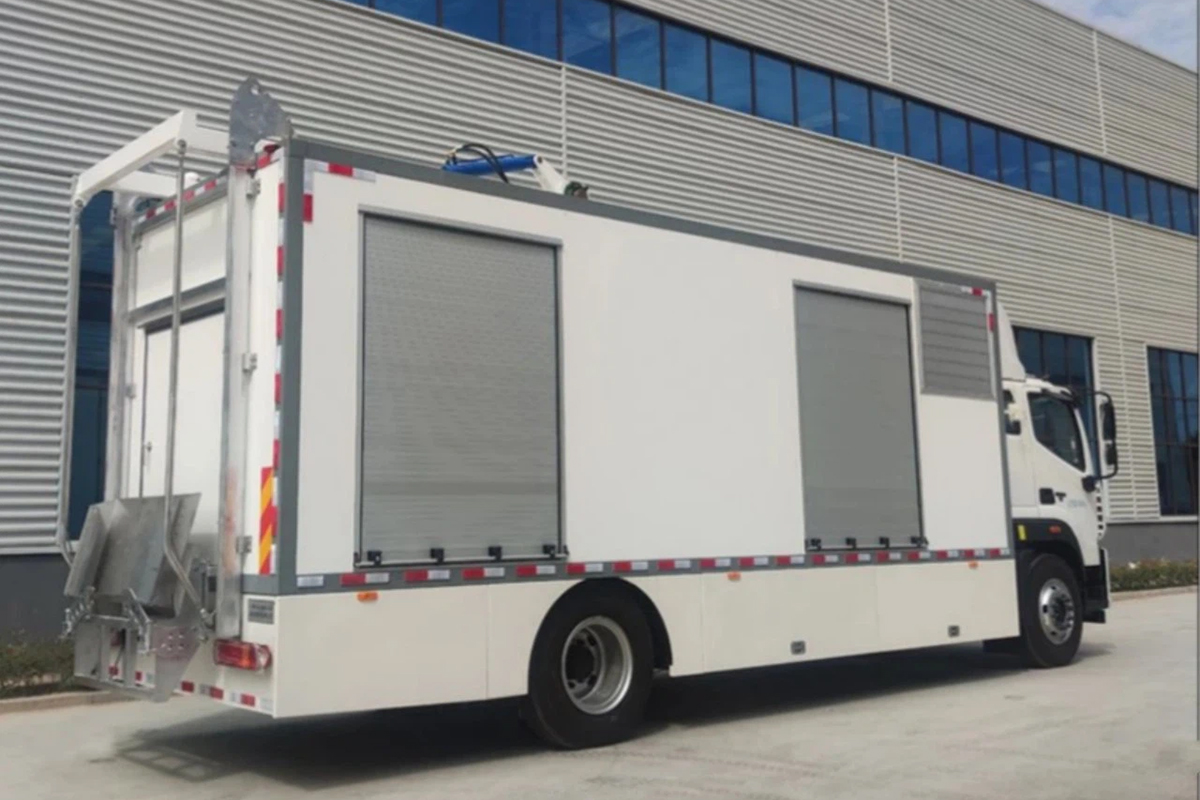
FAQ About Medical Waste Transfer Vehicles
Does a medical waste transfer vehicle need refrigeration?
Refrigeration is required when waste is transported over long distances, during high ambient summer temperatures, or when stored inside the vehicle for more than 48 hours prior to treatment. International standards (including WHO guidelines) recommend maintaining internal cargo temperatures between 3°C and 8°C to prevent bacterial growth, viral stabilization, odor generation, and gas buildup from decomposing organic waste. For short urban collection runs with daily processing, an insulated cargo body without active refrigeration may suffice subject to local regulations.
What capacity medical waste vehicle do I need?
Required vehicle capacity depends on your route’s daily waste generation volume, waste density (typically 0.12–0.18 kg/L for uncompacted infectious waste), number of collection points, and maximum allowable operating hours. Light-duty vans (1.5 to 3.5 tons GVWR) suit city clinics; medium-duty trucks (4.5 to 10 tons GVWR) serve regional hospital networks; heavy-duty trucks (12+ tons GVWR) manage centralized long-distance transport.
Can a medical waste transfer vehicle be customized?
Yes. We specialize in fully customized vehicle upfitting. Custom options include specific chassis brand matching, hydraulic tail lift integration, built-in UV-C or mist disinfection systems, liquid retention sumps, customized internal tie-down rails, split-compartment designs, and private-label exterior branding.
Can medical waste vehicles be supplied for government tenders?
Absoutely. We frequently assist global distributors and contractors participating in public health and municipal waste management tenders. We supply comprehensive bid documentation—including technical engineering drawings, ISO quality certificates, line-item specifications, and commercial compliance statements.
Can distributors order medical waste transfer vehicles in bulk?
Yes. We offer bulk manufacturing contracts, distributor pricing tiers, scheduled production reservations, and complete logistics support (including containerized SKD/CKD shipping or complete vehicle Ro-Ro transport) for distributors building local sales inventory or fulfilling large fleet contracts.