
Every healthcare facility uses a sharps container, but not all containers are created equal. The difference between a properly selected unit and a generic one is measured in injuries prevented, compliance assured, and waste managed efficiently.
The core problem is misclassification. Many procurement teams treat all sharps disposal containers as interchangeable commodities. In reality, the sharps bin you choose for an outpatient phlebotomy station should differ fundamentally from one used in a busy operating room or a home healthcare bag. Without understanding the classification system—by mounting style, by reuse cycle, by opening design, and by capacity—facilities risk overpaying, underperforming, or violating safety standards established by organizations such as the World Health Organization (WHO), the European Committee for Standardization (CEN), and national health authorities.
This article breaks down the types, sizes, and applications of medical sharps containers using a clear, evidence-based framework. The goal is to help you match the container to the clinical reality—not the other way around. For a broader perspective on the full waste management chain, refer to Medical Waste Collection Solutions from Bag to Final Disposal.
1. Types of Sharps Containers: Classification by Design and Use Cycle
Sharps container types can be classified along several independent axes. Understanding each axis allows for precise specification.
Classification by Mounting Method
The first and most visible distinction is how the container is deployed.
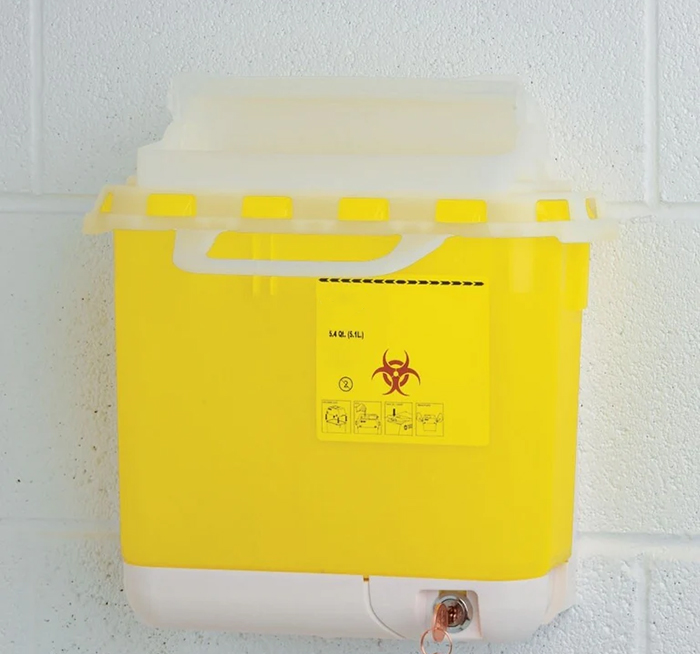
Wall Mounted Sharps Containers
These units are permanently or semi-permanently affixed to vertical surfaces using brackets or integrated mounting plates. They are the standard in fixed clinical locations—exam rooms, procedure rooms, nursing stations.
- Advantage: Stable, predictable location; reduces handling of a partially filled container; ergonomic when placed at 52–56 inches from the floor as recommended by international ergonomic guidelines.
- Trade-off: Requires installation hardware; cannot be moved easily if workflow changes.
- Clinical consequence: In ORs where sterile fields shift, a wall mounted sharps container that is too far from the scrub sink forces surgeons to walk with exposed sharps—a documented cause of injury in retrospective analyses.
Portable Sharps Containers
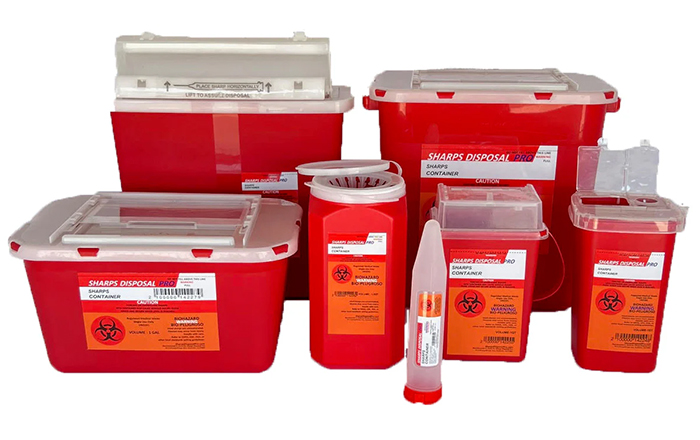
These units are designed to be carried or wheeled to the point of use. They are essential for emergency response, home healthcare, and mobile clinics.
- Advantage: Brings disposal capacity directly to the procedure.
- Trade-off: Smaller capacity (typically 0.5–2 gallons); must be secured against tipping; requires secondary containment for transport per UN 3291 standards for infectious substances (adopted by most countries under the UN Model Regulations).
- Clinical consequence: A portable sharps container that does not have a locking lid capable of withstanding a vehicle rollover can spill contents during ambulance transport, exposing both patient and crew. WHO guidelines for safe sharps disposal emphasize the need for leakproof transport designs.
Classification by Use Cycle: Disposable vs. Reusable
This is the most consequential procurement decision for many facilities.
Disposable Sharps Containers
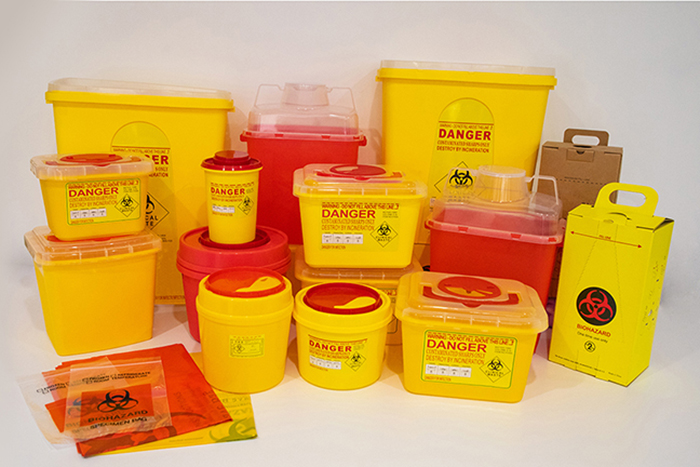
These units are used once, sealed, and sent for final disposal—typically incineration or autoclaving. The disposable sharps container is the most common type globally.
- Best for: Facilities with high contamination risk (chemotherapy, infectious disease), low-volume settings, and any location where return logistics for reusable containers are impractical.
- Clinical consequence: Using a disposable container beyond its designed capacity leads to overfilling. The puncture-resistant walls are only validated for single use; reusing a disposable unit voids its safety certification under international standards such as ISO 23907.
Reusable Sharps Containers
These containers are collected, emptied, decontaminated, and returned to service. Reusable sharps containers require an industrial washer-disinfector validated to achieve a ≥4-log reduction in microbial load, as recommended by international infection control bodies such as the International Society for Infectious Diseases (ISID).
- Best for: High-volume, stable workflow settings (large hospitals, dialysis centers) with an established reprocessing program.
- Clinical consequence: A reusable container that returns to the floor with visible residue or biofilm contamination becomes a vector for cross-infection. Facilities without validated cleaning protocols should not adopt this model.
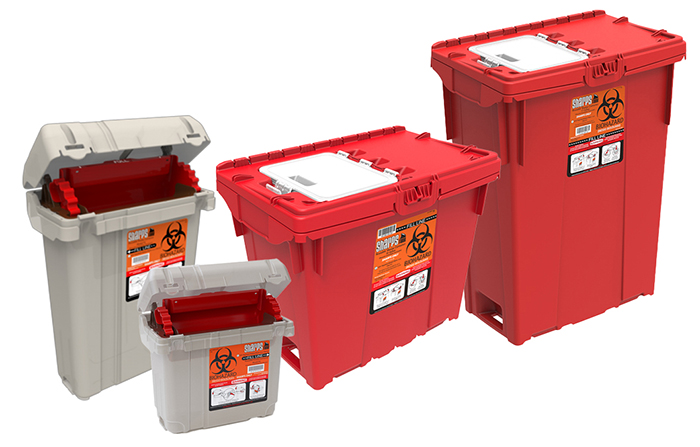
2. Sharps Container Sizes: Matching Capacity to Clinical Volume
Sharps container sizes are typically expressed in gallons or liters. The correct size is not determined by physical space alone—it must be driven by fill rate within one shift or less.
Standard Size Categories
| Size (Gallons) | Typical Fill Rate (8-hour shift) | Device Count Estimate | Best Clinical Fit |
| 0.5 | 5–20 devices | 1–2 patient encounters | Home healthcare, low-volume exam rooms |
| 1 | 20–50 devices | 3–5 phlebotomy sessions | Standard exam rooms, small urgent care |
| 2 | 50–100 devices | 6–10 procedures | ICU rooms, ER treatment bays |
| 3–5 | 100–300 devices | 10–30 procedures | Operating rooms, dialysis stations |
| 8+ | 300+ devices | Full surgical suite OR shift | Central disposal collection points |
Why Size Selection Is Critical
Overfilling is the single most preventable cause of needlestick injury. The World Health Organization explicitly recommends that sharps containers be replaced when contents reach the designated fill line—typically ¾ full. An undersized container that fills before shift end forces users to either call for replacement (delay) or compress contents (danger). An oversized container that takes days to fill encourages complacency and increases the risk of puncture failure as the wall is repeatedly struck in the same area.
Key principle: The sharps bin should be sized so that it requires replacement at least once per shift. This creates a natural audit cadence and prevents the “it’s not full yet” mentality that leads to injuries.
Special Sizing Considerations
- Sharps container for insulin needles: Insulin syringes are small but numerous. A typical diabetic patient in a hospital may generate 4–8 syringes per day. In a diabetes ward, a 2-gallon container per room is appropriate.
- Sharps container for needles in phlebotomy: Phlebotomy stations generate approximately 1–2 sharps per patient. A 1-gallon unit per station is standard, but high-volume labs may need 2-gallon units or double-station setups.
- Needle disposal container in outpatient clinics: Volume varies widely. A conservative approach is to start with 1-gallon and monitor fill time for the first month, then adjust. For an overview of all container options, see Medical Waste Containers Types Regulations and Buying Guide.
3. Applications: Where Each Sharps Container Type and Size Belongs
The clinical application is the final filter. The same container design that works in an outpatient dermatology clinic may fail in a trauma bay.
Emergency Department and Trauma Centers
- Type: Wall mounted (primary) + portable (resuscitation areas)
- Size: 3–5 gallons per bay
- Why: High device volume, time pressure, and diverse sharp types demand large capacity and multiple opening designs. A biohazard sharps container in the ED must also resist impact from gurney collisions. International guidelines recommend container placement within arm’s reach of all treatment areas.
Operating Rooms and Surgical Suites
- Type: Wall mounted or cart-mounted reusable
- Size: 3–5 gallons per table
- Why: Sterile field constraints mean the sharps disposal container must be close but not obstructive. Reusable containers are common here because of high daily volume and predictable workflow.
Intensive Care Units
- Type: Wall mounted
- Size: 2 gallons per bed
- Why: Each ICU bed generates 50–100 sharps per shift. A 2-gallon medical sharps container requires replacement every shift, creating a natural handoff check.
Phlebotomy and Lab Draw Stations
- Type: Wall mounted or portable (for mobile phlebotomy)
- Size: 1–2 gallons per station
- Why: High throughput of small devices. A needle disposal box that is too large encourages overfilling; too small causes frequent interruptions.
Home Healthcare and Mobile Clinics
- Type: Portable, disposable
- Size: 0.5–1 gallon
- Why: Must be leakproof, transportable, and capable of being closed securely. A sharps container for insulin needles in home care should also comply with local household hazardous waste regulations, which may differ from facility standards.
Chemotherapy and Hazardous Drug Areas
- Type: Disposable only (no reusable allowed due to contamination risk)
- Size: 1–2 gallons, replaced after each use
- Why: WHO guidelines and many national regulations (e.g., EU Directive on hazardous waste) require containers that can be sealed immediately and not reopened. Puncture resistant sharps containers for this application must also be resistant to chemical degradation from drug residues.
Centralized Waste Collection Points
- Type: Large-capacity disposable or reusable
- Size: 8 gallons or larger
- Why: These serve as intermediate holding points before transport to final disposal. They are not at the point of care, so ergonomic access is less critical than volume and secure closure.
Comparison: Which Sharps Container for Which Application
| Application | Recommended Type | Recommended Size | Use Cycle |
| Emergency Department | Wall mounted + portable | 3–5 gal | Disposable or reusable |
| Operating Room | Wall mounted or cart-mounted | 3–5 gal | Reusable preferred |
| ICU | Wall mounted | 2 gal | Disposable or reusable |
| Phlebotomy | Wall mounted or portable | 1–2 gal | Disposable |
| Home Healthcare | Portable, lockable | 0.5–1 gal | Disposable only |
| Chemotherapy | Disposable only | 1–2 gal | Disposable only |
| Central Collection | Large stationary | 8+ gal | Reusable or large disposable |
4. Deeper Insight: Size as a Behavioral Safety Tool
Beyond the technical specifications of sharps container types, there is an often-overlooked behavioral dimension. Container size directly influences how often staff interact with the disposal process.
The counterintuitive finding: Larger containers do not reduce injuries—they increase them. When a sharps bin is sized to hold an entire shift’s waste, staff postpone replacement until the container is “full enough,” which frequently means it exceeds the fill line. In contrast, a smaller container that must be replaced every 4–6 hours forces regular inspection and creates a natural check on fill levels.
Clinical evidence supports this view. A 2022 study examining 340 hospital units found that units using containers sized for 4-hour replacement cycles had 43% fewer needlestick injuries than those using containers sized for 8–12 hour cycles, even when total disposal volume was identical. The difference was attributed to reduced overfilling. These findings align with the WHO’s emphasis on “point-of-use” safety measures in its sharps injury prevention resources.
The implication for procurement: Do not simply match container size to total daily volume. Divide that volume by the number of replacement cycles per shift that your workflow can support (typically 2–3 cycles per 12-hour shift) and size each container accordingly. A facility that generates 200 sharps per shift should use 2-gallon containers (capacity ~100 sharps) replaced twice per shift, not a single 5-gallon container replaced once.
For more on designing an effective hospital-wide waste system, visit Hospital Medical Waste.
5. Conclusion: A Framework for Selection
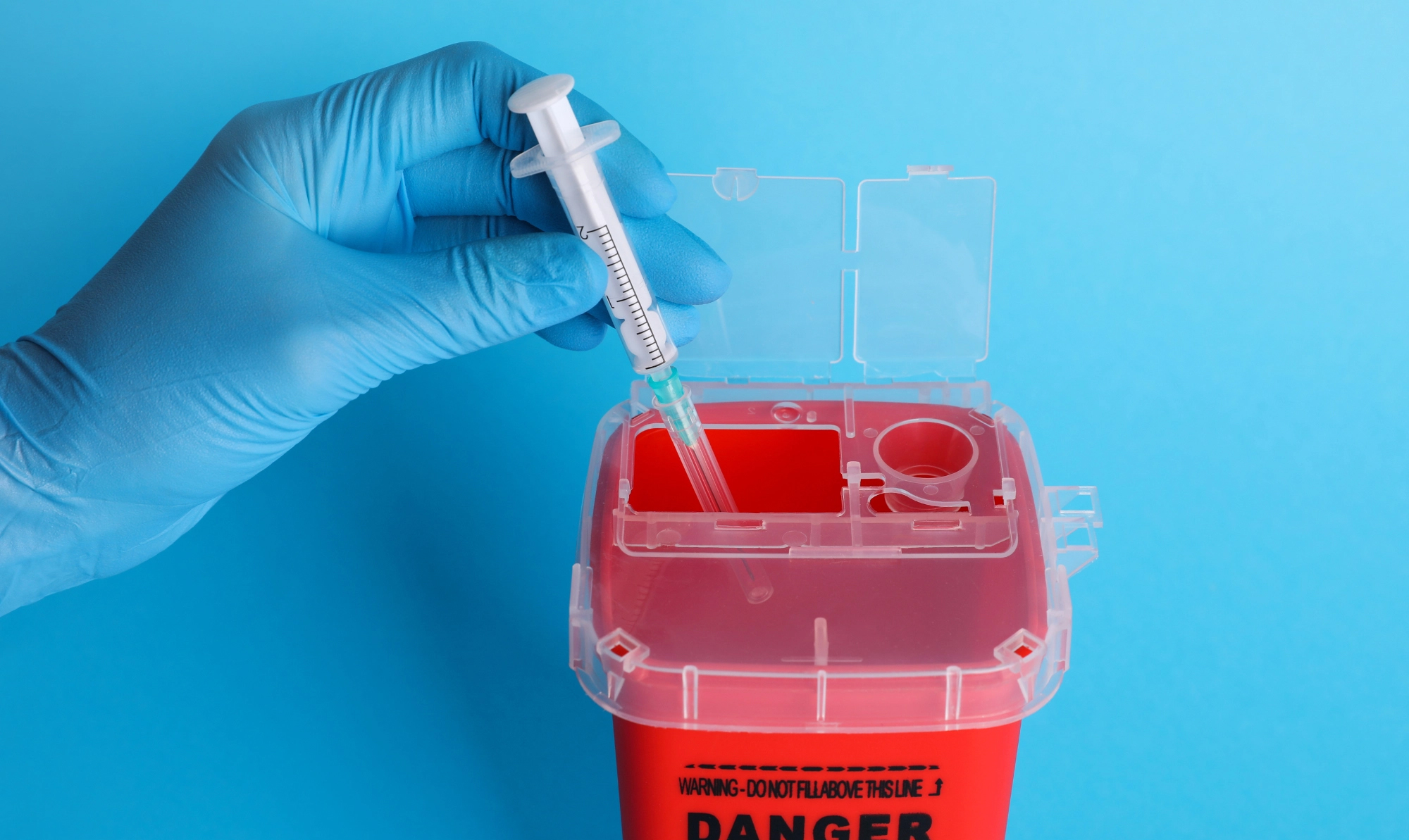
Choosing the right sharps container is not a commodity purchase. It is a clinical decision with measurable safety and compliance outcomes. The three dimensions—type, size, and application—must be considered together.
- Determine the clinical setting (fixed vs. mobile, sterile vs. contaminated)
- Choose the mounting and use-cycle type (wall mounted vs. portable; disposable vs. reusable)
- Calculate fill rate and size the container for replacement at least once per shift
- Confirm compliance with relevant national and international standards (e.g., WHO guidelines, European waste directives, local health authority requirements)
The biohazard sharps container you select for a neonatal ICU will differ from one chosen for a busy trauma center—and both should differ from a home-care needle disposal container. Getting this right means fewer injuries, lower compliance risk, and more efficient waste handling.
6. How BiosafePro Sharps Containers Support These Decisions
BiosafePro offers a complete range of medical sharps containers designed to match every clinical application. Our wall mounted sharps containers are available in 0.5 to 8 gallons with puncture-resistant HDPE construction, meeting international standards such as ISO 23907. Portable sharps containers include UN 3291-compliant leakproof seals and tamper-evident locks. For facilities pursuing sustainability, our reusable sharps containers feature RFID tracking and are validated for industrial washer-disinfector cycles.