

By BiosafePro Editorial Team | Biomedical Waste Management Specialists
BiosafePro is a professional manufacturer and global supplier of medical waste management solutions, including a full range of sharps disposal containers certified to international standards. Our team works directly with hospitals, laboratories, distributors, and procurement officers across more than 30 countries.
The short answer is no — you cannot throw a sharps container in the trash. Whether you are managing a high-volume clinical laboratory, overseeing hospital procurement, or distributing medical supplies across regions, understanding the legal and operational framework for sharps container disposal is not optional — it is a compliance imperative with direct consequences for staff safety, institutional accreditation, and regulatory standing.
This guide explains what proper sharps disposal looks like, who is accountable, what the regulations say, and how healthcare buyers can build a robust, cost-effective disposal program.
Why Improper Sharps Disposal Creates Serious Risks
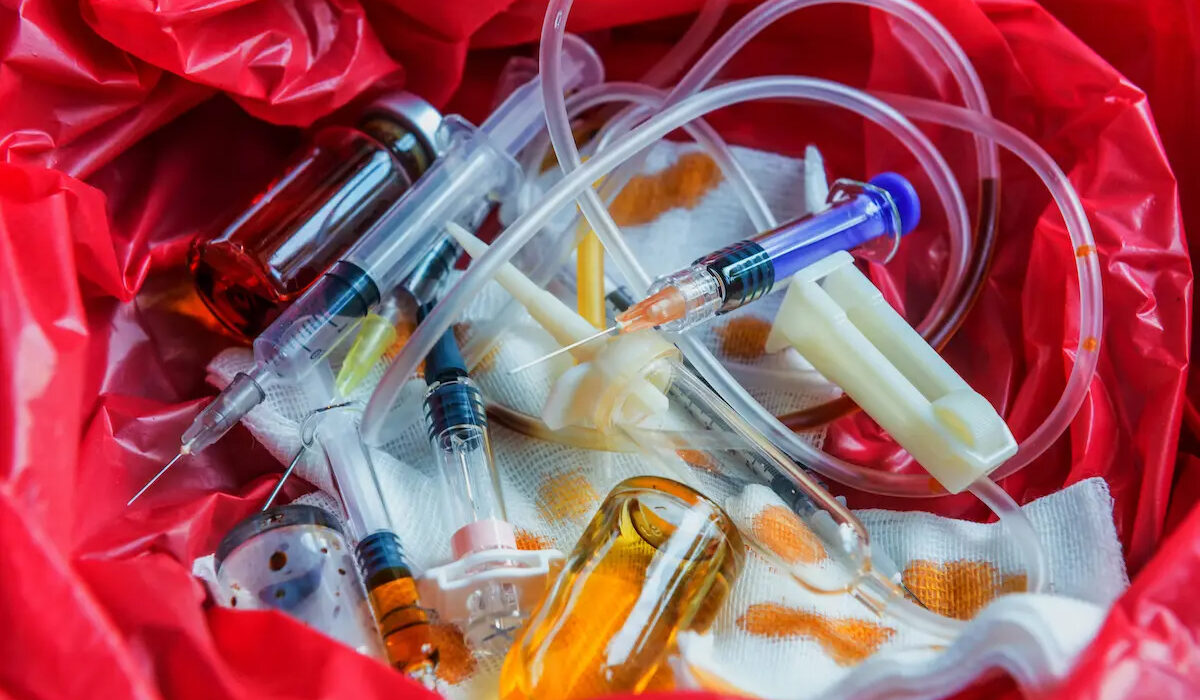
Discarding a used sharps container in the municipal trash stream is not merely a procedural violation — it initiates a chain of foreseeable harms that expose facilities to significant liability. When sharps waste enters the general waste stream, several safety concerns arise:
1.Needlestick Injuries During Waste Collection and Handling
According to the World Health Organization (WHO), an estimated 16 billion injections are administered globally each year, and unsafe disposal is a leading contributor to approximately 3.5 million needlestick injuries annually among healthcare and waste management workers. A single needlestick incident from improperly discarded sharps can trigger workers’ compensation claims, incident investigations, and lasting reputational damage to a facility.
2.Potential Exposure to Bloodborne Pathogens
Used sharps that bypass compliant disposal carry residual biological material. The U.S. OSHA Bloodborne Pathogens Standard (29 CFR 1910.1030) explicitly prohibits placing regulated waste — including sharps — in containers that could allow puncture or leakage. Similar provisions are codified in the EU Directive 2010/32/EU, which mandates the use of safety-engineered devices and proper disposal channels in all healthcare settings across member states.
3.Increased Occupational Hazards for Environmental Services Staff
Waste handlers, transport workers, and landfill personnel have no way of knowing that a municipal waste bag contains a full sharps container. The U.S. CDC and NIOSH classify needlestick injuries as preventable occupational hazards, underscoring that the duty of care begins at the point of generation — in the clinical or laboratory setting — and extends through final disposal.
4.Regulatory Violations and Financial Penalties
In the United States, used sharps container disposal is governed at the federal level under the Resource Conservation and Recovery Act (RCRA) and regulated by individual state environmental agencies. Facilities found to be placing sharps waste in general trash face civil penalties that can exceed $70,000 per day per violation under RCRA enforcement. In the EU, the Waste Framework Directive (2008/98/EC) sets similar liability frameworks. Non-compliance affects not only fines but also procurement eligibility and tender qualification.
5.Contamination of Municipal Waste Management Systems
Beyond human harm, improperly disposed sharps can pierce waste bags, injure sorting equipment operators, and contaminate recyclable material streams. This secondary contamination inflates municipal waste processing costs and creates regulatory exposure for the originating institution.
Key takeaway for procurement teams: The cost of non-compliant sharps disposal — in penalties, injury claims, and reputational harm — vastly exceeds the investment in a structured, compliant disposal program.
What Is the Proper Method for Sharps Container Disposal?
Healthcare facilities typically follow a structured sharps disposal workflow that aligns with both domestic regulations and international standards such as ISO 23907-1:2021 (Sharps injury protection — Requirements and test methods) and UN 3291 hazardous waste packaging classifications for transport.
Step 1: Replace Containers Before They Become Overfilled
A sharps container should never be filled beyond the fill-line indicator, typically marked at 75% capacity. Overfilling dramatically increases the risk of accidental needlestick during container closure and transport. Procurement policies should establish replacement intervals based on utilization data rather than fixed time schedules.
For a complete overview of container types, capacity options, and clinical applications, see: Sharps Containers Explained: A Guide to Types, Sizes, and Clinical Applications.
Step 2: Secure the Container for Transportation
Once filled to the appropriate level, the container must be permanently sealed using the integrated locking lid mechanism — a feature required under ASTM F2132 (Standard Specification for Sharps Containers) and analogous standards in other jurisdictions. The sealed container must then be placed in a designated secondary containment bag or labeled outer packaging compliant with UN 3291 regulations for transport of clinical waste.
Step 3: Follow Local Medical Waste Regulations
Sharps container disposal regulations vary by jurisdiction, but most share common requirements:
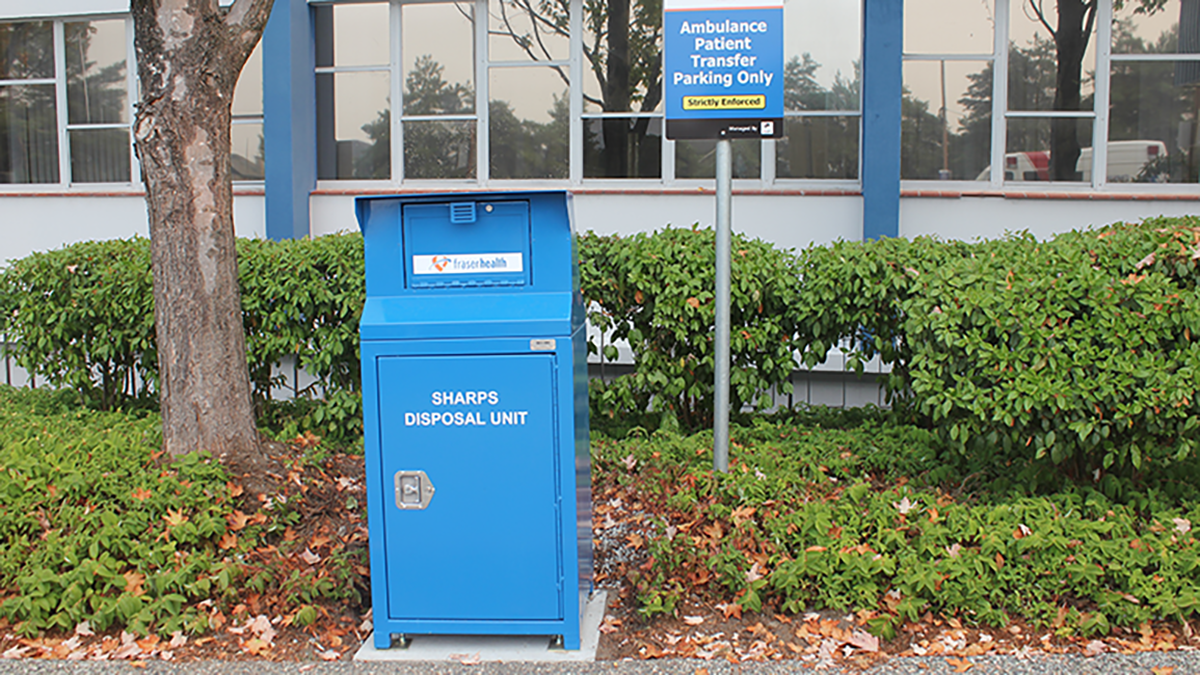
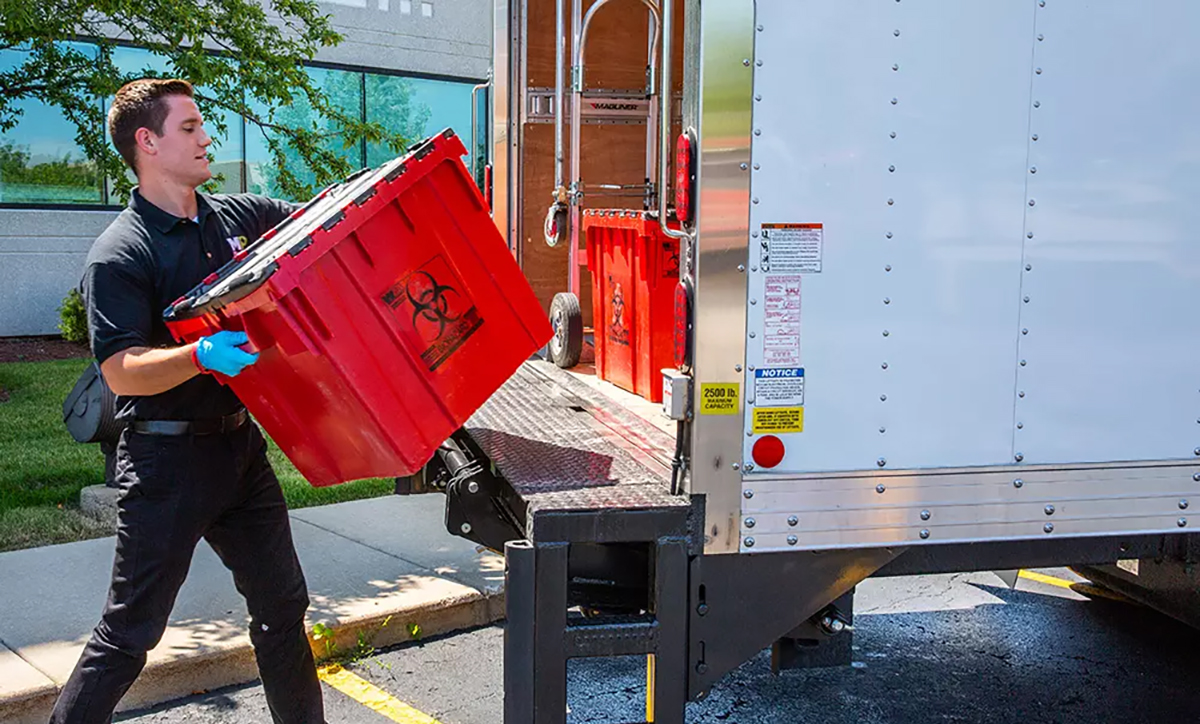
- Containers must be collected by a licensed medical waste hauler
- Manifests or consignment notes must accompany the waste from point of generation to treatment
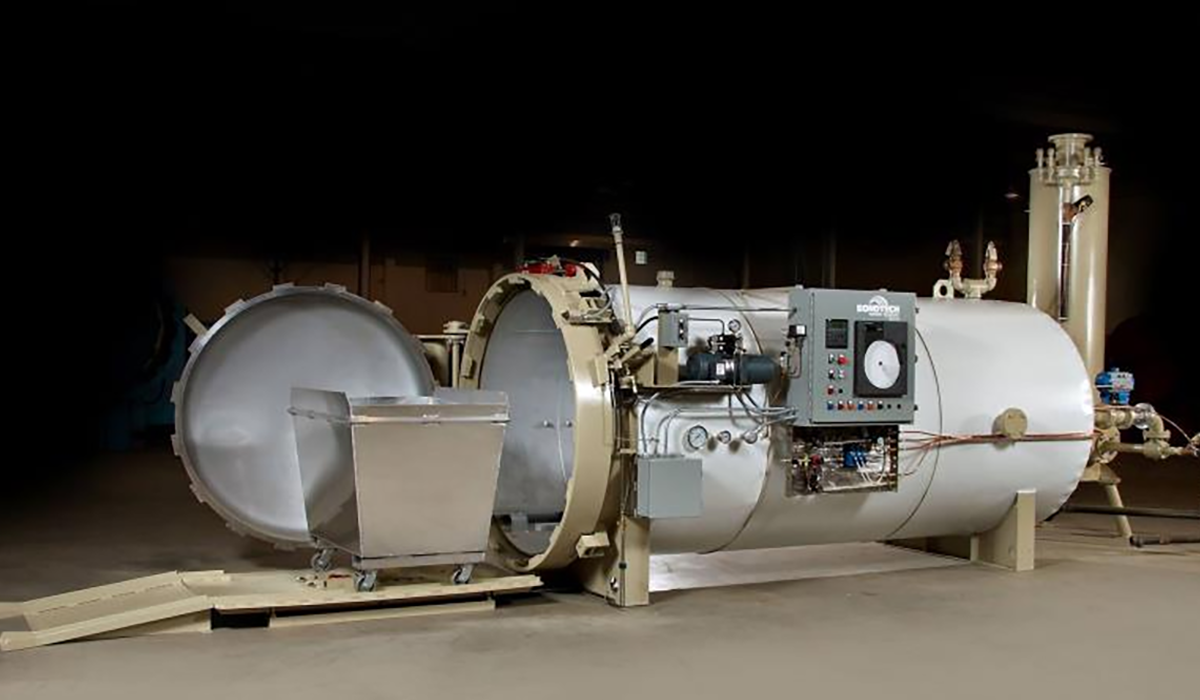
- Treatment methods — typically autoclaving, incineration, or chemical disinfection — must be documented
- Records must be retained for a minimum period (often 3–7 years, depending on jurisdiction)
In the United States, most states follow the Medical Waste Tracking Act (MWTA) framework. The EU aligns under Directive 2008/98/EC and national transpositions. Facilities operating across multiple geographies must maintain a regulatory matrix to ensure simultaneous compliance.
Can Home Users Throw Sharps Containers Away?
For residential users — including patients self-administering insulin, biologics, or other injectable therapies — the question “can you throw a sharps container in the trash?” is one that requires a jurisdiction-specific answer.
In the United States, regulations differ by state:
- California prohibits placing sharps in the trash entirely. Residents must use designated collection sites, mail-back programs, or authorized drop-boxes (California Health & Safety Code 118286).
- New York permits disposal in a puncture-resistant container in household waste only if no community collection option is available.
- Florida mandates use of an FDA-cleared sharps disposal system for all residential generators.
The FDA provides guidance under its “Sharps Disposal: Safe Community Needle Disposal” program, recommending that all users — residential or commercial — use FDA-cleared sharps disposal containers and participate in local collection programs where available (FDA, 2022).
For healthcare distributors and dealers: Educating end-users on proper how to dispose of sharps containers protocols is not only a service differentiator — it is increasingly a regulatory expectation in markets with extended producer responsibility frameworks.
Key Factors Hospitals Consider in Sharps Disposal Programs
When medical laboratories and hospitals design or evaluate their sharps disposal programs, procurement decision-makers weigh multiple operational and strategic factors:
1.Staff Safety
The primary driver of any sharps disposal investment is reducing needlestick injuries. Facilities reference benchmarks from the Exposure Prevention Information Network (EPINet) database, which tracks sharps injury rates per 100 occupied beds. High-performing institutions achieve rates below 10 injuries per 100 beds annually — a target that depends heavily on appropriate container placement, fill-level management, and disposal routing.
2.Workflow Efficiency
Containers that are improperly sized for their clinical environment create unnecessary handling steps. For example, placing a 1-liter container in a high-volume phlebotomy suite forces multiple daily replacements; a 5-liter container in a low-use satellite clinic creates overfill risks. Procurement teams increasingly conduct point-of-use assessments to match container capacity to actual clinical throughput.
Learn more about clinical best practices for container selection: What Can Be Placed in a Sharps Container: Clinical Guide to Sharps Disposal Compliance.
3.Environmental Responsibility
Healthcare sustainability programs — driven by frameworks like the Practice Greenhealth Emerald Award criteria and the NHS Net Zero commitment in the UK — are increasingly scrutinizing the full life-cycle impact of sharps disposal. Single-use plastic containers, when multiplied across a large hospital network, generate substantial plastic waste. Some facilities are now evaluating reusable container programs (with sanitization between cycles) or cardboard-based sharps containers that reduce plastic volume while maintaining puncture resistance.
4.Cost Control
The fully-loaded cost of used sharps container disposal extends beyond the unit price of the container itself. It includes collection fees, transport manifests, treatment costs, and administrative overhead for documentation. Facilities that standardize on a single container platform often negotiate better per-unit pricing and reduce disposal logistics complexity. Group purchasing organizations (GPOs) play a significant role in this cost consolidation at hospital network level.
How to Choose a Reliable Sharps Disposal Solution
For hospital procurement managers, laboratory directors, and regional distributors evaluating sourcing options, the supplier selection criteria go well beyond price-per-unit. How to dispose of a full sharps container safely and compliantly is inseparable from how that container was manufactured and what guarantees the supplier provides.
When evaluating suppliers and disposal systems, healthcare buyers often consider:
1.Compliance with Applicable Medical Waste Regulations
The container must carry relevant certifications for the markets in which it will be used. In the US, FDA 510(k) clearance may be required. In the EU, conformity with EN ISO 23907 and CE marking are standard expectations. For export markets, additional country-specific approvals (e.g., ANVISA in Brazil, SFDA in Saudi Arabia) should be verified before procurement.
2.Puncture-Resistant Construction
Containers must meet or exceed the ASTM F2132 puncture-resistance standard (US) or equivalent EN 23907 requirements (EU). The wall thickness, base integrity, and closure mechanism are all load-bearing elements of this specification.
3.Secure Locking Mechanisms
A container without a tamper-evident, permanent-lock closure is not compliant for final disposal under most regulatory frameworks. Single-hand operation of the closure mechanism is also a growing requirement in high-volume clinical environments, as it reduces the risk of contamination during the sealing process.
4.Appropriate Capacity Options
Reliable sharps container manufacturers offer a scalable range — typically from 0.5L (bedside, home use) through to 30L+ (surgical suite, pharmacy). The ability to source all sizes from a single supplier simplifies procurement administration and ensures consistent compliance standards across container types.
5.Compatibility with Hospital Waste Workflows
Wall-mount brackets, trolley integration, cart systems, and bin placement infrastructure all need to align with the container’s form factor. Suppliers who provide systems-level thinking — rather than standalone products — add measurable operational value.
6.Reliable Supply Chain Support
Continuity of supply is a non-negotiable for any regulated medical consumable. Procurement teams should evaluate supplier lead times, safety stock policies, and contingency protocols before awarding contracts — particularly for large-volume or multi-site deployments.
For a comprehensive buyer’s guide to evaluating sharps container suppliers, see: What Buyers Should Know Before Choosing a Sharps Container.

Conclusion
Sharps container disposal is a regulated, multi-step process governed by overlapping federal, state/regional, and international standards. Throwing a sharps container in the trash — whether in a clinical setting or at home — is illegal in most jurisdictions and creates measurable, preventable harm to waste workers, patients, and the broader community.
For medical laboratories, hospitals, and healthcare distributors, the correct approach to sharps disposal requires:
- Selecting certified, puncture-resistant containers matched to clinical volume and use case
- Replacing containers at the correct fill level and sealing them properly
- Partnering with licensed medical waste haulers for collection, transport, and treatment
- Maintaining compliant documentation across the entire waste chain
- Staying current with jurisdiction-specific sharps container disposal regulations
BiosafePro supports healthcare institutions and procurement professionals across more than 100 countries with a full range of CE-certified sharps containers, medical waste solutions, and regulatory guidance. Where to dispose of sharps containers and how to build a defensible, cost-effective program are questions our team addresses daily.
Contact BiosafePro to discuss your facility’s specific disposal requirements or to request a product catalog.
FAQ
1.Can businesses dispose of sharps containers differently from households?
Yes, but the requirements for commercial and institutional generators are typically more stringent, not less. Businesses — including medical practices, laboratories, tattoo studios, and veterinary clinics — are classified as regulated medical waste generators in most jurisdictions and must use licensed medical waste disposal contractors. Home users may have access to mail-back programs or community collection sites as alternatives, but commercial facilities generally cannot use these pathways for volume disposal.
2.Are there special requirements for transporting filled sharps containers?
Yes. In most countries, filled sharps containers are classified as Category B biological substances or clinical waste for transport purposes. In the United States, transport is governed by DOT 49 CFR Part 173.197; in the EU, by ADR regulations (European Agreement concerning the International Carriage of Dangerous Goods by Road). Containers must be properly labeled (UN 3291), secondary-contained, and accompanied by shipping documentation. Only licensed waste carriers may transport regulated medical waste.
3.How does improper sharps waste management affect hospital accreditation?
Improper sharps disposal can directly impact accreditation status under bodies such as The Joint Commission (TJC) in the US, which evaluates medical waste management under its Environment of Care (EC) standards — specifically EC.02.02.01. Non-conformances in waste disposal can result in Requirement for Improvement (RFI) citations, conditional accreditation, or, in repeat cases, loss of accreditation — which has downstream effects on reimbursement eligibility and institutional reputation.
4.How can hospitals reduce costs associated with sharps waste management?
Cost reduction in sharps disposal programs typically comes from four levers: (1) right-sizing containers to clinical volume to reduce over-frequency of replacement; (2) standardizing on a single supplier to achieve volume pricing; (3) implementing reusable container programs where permitted by regulation; and (4) consolidating waste collection routes to reduce per-pickup costs. GPO membership and long-term supply agreements with trusted sharps container manufacturers can also yield meaningful cost savings over time.
5.Are sharps disposal regulations the same in every country?
No. Sharps container disposal regulations vary significantly by country and, in federal systems like the US and Australia, by sub-national jurisdiction. Key variation points include: permitted disposal methods (incineration vs. autoclaving vs. landfill), generator size thresholds, required documentation, and the classification of sharps waste within broader medical waste categories. Distributors and dealers operating across multiple markets should maintain a jurisdiction-specific regulatory matrix and work with suppliers who have established compliance expertise in each target market.