


The initial quote from incinerator suppliers for a incinerador de residuos médicos often prompts a singular question: ‘How much does an incinerator cost?’ Yet, this medical waste incinerator price is just the beginning of understanding the true cost of medical waste disposal. However, for the professionals responsible for procuring hospital waste disposal equipment, that sticker price is merely the visible tip of a significant financial and operational iceberg. Focusing solely on the purchase price can lead to a critical miscalculation of the total commitment, potentially compromising safety, compliance, and long-term budgetary stability.
In an era of tightening regulations and heightened environmental scrutiny, understanding the complete biohazard waste disposal cost spectrum—from capital expenditure to decommissioning—is not just prudent accounting; it’s a fundamental component of operational risk management and clinical responsibility.
Why a Superficial Cost Analysis is a Critical Vulnerability
The management of infectious medical waste sits at a complex intersection of clinical safety, environmental stewardship, and fiscal accountability. A purchasing decision based on an incomplete medical waste incinerator price analysis carries profound, multi-faceted risks that extend far beyond the balance sheet.
Clinical and Operational Consequences:
An under-specified unit, chosen primarily for its low portable incinerator price, may fail to achieve the critical temperature-time matrix required for the complete destruction of resilient pathogens like prions or certain bacterial spores. This isn’t merely a technical failure; it represents a potential breach in the infection control chain, endangering waste handlers, maintenance staff, and the surrounding community. Furthermore, such a unit may struggle with load variability—from sharp, dense materials to bulky, fluid-saturated waste—leading to incomplete combustion. This produces higher volumes of potentially infectious ash and increases the release of harmful pollutants, directly contradicting the facility’s duty of care.
Financial and Regulatory Repercussions:
The true cost emerges sharply when regulatory non-compliance becomes a reality. Modern emission standards for particulate matter, acid gases (HCl, SOx), nitrogen oxides (NOx), and, most critically, dioxins and furans are stringent. A system lacking sophisticated air pollution control (APC) will inevitably violate these limits. The resulting penalties, mandated retrofits, and potential operational shutdowns can dwarf the initial “savings” from choosing a cheaper unit. The financial liability is compounded by reputational damage in an age where environmental performance is publicly scrutinized.
Therefore, the core question evolves from “What is the incinerator cost?” to “What is the total cost of guaranteed, compliant, and safe waste destruction over the system’s lifespan?” This guide provides the framework to answer it.
Deconstructing the Initial Capital Investment (CapEx)
The quoted bio medical waste incinerator price from manufacturers for the core system is the starting point. This cost is heavily influenced by several interdependent engineering specifications.
Combustion Chamber Design: The Core of Destruction Efficacy
The chamber is not merely a box to burn waste; it is a precision-engineered thermal reactor. The leap from a single-chamber to a dual-chamber design is one of the most significant cost factors—and for good reason.
Primary Chamber:
Here, waste is dried, volatilized, and undergoes primary combustion (typically at 800-1000°C). It reduces waste volume and converts it into combustible gases and carbonized solid residue.
Secondary Chamber:
This is where true pathogen destruction and emission control begin. Combustible gases from the primary chamber are subjected to temperatures exceeding 1100°C with sufficient residence time (often >2 seconds). This “temperature-time-turbulence” principle is non-negotiable for breaking down complex hydrocarbons and preventing the formation of dioxins. The engineering to achieve and maintain this consistently—through advanced burner systems, refractory materials, and geometry—constitutes a major portion of the medical waste incinerator cost.
Throughput Capacity and Sizing: Avoiding the Twin Pitfalls
Selecting capacity is a critical exercise in forecasting. Common pitfalls include:
Oversizing:
Purchasing a 500 kg/hr unit for a 100 kg/day facility inflates CapEx, increases fuel consumption for partial loads, and leads to wear from frequent start-stop cycles. It’s an inefficient capital allocation.
Undersizing:
A unit operating continuously at 120% capacity suffers accelerated wear, cannot handle peak loads (e.g., post-operative waste surges), and risks compromising combustion parameters as operators overload the chamber to keep up. A nuanced analysis of waste stream composition (sharps, plastics, anatomical, chemical) and hourly/daily fluctuation patterns is essential to right-size the investment.
Automation and Control Systems: The Digital Nervous System
The control panel is the command center. Its sophistication directly correlates with cost, compliance ease, and operational safety.
Basic Systems:
Rely on manual dials and operator judgment for air damper control and feed rates, introducing variability.
Advanced PLC-Based Systems:
Continuously monitor chamber temperatures, oxygen levels, and pressure differentials. They automatically adjust feed rates, secondary burner operation, and induced draft fans to maintain optimal combustion conditions regardless of waste load variability. This automation provides an immutable digital log—a crucial asset during regulatory audits to prove every batch was processed within compliant parameters. The premium for this technology is an investment in demonstrable compliance and risk reduction.
Hidden and Recurring Costs of Operation (OpEx)
OpEx is the ongoing financial reality that defines the true cost of medical waste disposal. It is where efficiency gains from a higher initial CapEx are realized—or where inefficiencies of a cheaper unit become a financial drain.
Fuel and Energy: The Perpetual Expense
Fuel is often the largest single OpEx item. Consumption is dictated by:
Thermal Efficiency:
Superior refractory insulation and chamber design minimize heat loss.
Heat Recovery:
This is a game-changer. Systems with integrated heat recovery can pre-heat combustion air or generate hot water/steam for facility use, reducing net fuel demand by 20-40%. While increasing CapEx, this feature transforms the incinerator from a pure energy consumer to a partial energy provider, offering a calculable return on investment.
Waste Composition:
High-plastic waste has a high calorific value and can be “autothermic” at certain loads, reducing auxiliary fuel need. Conversely, waste with high moisture content (e.g., fluid-saturated dressings) consumes significant energy just for drying.
Emission Control System Operation and Maintenance
The APC system is not a “set-and-forget” component. Its OpEx is substantial:
Consumables:
Scrubbers require neutralizing chemicals (lime, caustic soda). Baghouse filters require periodic replacement. Activated carbon for adsorption must be replenished.
Energy Consumption:
Induced draft fans, pump systems, and compressor units for the APC train consume significant electricity.
Maintenance:
Regular cleaning, inspection, and replacement of APC components are critical to avoid sudden failure and non-compliance. A poorly designed or maintained APC can become the primary source of operational downtime.
Residue Management: The Final, Costly Link
Incineration transforms but does not eliminate waste. Outputs include:
Bottom Ash:
From the primary chamber. If combustion is efficient, it may be considered non-hazardous, but it often requires testing and special landfilling.
Fly Ash & APC Residue:
Captured from flue gases, this material is frequently classified as hazardous waste due to concentrated heavy metals and other contaminants. Its handling, packaging, transportation, and disposal at a hazardous waste landfill are extraordinarily expensive. A more efficient combustion and APC system minimizes the volume and hazard of this residue, directly reducing a major, long-term cost liability.
Labor, Training, and Regulatory Compliance
Labor:
Automated feeding and ash removal systems reduce direct manual labor but require higher-skilled (and higher-paid) control room technicians.
Mandatory Testing:
Regulatory permits typically require annual (or more frequent) stack emission testing by accredited third parties—a direct, recurring cost.
Training:
Continuous training on operation, safety protocols (like handling mercury-containing broken thermometers or chemotherapy waste), and emergency procedures is essential to mitigate occupational risk and ensure consistent performance.
Comparative Analysis: The 10-Year Total Cost Projection
When comparing proposals from different incinerator manufacturers, it’s vital to translate specifications into long-term cost and risk. To visualize the trade-offs, consider this 10-year projected TCO analysis for a mid-sized hospital generating 150 kg/day of mixed waste:
| Cost Component | Basic Tier Incinerator (Low CapEx) | Advanced Tier Incinerator (High CapEx, High Efficiency) | Rationale & Impact |
| Initial Purchase & Installation | $250,000 | $450,000 | Higher CapEx for dual-chamber, advanced APC, automation, and heat recovery. |
| Annual Fuel Cost | $80,000 | $45,000 | Advanced insulation and heat recovery cut fuel consumption by ~40%. |
| Annual APC Consumables & Maintenance | $25,000 | $35,000 | More sophisticated APC has higher consumable (lime, carbon) and part costs. |
| Annual Residue Disposal | $40,000 | $15,000 | Superior combustion yields less and less-hazardous ash, drastically lowering disposal fees. |
| Annual Labor Cost | $60,000 | $45,000 | Higher automation reduces manual handling and feeding time. |
| Compliance & Testing | $15,000 | $10,000 | More stable, automated operation reduces risk of test failure and retest needs. |
| Estimated Major Refurbishment (Year 5-7) | $100,000 | $50,000 | Higher-quality refractory and components in advanced tier extend service life. |
| 10-Year Estimated TCO | ~$1,700,000 | ~$1,200,000 | The advanced system shows a $500,000 TCO advantage despite double the initial price. |
| Key Risks | High compliance risk, operational variability, reputational exposure. | Lower regulatory risk, consistent performance, demonstrable sustainability. | —— |
The Strategic Perspective: Incineration as a Core Clinical Utility
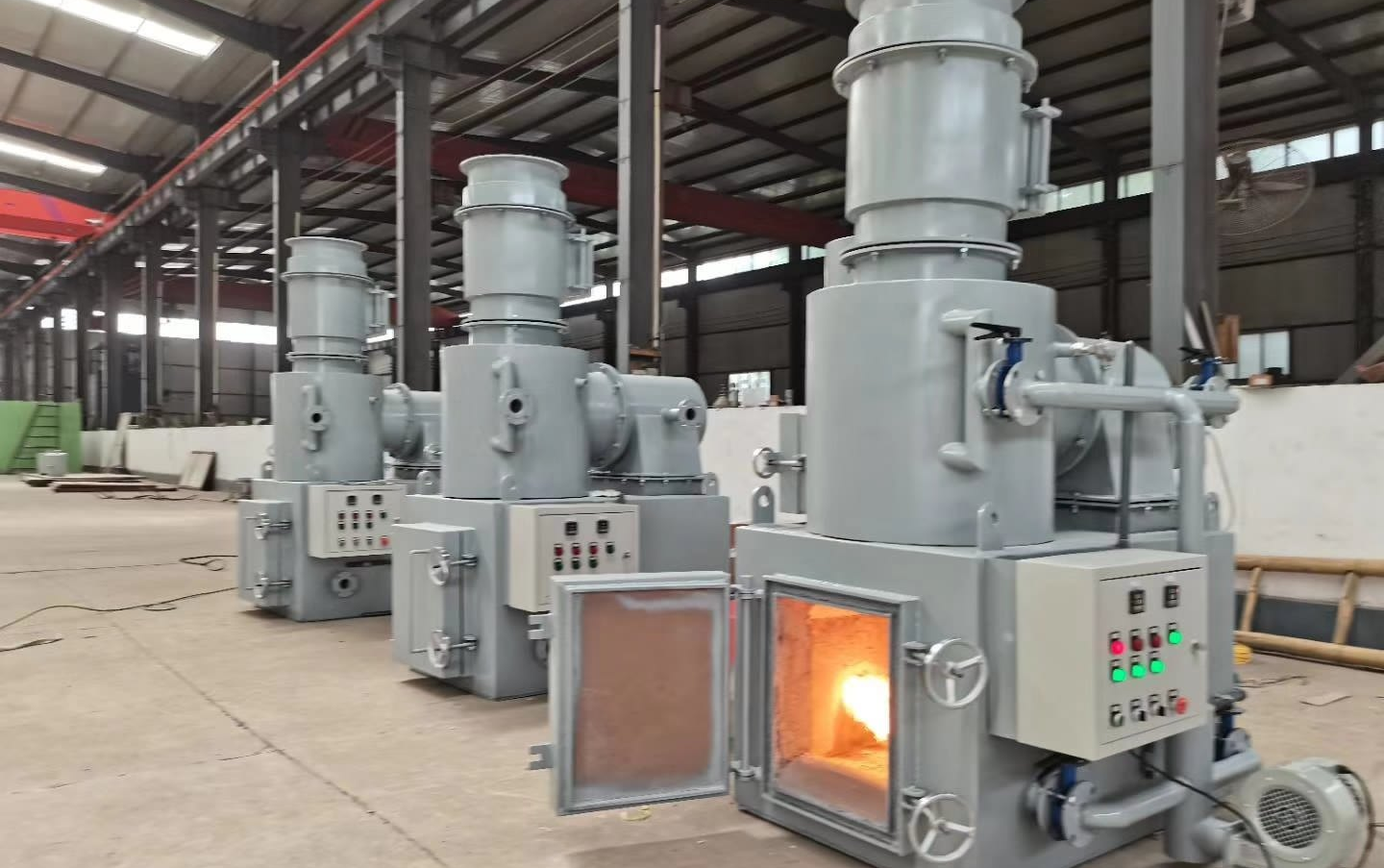
Moving beyond linear cost analysis requires a paradigm shift. A modern medical waste incinerator should be viewed not as a standalone piece of hospital waste disposal equipment, but as an integral component of the facility’s clinical waste management utility—akin to a sterile water supply or medical gas system. Its reliability directly impacts clinical operations.
Consider the consequence of system failure: A prolonged shutdown forces a hospital into costly emergency contracts for off-site medical waste disposal. This not only skyrockets the immediate biohazard waste disposal cost but also exposes the facility to logistical and security risks, undermining the investment in on-site hospital waste disposal equipment. These services come at a premium cost and introduce logistical complexities and chain-of-custody risks. More importantly, it creates a backlog of hazardous waste within the hospital, posing an internal infection control hazard and disrupting clinical workflows. The cost of this business interruption is rarely factored into simple price comparisons but can be devastating.
Therefore, the evaluation criteria must include engineering robustness, service support quality from incinerator suppliers, and system resilience. What is the meantime between failures? How quickly can critical spare parts be delivered? Does the manufacturer provide comprehensive operator training and technical support? The value of a reliable partner who ensures system uptime is immense and directly protects core clinical activities. For a foundational understanding of the technology enabling this reliability, explore our detailed resource on what a medical waste incinerator is and how it works.
Conclusion: Building a Framework for Informed Investment
The journey to answering ‘how much does an incinerator cost?’ is a disciplined exercise in Total Cost of Ownership modeling. It shifts the focus from the upfront bio medical waste incinerator price to the lifecycle incinerator cost, encompassing everything from procurement to decommissioning. It necessitates looking beyond the invoice to forecast a decade of operational, regulatory, and environmental performance.
The responsible procurement pathway involves:
- Conducting a Detailed Waste Audit: Precisely quantify and qualify your waste streams.
- Modeling TCO Scenarios: Use frameworks like the one above to project costs for different technology tiers over 10+ years.
- Prioritizing Compliance by Design: Ensure the selected system is engineered to meet not just current, but foreseeable future regulations, as outlined in resources like hospital incinerator standards and WHO guidelines.
- Vetting the Partner, Not Just the Product: Assess the manufacturer’s track record, engineering support, and spare parts logistics.
BiosafePro approaches this challenge by engineering systems where higher initial CapEx is strategically deployed to systematically lower lifetime OpEx and mitigate risk. Our designs focus on achieving maximum combustion efficiency (reducing fuel and residue costs), integrating intelligent automation (reducing labor and compliance risk), and offering configurable, high-performance APC to ensure unwavering regulatory compliance. We view our role as providing not just a thermal treatment unit, but a guarantee of operational continuity and environmental integrity.
The final decision should be guided by which solution delivers the lowest total cost of guaranteed, safe, and compliant waste destruction. To translate this framework into a tailored financial and technical model for your facility, we recommend a structured evaluation, beginning with our comprehensive guide on medical waste incinerator buying considerations.