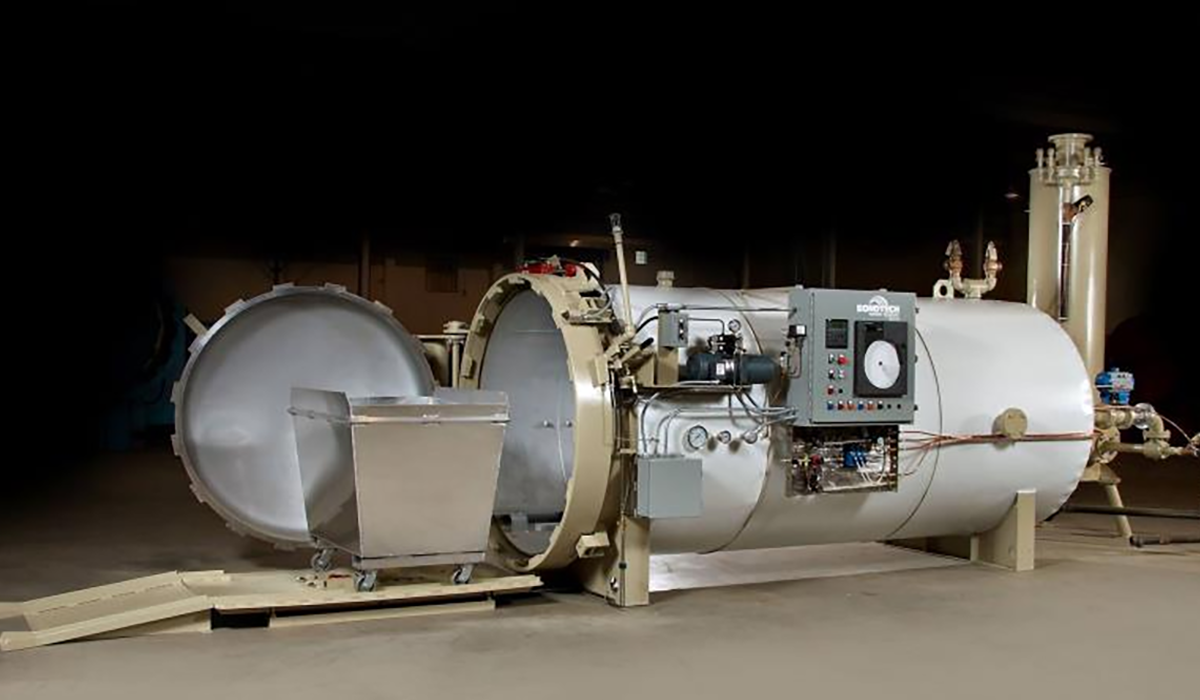



Understanding Biohazardous Waste
Before helping healthcare facilities choose the correct كيس النفايات الخطرة, it is essential to clearly understand what this type of waste contains and why ordinary bags are not suitable.
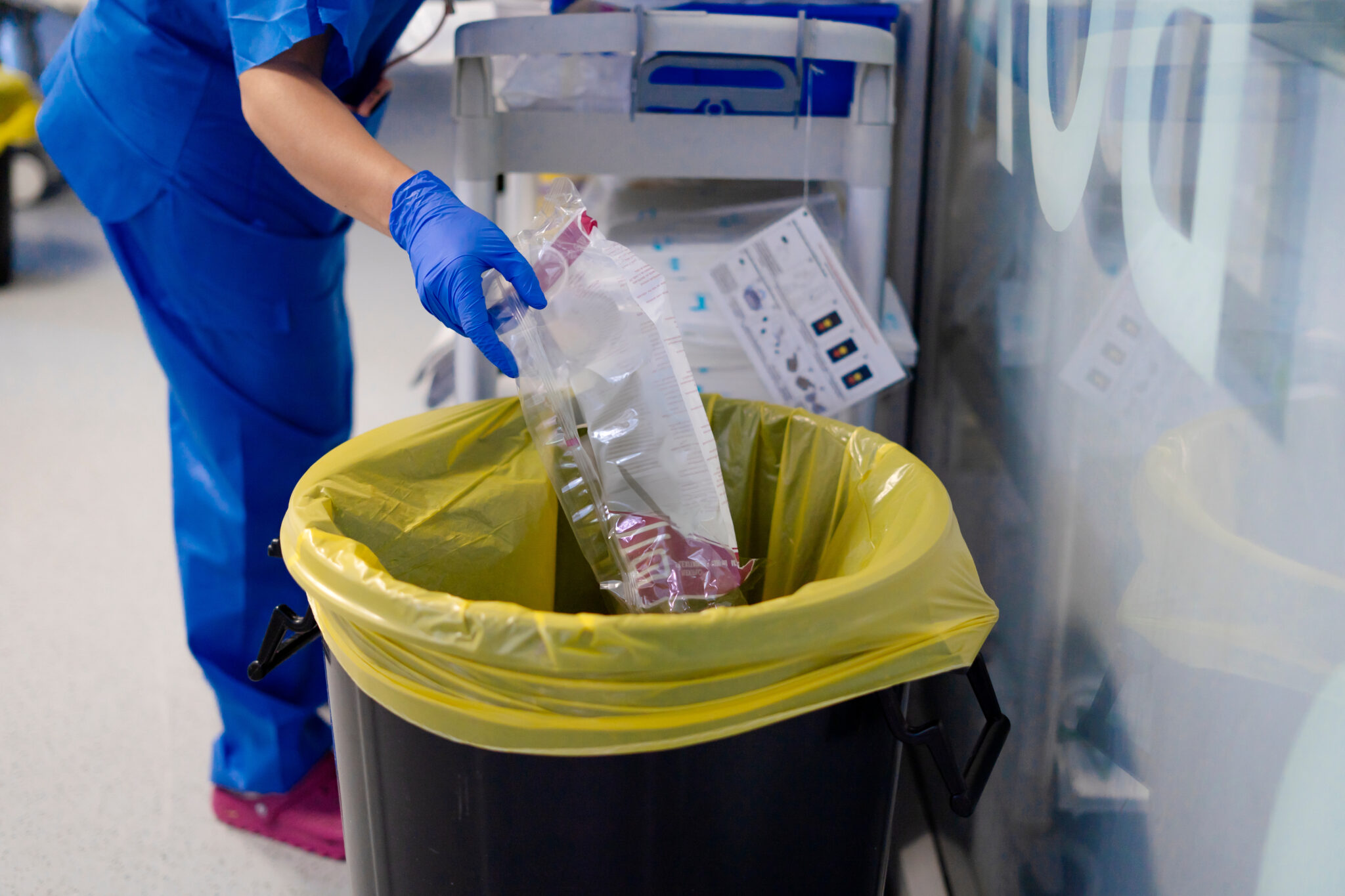
Simply put, biohazardous waste refers to medical waste that may contain microorganisms capable of causing disease in humans, such as viruses and bacteria.
Common Sources Include
Within healthcare facilities, biohazardous waste mainly consists of:
- Items contaminated with patient blood or body fluids (such as gauze, cotton swabs, and drainage bags).
- Active tissues or bodily fluids are generated during surgical procedures or medical treatments.
- Discarded samples or cultures after laboratory testing.
- Disposable supplies used in areas where infectious disease patients are treated or housed (such as protective gowns and gloves).
Differences in Regulations أcross Regions
Organizations such as the World Health Organization (WHO), the U.S. Centers for Disease Control and Prevention (CDC), and the European Union (EU) may use different classification systems, terminology, and compliance requirements. However, the core principle remains the same: identifying the level of risk associated with waste that may cause human illness.
Why does “Bag Selection” Start Here?
The characteristics of the waste directly determine the performance requirements of the bag:
- Will it leak?—— This relates to the bag’s liquid resistance and sealing performance.
- Does it contain sharp or rigid objects?—— This involves puncture resistance and tear strength.
- Does the handling process require clear identification of waste origin or responsibility?—— This involves visibility and clarity of warning labels and markings.
Choosing the wrong biohazard waste bag can lead to leakage, accidental occupational exposure, or cross-contamination, creating serious safety risks for staff and the environment.
Types of Biohazard Waste Bags
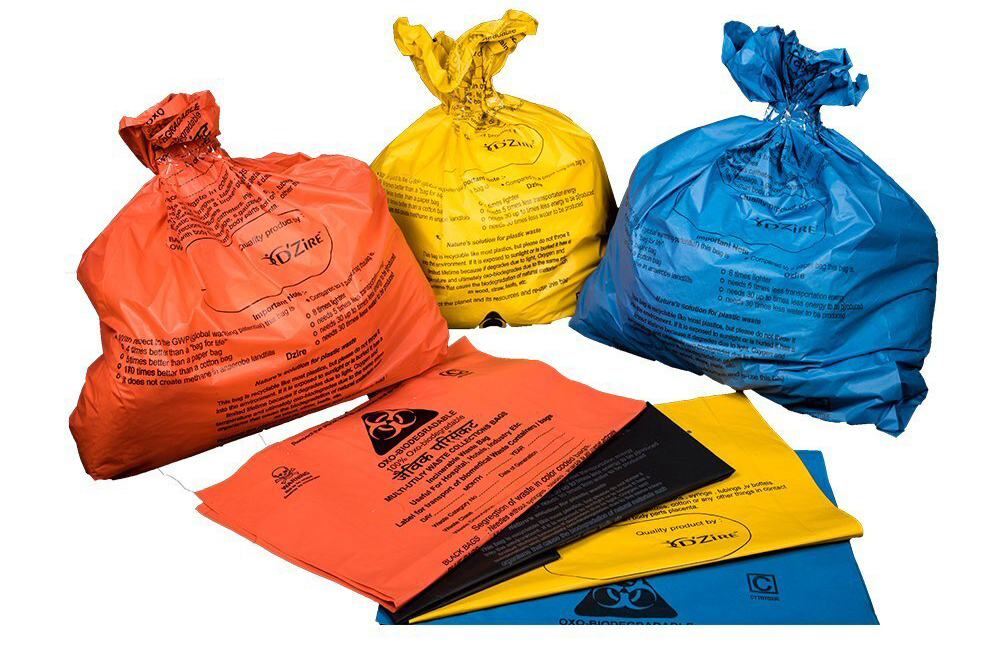
The different colors of waste bags seen in healthcare facilities are not selected at random. They function as “silent indicators” within the medical safety system, using color to communicate risk levels and regional treatment requirements.
Red Biohazard Bags
When a highly visible red biohazard bag is used, it typically contains the most common types of risk waste: blood-contaminated gauze and swabs, instruments contaminated with patient body fluids, and non-sharp laboratory waste.
Most countries recognize red as the standard color due to its high visibility, which helps prevent operational errors. This shared understanding also makes red biohazard bags the most convenient option for international procurement and cross-border logistics, as suppliers and regulatory authorities clearly recognize their meaning.
Yellow Biohazard Bags
In many regions, yellow indicates “high risk” or “special handling required.” These bags are generally used for higher-risk infectious soft waste or are mandated by certain countries, including parts of the Asia-Pacific and Middle East regions, as a compliance requirement.
When selecting yellow biohazard bags, special attention must be given to downstream treatment methods. Yellow bags are often required to match incineration or high-temperature sterilization processes. If a healthcare facility follows such disposal routes, yellow bags may align more closely with local regulatory verification procedures than red alternatives.
Blue Biohazard Bags
Blue bags are commonly used in laboratories or diagnostic departments. They are primarily intended for non-high-risk waste, such as empty reagent bottles, culture dishes, or uncontaminated medical plastic instruments.
Although blue bags are not universally mandated like red or yellow, they serve as an effective classification tool for general laboratory waste or low-risk medical waste in certain national or institutional systems. Before selection, it is essential to confirm whether downstream treatment facilities accept blue bags.
Black Waste Bags
Black waste bags play an important differentiating role in healthcare facilities. They are strictly used for medical waste with no infection risk, such as clean disposable packaging materials, unused pads, or uncontaminated office waste.
It is critical to note that black bags must never be used for any waste containing blood, body fluids, or potential microbial contamination. They must be strictly segregated from red, yellow, or blue biohazard waste bags to prevent misuse or cross-contamination.
Material and Strength Requirements
Selecting a biohazard waste bag based solely on price or perceived thickness is a common mistake. The material composition and actual mechanical strength of the bag directly determine whether leakage, tearing, or accidental exposure may occur, ultimately affecting personnel safety, environmental protection, and total disposal costs.
Comparison of Common Materials
HDPE (High-Density Polyethylene): Rigid and strong, suitable for holding relatively hard but non-puncturing waste (such as plastic instrument packaging). However, excessive rigidity can reduce tear resistance.
LDPE (Low-Density Polyethylene): Highly flexible with excellent liquid resistance, effectively preventing leakage of ordinary fluids. Its resistance to sharp objects is relatively weak.
LLDPE (Linear Low-Density Polyethylene): Combines flexibility with superior tear and puncture resistance. It is suitable for mixed waste containing both soft and rigid materials, as well as small amounts of liquid. Due to its balanced protective performance, LLDPE is currently one of the most widely used materials for biohazard waste bags.
Key Protective Performance Indicators
Tensile strength: Ensures that the bag does not rupture suddenly when lifting heavy, wet waste such as blood-soaked gauze.
Puncture resistance: Prevents leakage when needles, bone fragments, or sharp instrument edges are accidentally included.
Leak resistance and sealing integrity: Ensures that liquids such as blood or culture media remain fully contained after sealing and throughout transportation.
Strength Matching for Different Clinical Scenarios
Operating Room (OR): Frequent exposure to sharp instruments or bone fragments requires bags with high puncture resistance.
Intensive Care Units (ICU) / Isolation Wards: Large volumes of fluid-contaminated dressings and tubing require bags with excellent leak resistance, large capacity, and strong tear resistance.
Laboratories: Possible exposure to chemical agents or liquid cultures requires bags with strong sealing performance and resistance to specific liquids such as acids or alkalis.
General Wards and Clinics: Although overall risk is lower, bags must still meet baseline strength requirements to prevent routine handling damage.
Labeling and Symbol Compliance
ال warning symbols printed on a biohazard waste bag are far more than decorative graphics. Like the bag color itself, they serve as a silent safety declaration to operators, waste handlers, and regulatory inspectors. In cross-border procurement, neglecting labeling details is often more dangerous than using a slightly thinner bag, as compliance reviews almost always focus first on symbol accuracy.
International Standards for the Biohazard Sign
The globally recognized biohazard symbol is not a simplified illustration but a strictly regulated graphic with mandatory specifications:
Symbol proportions:
The ratio between the trefoil lobes and the central circle must follow defined standards. Incorrect proportions may render the symbol invalid or be judged non-compliant by regulators.
Color contrast:
Regardless of color combinations used, the symbol must maintain strong visual contrast against the bag background to ensure instant recognition, even in dim storage areas or emergency situations.
Visibility distance:
Symbol size directly determines recognition distance. Standard requirements typically demand clear visibility from 3–5 meters. Labels that are too small or placed near bag edges fail to provide adequate warning and significantly increase the risk of unsafe handling or misjudgment.
Printing Methods
Surface printing:
The symbol is printed only on the outer surface of the bag. After abrasion, liquid exposure, or compression during loading, the marking may fade, blur, or disappear entirely. When bags are filled and tied, folding areas often suffer from tearing or friction that damages the printed symbol.
Co-extrusion printing:
The symbol is integrated into the middle layer of the bag film during manufacturing. Co-extruded symbols are bonded with the bag material itself, offering superior resistance to abrasion, scratching, and liquid exposure. Even when the bag is folded, stacked, or scraped by sharp objects, the symbol remains clear and intact, ensuring continuous safety communication throughout the entire disposal cycle.
Consequences of Missing or Non-Compliant Labels
Hospital infection control audits:
If incorrect or failed biohazard labeling is identified during inspections, it may be classified as a major non-compliance issue. Corrective actions can include replacing all bags, retraining staff, issuing formal warnings, or even suspending certain clinical operations.
Cross-border supply chains:
Label specifications are not fully harmonized across countries. In some EU member states and in Australia, imported products may undergo strict compliance sampling. Incorrect symbol size or poor print clarity may result in shipment detention, destruction, or return, triggering contract breaches and compensation claims.
Operational blind-spot risks:
When symbols are unclear or missing, cleaning staff may fail to recognize high-risk waste, leading to direct hand contact with infectious materials, accidental opening of bags in non-high-risk zones, or improper sorting. Occupational exposure incidents can escalate into complex medical interventions and public risk management crises.

Best Practices for Storage and Handling
Selecting compliant biohazard waste bags does not eliminate risk on its own. Improper storage, overloading, incorrect sealing, or mismatched transport equipment can compromise the entire safety chain.
Improper Storage Conditions
Temperature extremes weaken material integrity:
Storage environments exceeding 30°C accelerate plastic oxidation.
Sudden impact during frozen storage, as required by some laboratories, may cause bags to become brittle and crack.
Excessive humidity reduces toughness:
Long-term storage in damp, poorly ventilated spaces can cause bag layers to adhere to each other, reducing tear resistance.
Exposure to light or chemicals:
Direct ultraviolet exposure accelerates material aging.
Prolonged exposure to chemical vapors in laboratory environments can weaken polymer molecular chains.
→ Storage principles: Ventilated and dry storage areas + controlled temperature (avoid sunlight and freezing) + avoidance of chemical exposure sources.
Loading and Sealing Standards
Biohazard waste bags must never be filled to full capacity. The standard safety filling limit is 60%.
After loading waste, sufficient headspace—approximately 40%—must be reserved to allow for:
- Double sealing using the “gooseneck tie” method.
- Prevention of liquid overflow during transport movement.
- Avoidance of excessive wall tension that reduces puncture resistance.
- Adequate space for hooks or automated lifting mechanisms.
→ Any practice of compressing waste beyond 70% capacity before sealing constitutes a high-risk operation.
Equipment Compatibility
A biohazard waste bag must be compatible with downstream handling tools to maintain system-wide safety:
- Waste containers: The bag opening must fit the container dimensions to prevent gaps where waste may slip between the bag and container wall.
- Transport carts: Cart frames must be free of sharp edges or weld points that could puncture the bag surface.
- Incineration or sterilization systems: Bag materials must tolerate required treatment temperatures. For example, some LDPE bags cannot withstand sterilization temperatures above 110°C.
- Logistics pathways: Oversized bags may be scraped in narrow corridors, while improperly sized bags may not fit into the incinerator inlets or transport units.
Common Operational Errors
- Bag tearing caused by incompatible waste containers or sharp cart structures.
- Inconsistent filling practices, such as loading yellow bags to 95% capacity, result in leakage during transport.
- Low-temperature storage is causing blue bags to crack unpredictably during handling.
- Mixed placement of red biohazard bags with black waste bags, forcing repeated downstream sorting.
These failures are rarely caused by product defects; they are usually the result of poor system-level process alignment.
Common Procurement Challenges
Failures in selecting biohazard waste bags are rarely due to supplier misconduct. Instead, they typically originate from structural blind spots within the procurement chain. Seemingly standardized purchase orders often yield inconsistent outcomes due to overlooked systemic mechanisms.
1. Ambiguous Specification Descriptions
Within procurement requirement documents:
Overgeneralized baseline information:
Descriptions such as “red medical waste bags” or “90 μm thickness” obscure critical decision factors, including resin formulation (LLDPE vs. recycled material), printing method (surface vs. co-extrusion), and mechanical performance metrics (directional tear resistance).
Unified departmental demands:
ICU sharps bags, laboratory chemical-resistant bags, and general medical waste bags are often grouped together as “biohazard waste bags,” forcing suppliers to deliver minimal specifications to meet low-price tender constraints.
→ When procurement requirements fail to anchor real clinical scenarios using technical language, supplier “compliance” becomes a gray channel for performance downgrading.
2. Sample Approval ≠ Batch Stability
Approval of samples does not guarantee consistent mass production quality:
Production batch variability:
Samples are often produced under controlled conditions using premium raw materials. During mass production, secondary materials, accelerated cooling, or reduced calendaring steps may be introduced to reduce cost.
Loss of critical performance parameters:
Without mandatory requirements for puncture resistance (e.g., ≥8 N) or leak thresholds, acceptance based solely on visual inspection allows performance drift across batches, creating latent safety risks.
3. Regulatory Domain Differences
International healthcare procurement must satisfy multiple regulatory systems simultaneously:
Mutual exclusivity of standards:
Bags compliant with U.S. FDA drop dart testing (ASTM D1709) may fail to meet EU EN ISO 16604 liquid penetration resistance requirements.
Symbol recognition mismatches:
Regional differences in biohazard symbol proportions or color contrast may not be verified in advance, causing entire shipments to be detained or destroyed in certain markets.
→ Without an established multi-regional compliance mapping system, globally unified procurement contracts can effectively double inventory risk and cost.
Recommendation: Biohazard Waste Bag Selection Checklist
Replacing vague terminology with a structured parameter checklist is the only effective way to avoid procurement errors.
| Parameter Category | Mandatory Anchoring Item (Example) | Risk Mitigated |
| Base Material | Resin type (e.g., virgin LLDPE grade) | Mixing of secondary or recycled materials |
| Mechanical Performance | Longitudinal tensile strength ≥ 18 MPa / Puncture energy ≥ 0.8 J | Thickness compliance with mechanical failure |
| Environmental Resistance | Strength retention ≥ 85% after UV aging | Material degradation during storage and transport |
| Printing System | Co-extrusion layer thickness ≥ 25 μm + print abrasion resistance grade | Symbol failure due to handling abrasion |
| Compliance Documentation | EU CE-MDR / U.S. FDA DOC file numbers | Customs detention or hospital audit non-compliance |
| Fill Limit | 60% of the nominal volume is the maximum safe sealing load | Overfilling, leakage, or seal failure |
OEM Custom Printing Options
The Deeper Value of Custom Printing: Visual Control Points Across Hospital Operations
Value of OEM Biohazard Waste Bags
Hospital branding —— Printing hospital logos and identification codes directly on the bag prevents loss or mix-ups during off-site transport and handover, reinforcing full-process accountability.
Departmental segregation —— Operating rooms (red bags with blade warning symbols), infectious disease units (yellow bags with double biohazard symbols), and laboratories (blue bags with chemical formulas) enable visual sorting and error prevention at a glance.
Internal workflow management —— Printed instructions such as “Sterilized–Awaiting Incineration” or “High-Risk Chemical Liquid Waste” replace paper labels that are prone to detachment, eliminating secondary labeling errors.
Types of Customization Content
Customization is not limited to placing logos or text on the bag. It requires defining four-dimensional physical parameters:
- Graduated material thickness for tear resistance: Ranging from 60 μm for general waste bags to 150 μm for laboratory hazardous waste bags.
- Non-standard bag structure and cutting design: Narrow-mouth pathology bags with anti-leak structures, or wide-mouth instrument recovery bags with reinforced opening edges.
- Compliance-adjusted biohazard symbols: Layout solutions that integrate institutional codes while maintaining ISO 15223 symbol proportions.
- Mandatory technical warning text: Permanent printing of operational instructions such as “Do Not Compress” and “Maximum Fill Level” in multiple languages.
Critical Details to Confirm in Customization
Ignoring the following parameters may render customization ineffective:
- Printing durability aligned with bag lifespan:
Inks must pass ISO 15755 durability testing, retaining at least 90% integrity after 20 alcohol wipes and 168 hours of UV exposure, preventing symbol degradation during circulation.
- Batch-to-batch color and symbol consistency:
Use LAB color space control with ΔE ≤ 2.0 and symbol position tolerances of ±1.5 mm to ensure zero disruption to hospital visual identification systems.
- Minimum order quantity (MOQ) and inventory balance:
Consumption frequency by department must be used to calculate turnover cycles, preventing long-term storage degradation (for example, LLDPE shelf life of approximately 24 months).
Requirements for Different Types of Healthcare Facilities
The technical adaptation strategy for biohazard waste bags across different medical functional areas must be tiered according to operational intensity, waste characteristics, and turnover cycles. Below are the classification requirements for three core scenarios: Emergency Departments, Operating Rooms, and Laboratories.
Emergency Department
Primary focus: High-frequency liquid containment and emergency protection against sharps.
- Mandatory structural features: Narrow-mouth anti-backflow design (to prevent spillage during transport) + pull-handle drawstring closure (enabling one-handed operation during resuscitation intervals).
- Material resistance requirement: Instantaneous tear resistance ≥ 9 N, addressing risks from improperly discarded syringes or broken glass.
- Time-critical visibility controls: Fluorescent orange printing combined with photoluminescent ink indicator strips, enabling rapid identification in low-light nighttime environments.
- Rigid turnover rule: Mandatory sealing and transfer every 2 hours in high-load zones, preventing fermentation and accumulation of blood-contaminated dressings.
Operating Room
Core challenge: Impact from heavy instruments and continuous fluid permeation pressure.
- Load-bearing reinforcement solution: Bag base reinforced to 150 μm thickness with a cross-rib embossing structure, resisting impact from falling bone saws or drill heads.
- Fluid isolation layer: Inner wall laminated with hydrophobic nonwoven fabric to prevent adhesion and penetration of pus, blood, or adipose tissue.
- Seal redundancy system: Pre-installed dual-track tie channels ensuring closure integrity under loads up to 25 kg without tie failure.
- Visual risk stratification mechanism: Red background with black text “High-Risk Tissue” labeling combined with surgical sequence numbers, distinguishing from routine infectious waste handled in standard red biohazard bags.
Laboratory
Primary requirements: Resistance to chemical corrosion and monitoring of reaction status.
- Corrosion-resistant material formulation: LLDPE base material co-extruded with an EVOH barrier film to resist solvent exposure from xylene and formaldehyde.
- Gas pressure relief design: Integrated one-way vent valve at the bag opening to prevent rupture caused by fermentation gas buildup.
- Process indication medium: Printed chemical indicator strips that undergo color change verification after sterilization at 121°C.
- Hazardous waste traceability system: NFPA 704 diamond labeling combined with component codes (e.g., CH103 indicating chloroform-class waste).
Compatibility Control and Routing Rules
A hospital-wide, unified tri-mapping system linking bag type – department – downstream treatment must be established:
- Emergency bag workflow: Direct connection to incineration lines; high-temperature sterilization is prohibited to avoid plastic melting.
- Operating room bag pathway: Pre-sterilization followed by transfer to licensed hazardous waste treatment facilities; labels must withstand 121°C steam environments.
- Laboratory bag consolidation: Inert gas pre-treatment followed by authorized logistics channels; UN numbers must be clearly marked to prevent conflicts with hazardous materials transport regulations.
خاتمة
Selecting the appropriate biohazard waste bag is not a matter of color preference or unit price. It directly affects infection control, regulatory compliance, and the operational safety of healthcare facilities. From red biohazard bags used for blood-contaminated and infectious soft waste to yellow bags designated for high-risk disposal pathways, each choice reflects the maturity of an institution’s waste management system.
It is equally important to recognize that different types of medical facilities and departments have distinct waste management needs. Emergency departments, operating rooms, laboratories, and isolation units generate different waste profiles in terms of volume, contamination level, and handling frequency. A one-size-fits-all biohazard bag approach often leads to overuse, misclassification, or compliance gaps, especially in high-turnover or high-risk clinical environments.
In practice, consistency matters as much as specifications. Bag material quality, color accuracy, labeling clarity, and batch-to-batch stability all determine whether a product performs reliably under daily clinical pressure. This is particularly critical for healthcare systems managing multiple departments or operating under varied regulatory frameworks.
At BiosafePro, we work closely with healthcare providers and distribution partners to support standardized, compliant biohazard waste bag solutions that align with specific clinical workflows rather than generic assumptions. The goal is to help partners reduce compliance risks, simplify procurement decisions, and maintain long-term supply reliability.
Before finalizing specifications or large-volume procurement, requesting samples is a practical step. Real-world testing under actual loading, sealing, transport, and disposal conditions remains the most effective way to validate suitability.