


By BiosafePro Technical Editorial Team | Biomedical Waste Management Specialists
BiosafePro is a specialized medical waste equipment manufacturer dedicated to environmental decontamination technology, high-temperature steam sterilization, microwave disinfection, and chemical treatment systems for healthcare facilities, laboratories, and regional waste management operators worldwide.
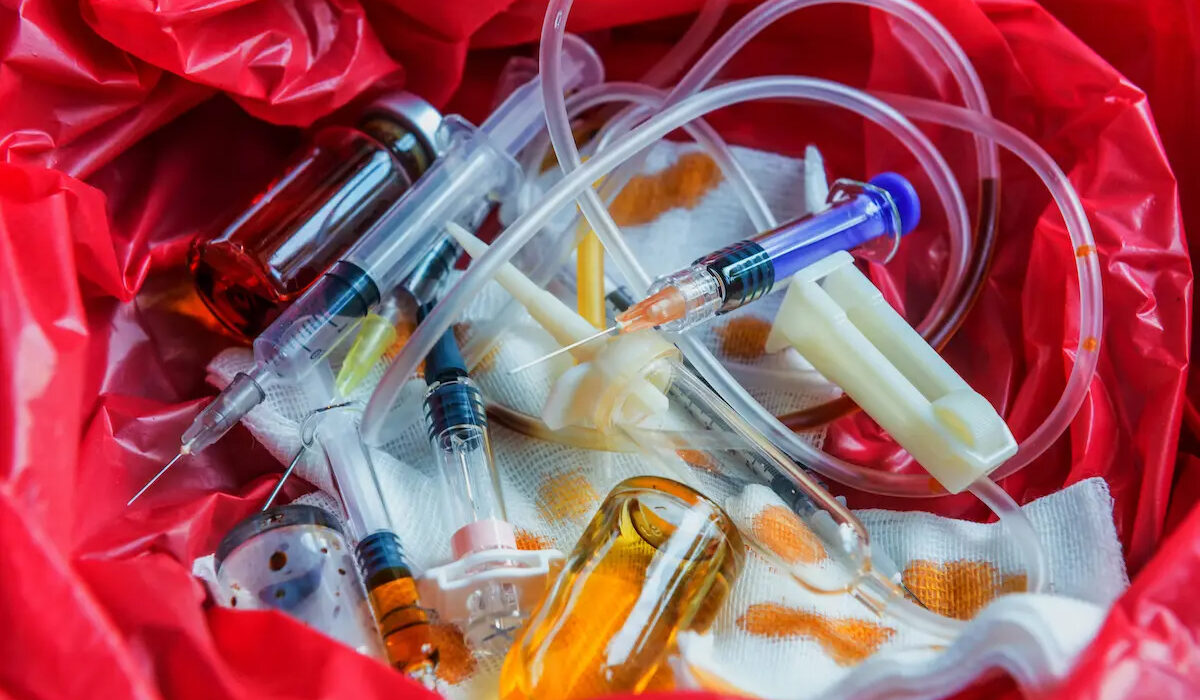
Healthcare facilities, clinical laboratories, and regional waste management centers generate substantial volumes of regulated biohazardous materials daily. According to the World Health Organization (WHO), non-hazardous general waste accounts for approximately 85% of total healthcare waste, while hazardous materials—including infectious, biological, and sharps waste—comprise the remaining 15% to 25% depending on facility type and management practices (Source: World Health Organization Fact Sheet). Before final disposal or landfilling, these materials require validated decontamination to eliminate pathogen transmission risks. A medical waste autoclave utilizes saturated steam under controlled pressure and elevated temperatures to achieve microbicidal activity, rendering biomedical waste non-infectious.
Selecting appropriate medical waste treatment equipment involves matching equipment specifications with waste streams, throughput capacity, facility utilities, regulatory compliance mandates, and operational budgets. This technical guide outlines the primary classifications, operational features, and procurement criteria for modern medical waste sterilization equipment.
What Is a Medical Waste Autoclave?
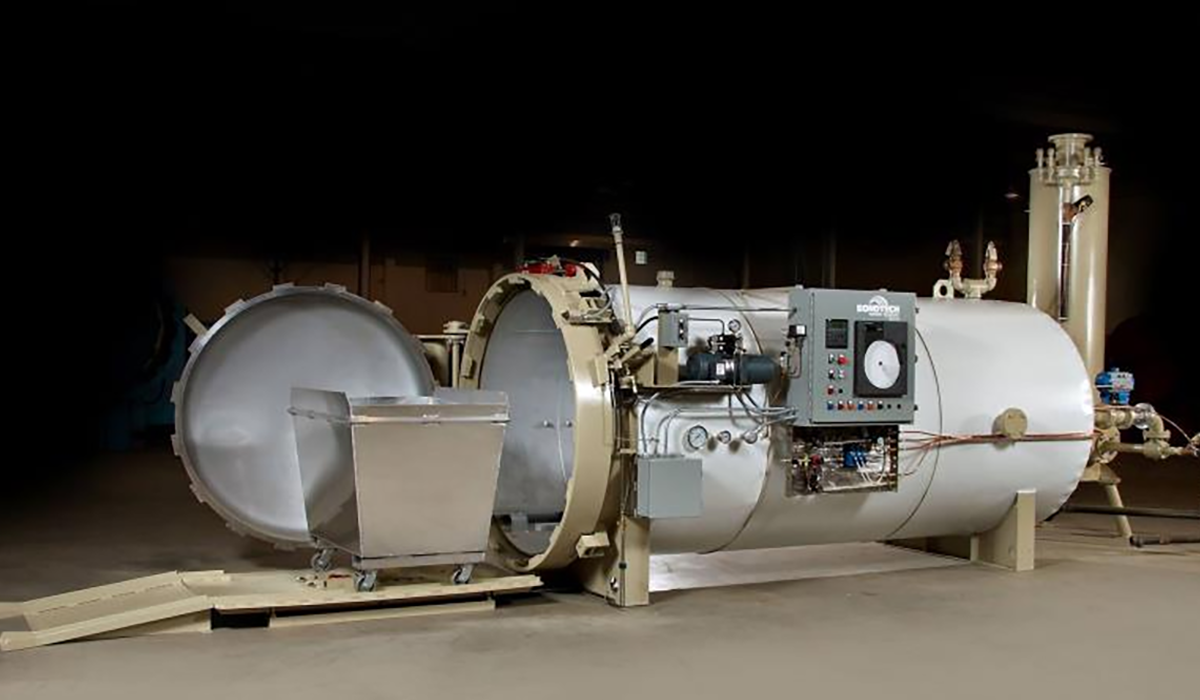
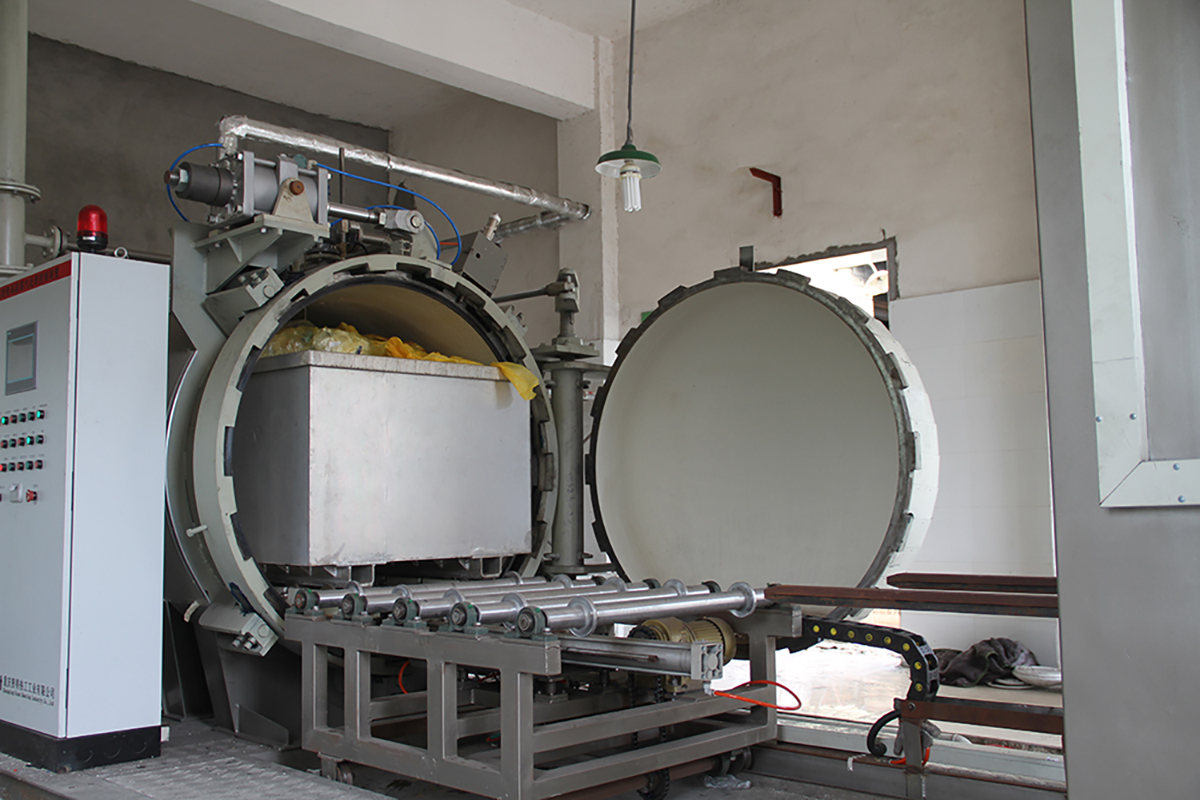
A medical waste autoclave is a heavy-duty pressure vessel designed to perform medical waste sterilization by exposing infectious waste streams to direct, saturated steam. Operating parameters typically range from 121℃ (250℉) to 138℃ (280℉) at pressures between 1.1 bar (16 psi) and 2.4 bar (35 psi) over exposure times of 15 to 60 minutes (Source: CDC Guidelines for Environmental Infection Control in Health-Care Facilities).
Unlike medical instrument sterilizers optimized for delicate, reusable surgical tools, an autoclave for biomedical waste is engineered for dense, non-uniform, and mixed waste loads. These loads include contaminated PPE, plastic tubing, culture plates, liquid containers, and sharps boxes.
The primary operational difference lies in the entire processing lifecycle:
- Load Dynamics: Biomedical waste containers retain entrapped air pockets, necessitating specialized air evacuation sequences.
- Effluent Management: Exhaust steam and condensate from infectious waste sterilization cycles must be decontaminated before release to prevent aerosolized pathogen escape.
- Pretreatment Integration: Many high-throughput medical waste treatment technologies incorporate integrated shredding or milling mechanisms to reduce volume prior to or after thermal exposure.
Key Procurement Considerations
Selecting an optimal medical waste treatment setup requires evaluating facility logistics rather than focusing solely on vessel volume. Healthcare procurement teams should evaluate the following structural questions:
- Which specific categories of regulated medical waste will be processed on-site?
- What is the daily mass (kg) and total volume (m³) of waste generated during peak operations?
- Is the system intended for localized, point-of-use hospital processing or centralized, off-site regional treatment?
- Will operations utilize manual cart loading, semi-automated tipping, or fully automated continuous feed systems?
- Does the waste composition require pre-vacuum air removal to ensure total steam penetration?
- What automated cycle logging, pressure-vessel certifications (e.g., ASME, PED), and environmental discharge reports are required by local regulatory bodies?
Types of Medical Waste Autoclaves
Gravity Steam Medical Waste Autoclaves
Gravity displacement units represent a foundational class of medical waste sterilization systems. In a gravity displacement cycle, steam enters the top or sides of the pressure chamber and, being less dense than air, gradually displaces cool air downward through a temperature-actuated exhaust drain.
- Operational Parameters: Temperatures typically operate at 121℃with dwell times ranging from 30 to 60 minutes depending on density (Source: CDC Guidelines for Environmental Infection Control in Health-Care Facilities).
- System Simplicity: Featuring fewer moving parts, gravity systems offer streamlined operational maintenance and lower initial capital outlay.
- Waste Suitability: Effective for porous, loosely packed biohazardous waste, flat culture dishes, and unsealed liquid containers where air entrapment is minimal.
OPERATIONAL INSIGHT: Gravity units are suitable for straightforward waste profiles; however, high-density loads, tightly sealed bags, or dense fabric packs can prevent complete air evacuation, leading to cold spots and incomplete sterilization.
Pre-Vacuum / Vacuum Medical Waste Autoclaves
Pre-vacuum medical waste sterilization equipment incorporates a mechanical vacuum pump system to actively extract air from the chamber prior to steam injection. By executing multiple pulse vacuum cycles (prevacuum phases), the system removes air from dense loads, enabling rapid and uniform saturated steam penetration.
- Steam Penetration Efficiency: Mechanical air removal reduces cycle times by up to 40% compared to gravity systems while achieving a validated SAL 10⁻⁶ (Sterility Assurance Level) across complex load configurations (Source: ISO 17665-1:2024).
- Application Range: Designed for dense waste loads, bulk collections of biological bags, contaminated bedding, and boxed sharps waste.
- Capital & Utility Requirements: Pre-vacuum systems require dedicated cold-water connections for liquid ring vacuum pumps and require higher initial capital expenditure and preventive maintenance budgets.
For facilities managing variable or dense waste loads, purchasing teams should prioritize pre-vacuum configurations over basic gravity models. For a detailed comparative analysis of sterilization options across different technology baselines, review our comprehensive analysis on medical waste sterilization methods.
High-Capacity Medical Waste Autoclave Systems
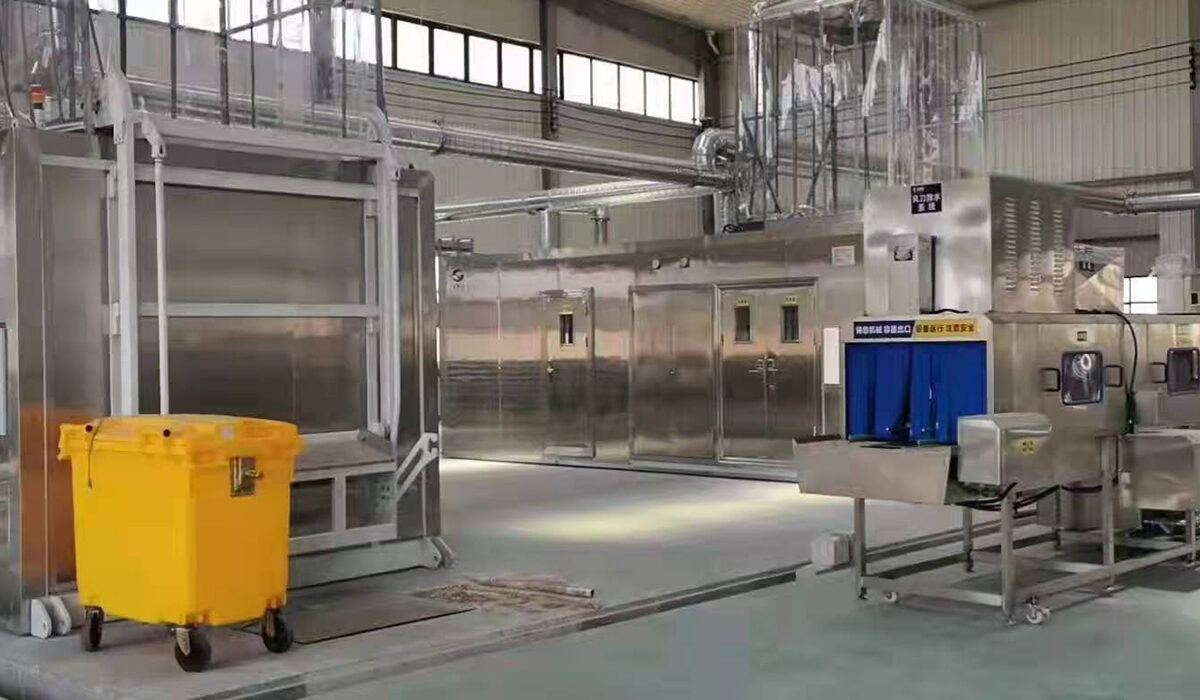
High-capacity medical waste management units serve centralized treatment hubs, large tertiary referral hospitals, and regional hazardous waste facilities. These industrial-grade systems feature chamber volumes ranging from 1,000 liters to over 10,000 liters, processing batch loads from 150 kg/cycle to well over 1,500 kg/cycle.
High-capacity installations typically incorporate integrated pre- or post-treatment shredders. Internal or external shredding reduces raw medical waste volume by up to 80% while transforming recognizable waste components into a homogenous, non-recognizable municipal-grade waste stream (Source: EPA Non-Incineration Treatment Technologies and Trends). To explore industrial-scale processing specifications, examine our high-temperature steam treatment solutions.
Key Features to Compare Before Buying a Medical Waste Autoclave
Selecting an autoclave for biomedical waste requires evaluating operational parameters against facility throughput and utility availability.
| Feature / Metric | Technical Parameter Range | Operational Impact for Healthcare Buyers |
| Chamber Capacity | 100 L to 10,000+ L | Dictates volume per batch; must match daily generation rates. |
| Working Temperature | 121℃ to 138℃ (250℉–280℉) | Higher temperatures accelerate microbicidal kill rates, shortening cycle times. |
| Working Pressure | 1.1 to 2.5 bar (16 to 36 psi) | High-pressure design allows rapid thermal transfer during saturated steam exposure. |
| Vacuum System | Single to multi-stage pulse vacuum | Mandated for dense loads to eliminate cold air pockets and ensure steam contact. |
| Cycle Duration | 20 to 60 minutes total time | Dictates total daily processing turnover and continuous labor usage. |
| Loading System | Manual, hydraulic bin lifter, automated cart | Reduces operator exposure to biohazards and minimizes physical lifting injuries. |
| Unloading System | Sliding door, double-door pass-through | Pass-through designs enforce bio-containment barriers between dirty and clean areas. |
| Control System | PLC with touch interface & user tiers | Provides automated process control, alarm tracking, and compliance validation. |
| Safety Interlocks | Pressure, temperature, door lock sensors | Prevents chamber opening while pressurized or elevated in temperature. |
| Data Recording | Thermal printer, USB, Ethernet/SCADA | Generates tamper-proof records for environmental health compliance audits. |
| Material of Construction | 316L Stainless Steel / Titanium alloy | Resists pitting, chemical corrosion, and thermal cycling degradation. |
| Utility Requirements | Electric steam boiler / Direct steam, cooling water | Requires evaluation of facility electrical (380V–480V 3-Phase) and water supply. |
| Installation Footprint | 2m² to 50+m² floor area | Requires floor load clearance (up to 2,000 kg/m²) and access pathways. |
Medical Waste Autoclave Capacity: How Much Do You Need?
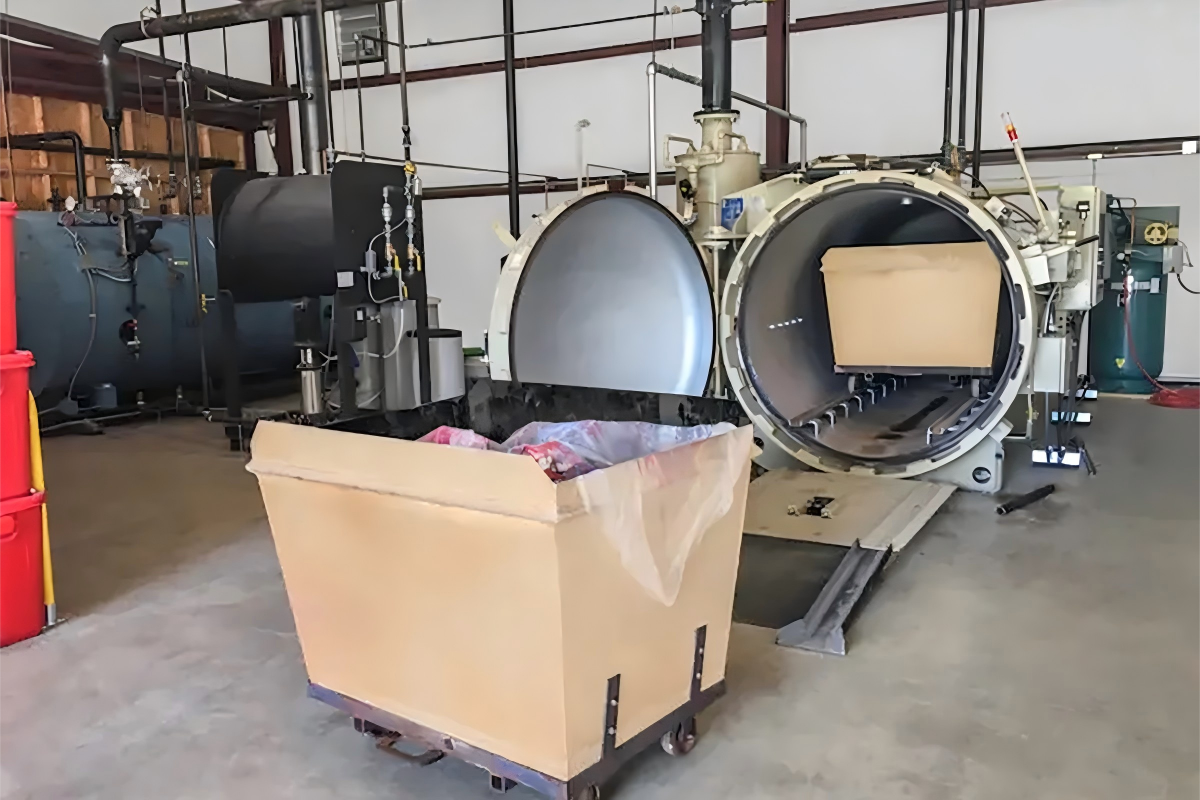
Procurement teams must avoid sizing equipment based solely on peak daily waste output. Sizing an autoclave for biomedical waste based purely on total daily weight without accounting for operational variables leads to capacity bottlenecks or equipment underutilization.
A facility producing 300 kg of infectious waste per day operating on an 8-hour shift should not simply purchase a single 300 kg/cycle machine. Real-world capacity planning must account for:
- Shift Schedule: Operating hours per shift and available operational shifts per day.
- Cycle Overhead: Load prep time, heating, vacuum extraction, dwell time, cooling, and unloading (averaging 45–60 minutes total per batch).
- Waste Density Fluctuation: Loose plastic tubing and hollow containers can lower waste density to 0.08 kg/L, whereas wet lab materials or dense sharps containers can reach 0.25 kg/L.
- Maintenance Reserves: Planned downtime for door seal replacements, boiler maintenance, and calibration (typically 5% to 8% scheduled downtime).
- Peak Generation Ratios: Surge capacity allowance during seasonal disease spikes or facility expansion (typically adding a 20–30% capacity buffer).
Baseline Sizing Calculation Example
To estimate required batch processing capacity:
Required Batch Capacity (kg/cycle)= Total Daily Waste Volume (kg) / [Planned Cycles per Day × Load Efficiency Factor (0.75)]
Example: A hospital generating 400 kg of waste daily, running 4 planned cycles within a single shift, requires a net usable chamber capacity of roughly:
400 kg / (4 cycles x 0.75 load efficiency) ≈ 133.3 kg per cycle
Assuming an average waste bulk density of 0.12 kg/L, the required usable chamber volume is roughly 1,111 liters.
What Medical Waste Can Be Treated by an Autoclave?
An autoclave for biomedical waste cannot decontaminate all healthcare waste streams. Misapplication can lead to dangerous chemical off-gassing, environmental non-compliance, or equipment damage.
| Waste Category | Autoclave Suitable? | Operational Conditions & Regulatory Context |
| Infectious Waste & PPE | YES | Standard Steam Cycle (121℃–134℃) |
| Contaminated Dressings | YES | Standard Steam Cycle |
| Microbiological Cultures | YES | Standard Steam Cycle with high-temp validation |
| Sharps Waste | YES | Requires puncture-resistant containers + optional shredding |
| Contaminated Plastics | YES | Thermostable plastics (PP/PE) only |
| Pathological / Anatomical | RESTRICTED | Requires specific regulatory approval; incineration preferred |
| Pharmaceutical Waste | NO | Requires high-temperature incineration (>1100℃) |
| Cytotoxic / Chemotherapy | NO | Requires dedicated chemical/thermal destruction |
| Volatile Chemical Waste | NO | Prohibited due to off-gassing hazards |
| Radioactive Materials | NO | Prohibited; strict nuclear decay regulatory handling |
OPERATIONAL INSIGHT: The central procurement question is not whether steam decontaminates medical waste generally, but whether a specific autoclave configuration meets the regulatory requirements for your facility’s specific waste stream.
Medical Waste Autoclave Applications
Hospitals and Healthcare Facilities
For acute care hospitals, installing on-site medical waste disposal technology eliminates the chain-of-custody risks and recurring transport expenses associated with off-site hauling.
- Primary Use Cases: Decontamination of infectious isolation waste, surgical dressings, blood bags, and laboratory consumables.
- Key Operational Priorities: Low noise output, space-saving vertical or pass-through configurations, integrated effluent de-gas filtration, and simple touch-screen operation for facility staff.
Centralized Medical Waste Treatment Facilities
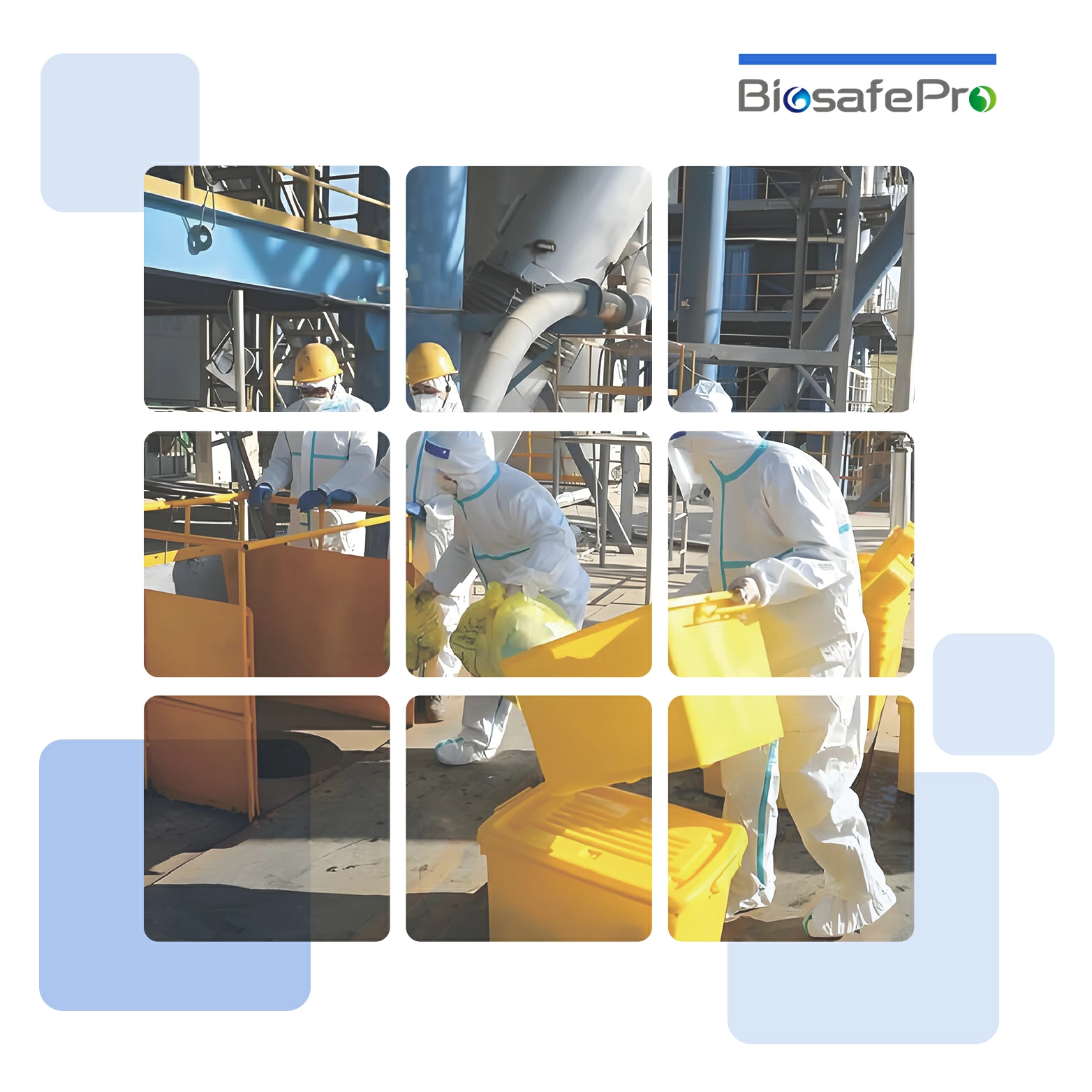
Commercial off-site treatment plants process bulk medical waste collected from hundreds of clinics, dental practices, and regional healthcare sites.
- Primary Use Cases: Continuous, large-scale medical waste treatment operating 16 to 24 hours per day.
- Key Operational Priorities: Heavy-duty construction, integrated heavy-duty bin lifters, secondary shredding options, low operating costs per kilogram, and integrated SCADA tracking systems.
- System Integration: These installations often combine medical waste sterilization systems with post-shredding, automated volume compaction, and continuous emission monitoring.
Laboratories and Research Facilities
Biomedical research institutes, pharmaceutical development centers, and BSL-3/BSL-4 containment laboratories require validated point-of-use decontamination of biohazardous media and active cell cultures.
- Primary Use Cases: Inactivation of viral pathogens, recombinant DNA vectors, bacterial strains, and contaminated research tools prior to leaving containment barriers.
- Key Operational Priorities: Dual-door pass-through designs, effluent air filtration systems (using 0.2-micron PTFE hydrophobic filters), and cycle logging software compliant with 21 CFR Part 11 standards.
For details on alternative non-incineration thermal technologies implemented in clinical and research facilities, review our technical breakdown on medical waste microwave treatment systems.
Medical Waste Autoclave vs. Other Treatment Methods
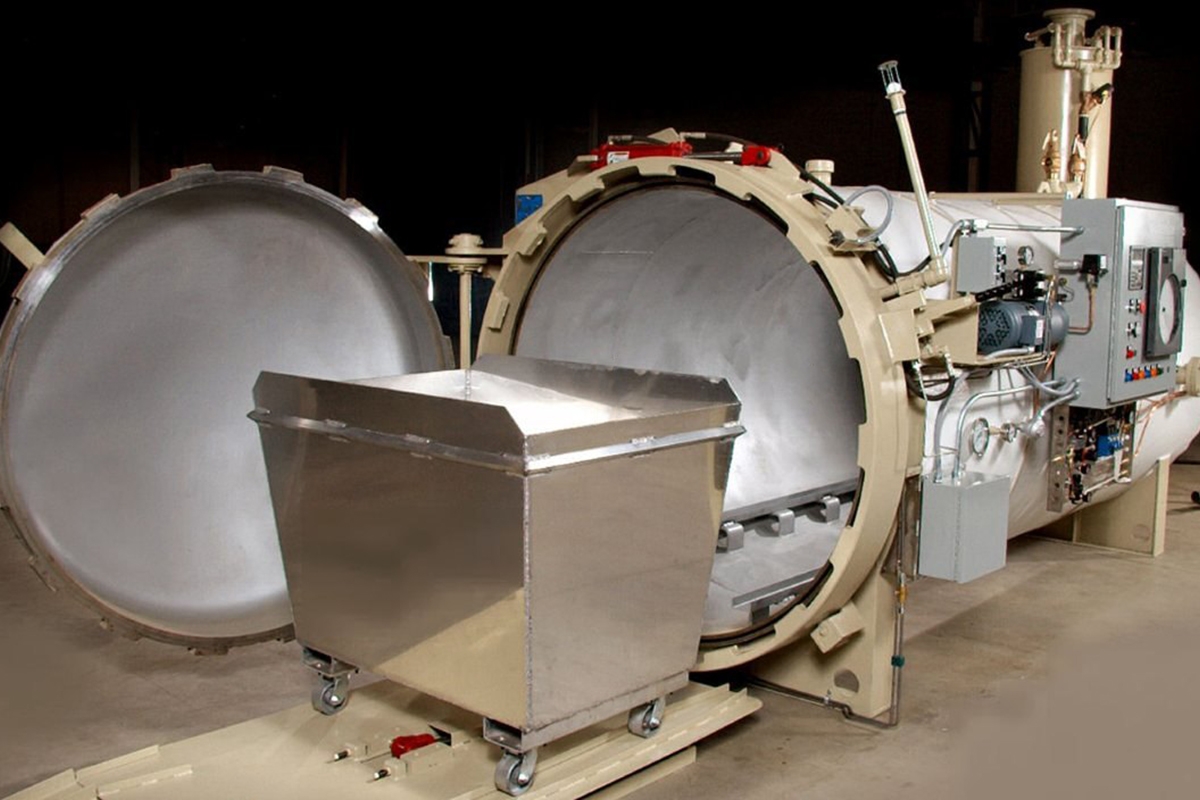
Selecting appropriate medical waste treatment equipment requires comparing steam sterilization against competing thermal, chemical, and irradiation technologies.
| Treatment Method | Core Operating Mechanism | Primary Advantages | Main Operational Limitations |
| Medical Waste Autoclave | Saturated high-pressure steam (121℃–138℃) | Non-burn technology; low operating cost; high reliability; no toxic dioxin emissions. | Does not reduce mass; waste remains recognizable unless integrated with a shredder. |
| Microwave Disinfection | 2.45 GHz RF radiation + steam heating | Rapid volumetric heating; low water usage; low energy consumption per kg. | High initial capital expenditure; requires uniform moisture and pre-shredding. |
| Incineration | High-temp thermal oxidation (850℃–1100℃+) | Complete combustion; reduces mass by 90% and volume by 95%; handles anatomical waste. | High fuel consumption; strict air emission regulations (flue gas scrubbers required). |
| Chemical Treatment | Liquid/gas chlorine, hypochlorite, or ozone | No high-pressure vessels; effective for localized liquid bio-waste disinfection. | Chemical handling safety risks; ongoing chemical supply costs. |
When a project prioritizes thermal decontamination of infectious waste without generating combustion emissions, high-pressure steam autoclaving is often the most cost-effective and compliant solution (Source: UNEP Compendium of Technologies for Treatment of Healthcare Waste, 2024). For a direct comparison across financial and operational dimensions, see our comparative study on microwave, autoclave, or incineration technologies .
Frequently Asked Questions
Q: How does a medical waste autoclave sterilize medical waste?
A medical waste autoclave sterilizes waste by injecting saturated steam under pressure into a sealed vessel. The steam transfers thermal energy upon condensing on cooler waste surfaces, rapidly denaturing the proteins and cell membrane structures of microorganisms. Maintaining a temperature of 121℃ to 138℃ for a validated exposure time achieves a minimum 6-log10 (99.9999%) reduction of resistant bacterial spores such as Geobacillus stearothermophilus.
Q: What is the difference between a medical waste autoclave and a medical instrument autoclave?
Medical instrument autoclaves are engineered for delicate, reusable surgical tools, featuring clean steam systems and strict dry-phase cycles to protect metal instruments. In contrast, a medical waste autoclave is built for non-uniform biohazardous loads. It features heavy-duty chamber materials, pre-vacuum cycles to extract entrapped air from sealed bags, contaminated condensate filtration systems, and optional integrated shredders to render treated waste unrecognizable.
Q: How do I choose the right medical waste autoclave capacity?
Calculate your required capacity by dividing total daily medical waste mass (kg) by the number of planned operating cycles per day, then divide by a 0.75 load efficiency factor. Factor in average waste bulk density (0.08 to 0.20 kg/L), loading prep times, daily peak load spikes, and preventive maintenance downtime to ensure your facility maintains adequate capacity during operational surges.
Q: What factors affect the processing capacity of a medical waste autoclave?
Key factors include total chamber volume, pre-vacuum extraction efficiency, boiler heating speed, waste load density, bag packing configuration, thermal conductivity of the waste materials, and cooling/exhaust cycle times. Waste that is loosely packed in steam-permeable bags processes faster than tightly packed, dense waste containers.
Q: What utilities are required for a medical waste autoclave?
Standard requirements include a high-voltage 3-phase electrical connection (380V–480V), an adequate steam supply (from an internal or central boiler), treated softened feed-water to prevent chamber scaling, a cold cooling-water line for vacuum pumps and discharge cooling, a floor drain rated for thermal exhaust, and compressed air (6–8 bar) for pneumatic valve operation.
BiosafePro Company Overview
BiosafePro (founded 2012) manufactures medical waste treatment systems, specializing in high-capacity steam autoclaves, integrated shredding systems, and microwave disinfection units. Certified under ISO 9001 and ISO 13485 standards, our equipment carries CE pressure vessel compliance and serves healthcare facilities across 45 countries worldwide.
Take the Next Step in Healthcare Waste Optimization
Contact the BiosafePro engineering team today for a custom technical consultation and sizing analysis for your facility. Visit biosafepro.com to download detailed product specifications and request a competitive quote.
References
- World Health Organization (WHO). (2018). Safe Management of Wastes from Health-Care Activities, 2nd ed.
- ISO Standards Authority. (2024). ISO 17665-1:2024 – Sterilization of health care products — Moist heat — Part 1: Requirements for the development, validation and routine control of a sterilization process for medical devices.
- S. Centers for Disease Control and Prevention (CDC). (2024). Guidelines for Environmental Infection Control in Health-Care Facilities.
- S. Environmental Protection Agency (EPA). Medical Waste Treatment Technologies: Non-Incineration Treatment Technologies and Trends, Chapter 3.
- United Nations Environment Programme (UNEP). (2024). Compendium of Technologies for Treatment of Healthcare Waste.