By BiosafePro Technical Editorial Team | Biomedical Waste Management Specialists
BiosafePro is a specialized medical waste equipment manufacturer dedicated to environmental decontamination technology, high-temperature steam sterilization, microwave disinfection, and chemical treatment systems for healthcare facilities, laboratories, and regional waste management operators worldwide.
Medical waste autoclave machine price typically ranges from $12,000 to over $250,000 USD ex-works, depending on chamber volume, processing throughput, integrated shredding, and automation grade (Source: WHO Health-Care Waste Management Cost Benchmarks & Global Tender Analysis). For hospital purchasing committees, clinical laboratories, and regional distributors, comparing vendor quotations solely by chamber liter capacity frequently leads to budget overruns during facility integration.
A standard 100-liter laboratory unit and an industrial 1,500-liter hospital system operate under fundamentally different engineering, utility, and regulatory architectures. Understanding medical waste autoclave cost factors requires analyzing how treatment capacity, mechanical size reduction, steam generation infrastructure, pressure vessel metallurgy, and validation documentation interact across the equipment lifecycle.
“In healthcare procurement, evaluating non-incineration treatment technologies requires calculating the total cost per kilogram of treated waste—integrating capital amortization, utility consumption, maintenance consumables, and residue disposal—rather than relying on baseline equipment purchase price alone.”
— World Health Organization (WHO), Safe Management of Wastes from Health-Care Activities (2nd Edition) (Source: WHO)
Facilities comparing thermal disinfection pathways against combustion should also review the broader capital and emissions trade-offs outlined in Medical Waste Autoclave vs. Incinerator: Which Is Better?.
What Is the Typical Medical Waste Autoclave Price?
Medical waste autoclave equipment price is segmented into four distinct capacity and engineering tiers based on daily waste generation and institutional scale. While an entry-level 100L medical waste autoclave price starts between $12,000 and $28,000, centralized hospital medical waste autoclave system price packages with integrated shredding and automated material handling routinely reach $150,000 to $300,000+ (Source: International Healthcare Tender Benchmarks).
| Equipment Tier & Target Facility | Nominal Chamber Volume | Typical Throughput (kg/cycle) | Ex-Works Price Range (USD) | Typical Configuration Profile |
| Compact / Laboratory Tier (Clinics, pathology labs, blood banks) | 75 L – 150 L | 10 – 35 kg/cycle | $12,000 – $28,000 | Vertical or small horizontal; electric built-in steam generator; no shredder; basic PLC |
| Small-to-Mid Hospital Tier (50–150 bed hospitals, surgical centers) | 200 L – 500 L | 40 – 120 kg/cycle | $30,000 – $75,000 | Horizontal cylindrical/rectangular chamber; pre-vacuum; built-in or external steam; optional separate shredder |
| Large Hospital Tier (200–600+ bed acute care facilities) | 600 L – 1,500 L | 150 – 450 kg/cycle | $80,000 – $165,000 | Double-door pass-through; high-vacuum pump; automated loading cart; industrial PLC & data logging |
| Centralized / Integrated Tier (Regional treatment plants, tertiary hubs) | 1,500 L – 4,000+ L | 500 – 2,000+ kg/day | $160,000 – $300,000+ | Integrated heavy-duty shredder; automated bin lifter; external industrial boiler; SCADA telemetry |
(Source: Compiled from WHO Non-Incineration Treatment Technology Cost Guides & International Medical Equipment Procurement Data)
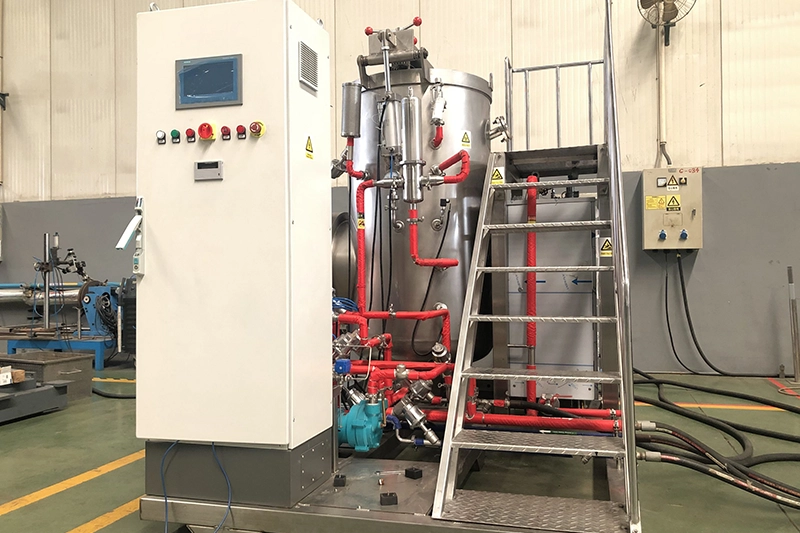
1. Treatment Capacity Is One of the Biggest Price Factors
Medical waste autoclave capacity price scales non-linearly because larger chambers require thicker pressure vessel walls, higher-horsepower vacuum pumps, reinforced door-locking mechanisms, and greater thermal energy input per cycle. Increasing chamber volume from 200 liters to 1,000 liters typically increases base medical waste autoclave pricing by 180% to 260%, even before adding automated loading accessories (Source: Pressure Vessel Engineering & OEM Cost Models).
When comparing quotations, buyers should look at both:
- Chamber capacity, such as liters per cycle
- Actual treatment throughput, such as kg/cycle or kg/day
Nominal Chamber Volume vs. Usable Loading Density
A common procurement error is equating gross chamber liters directly with waste mass. Biohazardous waste—such as bagged PPE, empty IV bags, disposable syringes, and laboratory plastics—has a low bulk density of 0.08 to 0.15 kg/L (Source: WHO Safe Management of Wastes from Health-Care Activities). Furthermore, saturated steam requires 20% to 30% free void space inside the chamber to penetrate waste bags and achieve validated sterility assurance levels (SAL) (Source: ISO 17665:2024).
- Loading Factor Impact: A 500-liter chamber loaded at a 70% fill ratio with waste averaging 0.12 kg/L processes approximately 42 kg per cycle, not 500 kg.
- Cycle Turnaround Frequency: Total daily throughput (kg/day) depends on cycle duration. A standard prevacuum medical waste sterilization autoclave priceincludes high-efficiency vacuum pumps that reduce total cycle time (heat-up, 134℃ exposure, vacuum drying, cooling) to 45–60 minutes, enabling 6 to 8 cycles per 8-hour shift (Source: BiosafePro High-Temperature Steam Treatment Specifications). Gravity-displacement units, while cheaper upfront, require 75–110 minutes per cycle due to slower air removal.
2. Integrated Shredding Can Increase the Equipment Cost
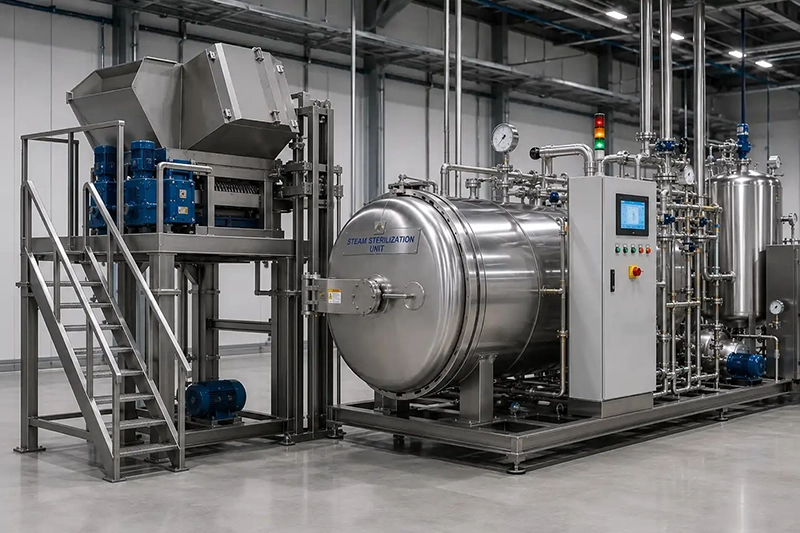
Adding an integrated mechanical shredder increases medical waste autoclave with shredder price by 35% to 75% compared to a standalone steam sterilizer of equivalent capacity (Source: UNEP Healthcare Waste Technology Compendium). High-torque dual-shaft or four-shaft shredders engineered to pulverize stainless-steel sharps, glass vials, and dense plastics require hardened alloy steel cutters, heavy-duty gearboxes, and sealed bearings capable of withstanding thermal cycling or pre-treatment shock loads.
For procurement purposes, the key question is not simply: “Is an autoclave with shredder more expensive?” It usually is.
The more useful question is: “Does the project actually need integrated shredding, and is the shredder included in the supplier’s quoted scope?”
Integrated Shredding vs. Post-Cycle Shredding vs. No Shredder
- Regulatory & Volume Reduction Drivers: Shredding reduces treated waste volume by 60% to 80% and renders sharps and single-use medical devices unrecognizable, preventing illegal reuse and lowering municipal landfill tipping fees (Source: WHO & BiosafePro Technical Data).
- Pre-Vacuum Shredding vs. Post-Treatment Shredding: Systems that shred before or during sterilization inside a sealed vessel prevent fugitive aerosol release and improve steam penetration, but incur higher medical waste autoclave system costdue to complex shaft seals and wear-resistant chamber liners. Conversely, placing an external shredder downstream of a standard sterilizer lowers capital complexity and simplifies cutter maintenance.
- Scope Verification: Some vendor quotes list an “autoclave-shredder system” where the shredder is an unmounted peripheral unit without automated transfer conveyors. Buyers evaluating whether mechanical size reduction justifies the capital premium can consult Medical Waste Autoclave with Shredder: Is It Worth It.
3. Automation and Control Systems Affect the Quotation
Control architecture and mechanical automation account for 15% to 30% of total medical waste treatment autoclave price in mid-to-large hospital installations (Source: Healthcare Equipment Procurement Benchmarks). Entry-level units rely on manual hinged doors, manual cart loading, and basic digital timers, whereas modern hospital-grade systems incorporate automated pneumatic sliding doors and closed-loop PLC validation.
Depending on the project, the quotation may include features such as:
- Automatic loading and unloading
- Programmable treatment cycles
- PLC-based control
- Temperature and pressure monitoring
- Automatic cycle recording
- Alarm and safety functions
- Data logging
- Remote monitoring or communication functions
How Control Specifications Drive Cost and Compliance
- Dual-Sensor Independent Monitoring: Regulatory standards such as EN 285 and ISO 17665 require independent verification of chamber temperature and pressure rather than relying on a single control probe (Source: EN 285:2015+A1:2021). Adding redundant PT100 temperature sensors, calibrated pressure transducers, and an independent batch-recording thermal printer or encrypted electronic audit trail adds $2,500 to $8,000 to the quotation.
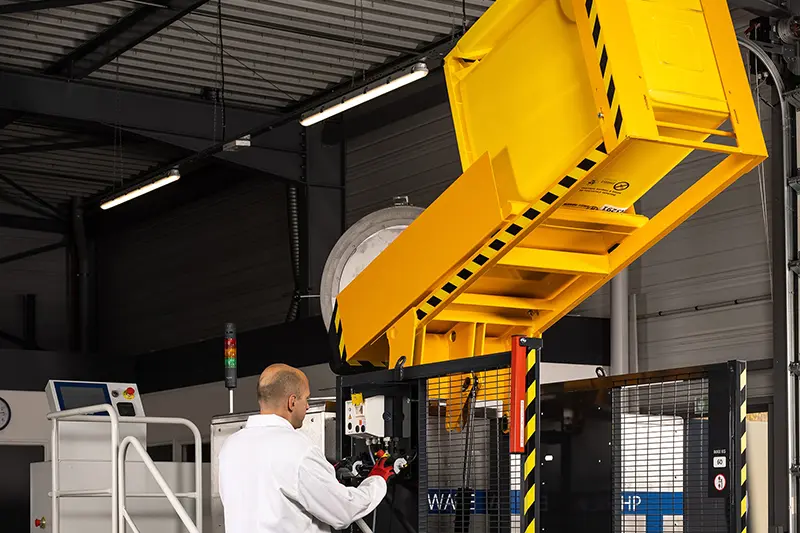
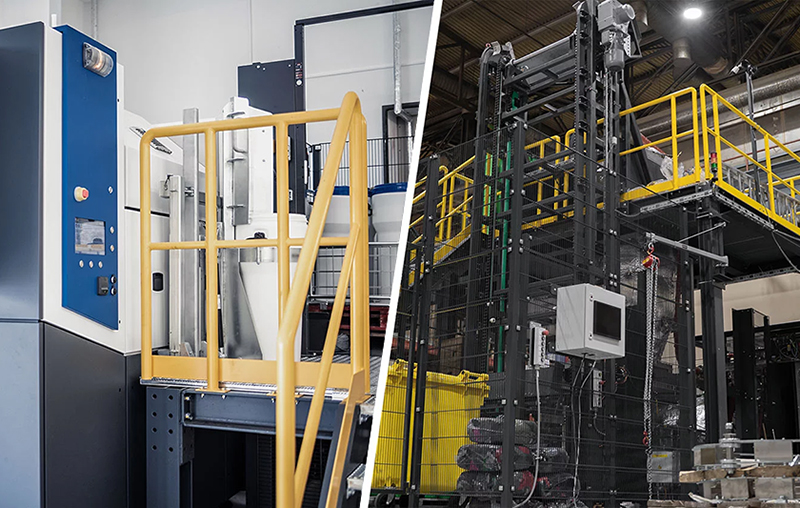
- Automated Material Handling: For chambers exceeding 600 liters, manual pushing of heavy stainless-steel waste carts creates ergonomic hazards. Motorized track loaders, automated bin tippers, and double-door pass-through configurations (separating the contaminated “dirty” loading zone from the sterilized “clean” unloading zone) add $10,000 to $35,000 to the medical waste autoclave system price (Source: Hospital CSSD & Waste Facility Design Standards).
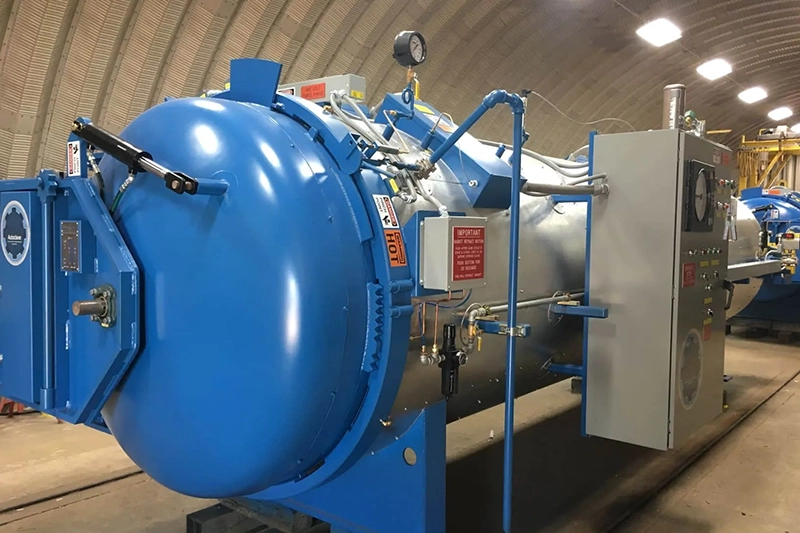
4. Steam Generation and Utility Requirements Can Change the Total Cost
The method of steam supply directly alters both the quoted medical waste steam autoclave price and the facility’s civil/MEP (Mechanical, Electrical, and Plumbing) construction budget. Autoclaves are manufactured either with an integrated electric/gas steam generator mounted beneath the chamber or configured to draw saturated steam from a hospital’s centralized boiler plant. This creates an important distinction between equipment price and installed project cost.
Built-In Steam Generators vs. Centralized Plant Steam
- Built-In Electric Steam Generators: Including an integrated stainless-steel electric boiler raises the manufacturer’s medical waste autoclave machine priceby $3,000 to $15,000 depending on kilowatt rating (typically 18 kW to 120 kW) (Source: Industrial Steam Sterilizer OEM Pricing Data). However, it eliminates the need for long insulated steam supply pipelines, condensate return traps, and dedicated boiler operators, reducing on-site installation costs for clinics and standalone laboratories.
- Centralized Hospital Steam Supply: Purchasing a “house-steam” autoclave lowers the ex-works equipment invoice, provided the facility already maintains a central boiler delivering dry saturated steam at 0.3 to 0.5 MPa (3 to 5 bar) (Source: BiosafePro High-Temperature Steam Treatment Engineering Guidelines). If the existing boiler lacks spare capacity or requires pressure-reducing stations and clean-steam filtration, MEP retrofits can easily exceed $20,000 to $50,000.
- Water Quality & Effluent Cooling: Hard water causes rapid scale accumulation on heating elements and solenoid valves. Industrial installations frequently require an automatic water softener ($1,200–$4,500) and a wastewater heat exchanger/quenching tank to cool condensate below 60℃before municipal sewer discharge, as mandated by local plumbing codes (Source: International Plumbing Code & WHO Effluent Guidelines).
5. Installation and Commissioning Should Be Checked Separately
On-site deployment, site acceptance testing (SAT), and operator certification typically add 10% to 25% to the ex-works medical waste autoclave equipment cost, yet these line items are frequently excluded or ambiguous in initial supplier proposals (Source: International Medical Equipment Tender Audits).
Installation-related costs may include:
- Equipment positioning and assembly
- Utility connections
- Commissioning
- Site testing
- Operator training
- Calibration or verification
- Travel and technical service
- Additional auxiliary equipment
Avoiding Hidden Deployment Expenses
- Rigging and Structural Access: A 1,000-liter horizontal autoclave weighs between 1,800 kg and 3,500 kg empty (Source: Pressure Vessel Structural Specifications). If hospital corridor widths or elevator load limits cannot accommodate the assembled frame, suppliers must either ship the unit in modular sections for on-site welding/reassembly or facilities must fund exterior wall openings and crane rigging.
- Microbiological Validation (IQ/OQ/PQ): Unlike standard general-purpose sterilizers, infectious medical waste autoclave price tenders require documented Installation Qualification (IQ), Operational Qualification (OQ), and Performance Qualification (PQ) using biological indicators (Geobacillus stearothermophilus spores achieving at least a 6-log reduction, or 10^-6 sterility assurance level) (Source: STAATT — State and Territorial Association on Alternate Treatment Technologies). Confirm whether the supplier’s commissioning fee includes biological challenge testing kits and third-party laboratory incubation.
6. Material, Chamber Design and Safety Configuration Also Affect Price
Pressure vessel metallurgy, weld integrity, and redundant safety interlocks represent the core structural determinants of medical waste autoclave machine cost and service lifespan. Two sterilizers with identical external dimensions can differ in price by 30% to 50% based on stainless steel grade, jacket design, and door engineering (Source: ASME Boiler and Pressure Vessel Code & OEM Fabrication Standards).
Key Engineering Differentiators
- Stainless Steel Grade (304 vs. 316L): Infectious medical waste frequently contains chlorinated plastics (PVC) and residual chemical disinfectants that release corrosive chlorides under high heat and pressure. Chambers fabricated from AISI 316L molybdenum-bearing stainless steel resist pitting and stress-corrosion cracking significantly better than standard AISI 304, adding 12% to 20% to vessel fabrication cost while extending operational service life from 7–10 years to 15+ years (Source: Materials Engineering & Hospital Sterilizer Lifecycle Data).
- Full Jacket vs. Semi-Jacket vs. Single-Wall Design: Fully jacketed chambers circulate steam around the entire vessel exterior to preheat walls, prevent condensation pooling, and accelerate drying. Single-wall chambers without external steam jackets cost less to manufacture but produce wetter post-cycle waste loads, increasing disposal weight and microbial regrowth risks.
- Door Locking & Vacuum Integrity: Motorized radial-arm doors or pneumatic sliding doors with triple safety interlocks (preventing door opening when chamber pressure exceeds 0.02 MPa or while the opposite door is open in pass-through models) cost substantially more than manual handwheel bolts, yet are mandatory under modern occupational safety codes (Source: PED 2014/68/EU & ASME Section VIII). For detailed comparisons of structural designs, see Medical Waste Autoclave Types, Features, and Applications.
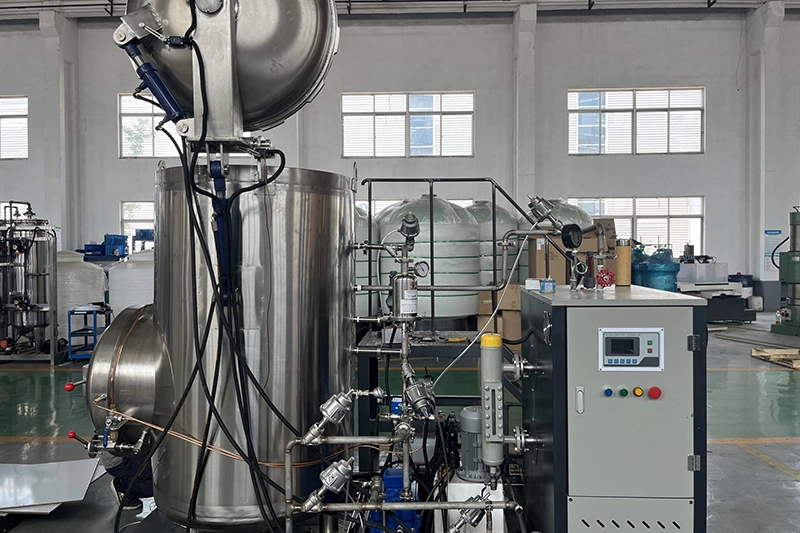
7. Certification and Documentation Can Add to the Cost
Regulatory compliance engineering, third-party pressure vessel inspection, and localized technical dossiers add 8% to 18% to the manufacturer’s production cost, directly impacting the final medical waste autoclave pricing submitted in competitive tenders (Source: Medical Device & Pressure Equipment Regulatory Compliance Benchmarks).
More importantly, buyers should avoid comparing Supplier A complete documentation package with Supplier B equipment only.
Mandatory Compliance & Validation Deliverables
Pressure Vessel & Safety Certifications: Depending on the destination market, legal installation requires certified compliance with ASME Section VIII, Division 1 (North America and international tenders), PED 2014/68/EU (European Economic Area), or GB/T 150 (China). Third-party notified body inspection, radiographic weld testing (X-ray), and hydrostatic test certificates carry direct factory certification fees that uncertified budget fabricators omit.
Quality Management & Efficacy Standards: Hospital procurement committees and ministries of health increasingly require manufacturers to hold ISO 13485:2016 (Medical Devices Quality Management Systems) or ISO 9001:2015, alongside microbiological inactivation test reports aligned with STAATT Level III/IV criteria (Source: ISO 13485:2016 & STAATT Guidelines).
Tendering & Customs Documentation: A complete quotation should explicitly include Bilingual/English Operation & Maintenance (O&M) manuals, electrical/P&ID schematics, spare parts BOMs, Certificate of Origin, and factory calibration certificates for all temperature and pressure instruments. High-performance systems such as the BiosafePro High-Temperature Steam Treatment System.
What Should Buyers Compare in a Medical Waste Autoclave Quotation?
To prevent scope gaps and ensure apples-to-apples bid evaluation across multiple manufacturers, procurement teams and distributors should require every vendor to itemize the following 14 technical and commercial parameters in their quotation:
| Cost / Specification Item | What to Check |
| Treatment capacity | kg/cycle, kg/day or other applicable throughput |
| Chamber volume | Actual usable capacity, not only nominal volume |
| Shredding | Integrated, separate or not required |
| Automation | Manual, semi-automatic or automatic |
| Steam supply | Built-in generator or external steam |
| Utilities | Electricity, water, drainage and other requirements |
| Control system | PLC, monitoring, alarms and cycle recording |
| Installation | Included or quoted separately |
| Commissioning | Included or excluded |
| Training | Operator training and technical support |
| Spare parts | Initial spare-parts package and availability |
| Documentation | Technical and compliance documentation |
| Warranty | Coverage period and service scope |
| Customization | Required project-specific modifications |
(Source: BiosafePro Healthcare Equipment Procurement Evaluation Framework)
FAQ
Q: What is the biggest factor affecting medical waste autoclave price?
Treatment capacity (throughput in kg/cycle and chamber volume in liters) combined with integrated shredding are the two largest cost drivers. Scaling from a compact 100-liter laboratory unit ($12,000–$28,000) to a 1,000+ liter hospital system with automated loading and integrated shredding ($150,000–$300,000+) multiplies pressure vessel steel mass, steam generation capacity, and mechanical complexity (Source: WHO & International Tender Benchmarks).
Q: Does a medical waste autoclave with a shredder cost more?
Yes. An integrated shredder typically increases medical waste autoclave with shredder price by 35% to 75% over a non-shredding unit of the same chamber size (Source: UNEP Technology Compendium). High-torque alloy cutters, heavy-duty drive motors, and sealed shaft housings add significant manufacturing and maintenance costs, though they reduce post-treatment waste volume by 60% to 80% and lower downstream landfill disposal fees.
Q: Is installation included in the medical waste autoclave price?
Usually not in standard ex-works (EXW) or FOB quotes. Base quotations cover the machine itself, while rigging, MEP utility hookups, on-site commissioning, and microbiological validation (IQ/OQ/PQ) typically add 10% to 25% to total project cost (Source: ECRI Institute Capital Planning Guidelines). Buyers should request a separate itemized schedule for installation, engineer travel, and site acceptance testing.
Q: Does a larger autoclave always have a higher price?
Generally yes, for identical specifications, though a smaller unit with high-end options can outprice a basic larger model. For example, a 300-liter double-door pass-through infectious medical waste autoclave price featuring 316L stainless steel, integrated shredding, and full EN 285 compliance documentation can exceed the cost of a basic 600-liter single-door, manual-loading 304 stainless steel unit without a built-in boiler.
Q: Does the type of medical waste affect autoclave pricing?
Yes. Standard infectious soft waste (gauze, PPE, culture plates) can be processed in standard prevacuum steam sterilizers operating at 134℃ and 0.22 MPa (Source: WHO & BiosafePro Technical Specifications). However, dense sharps containers, heavy surgical plastics, or high-moisture pathological/laboratory loads require reinforced loading baskets, integrated shredders, extended vacuum drying phases, and corrosion-resistant 316L stainless steel chambers—all of which increase capital equipment cost.
About BiosafePro
BiosafePro is a specialized biomedical waste management solutions manufacturer with over 24 years of industry experience (Source: BiosafePro Corporate Profile). Offering a full-spectrum portfolio—from biohazard bags and sharps containers to high-temperature steam autoclaves, microwave disinfection units, shredders, and incinerators—BiosafePro manufactures CE-certified equipment aligned with global healthcare and environmental regulations, serving 1,300+ hospitals, laboratories, and distributors across international markets worldwide (Source: BiosafePro).
Planning a medical waste treatment upgrade or preparing a hospital tender specification? Contact the BiosafePro engineering team with your daily waste volume (kg/day) and facility utility parameters to receive an itemized equipment specification and project quotation.
References
- World Health Organization (WHO). Safe Management of Wastes from Health-Care Activities (2nd Edition).
- United Nations Environment Programme (UNEP). Compendium of Technologies for Treatment/Destruction of Healthcare Waste.
- ISO 13485:2016 — Medical devices — Quality management systems — Requirements for regulatory purposes.
- ISO 17665: 2024— Sterilization of health care products — Moist heat — Part 1: Requirements for the development, validation and routine control of a sterilization process for medical devices.
- EN 285:2015+A1:2021 — Sterilization — Steam sterilizers — Large sterilizers.
- State and Territorial Association on Alternate Treatment Technologies (STAATT). Technical Assistance Manual: State Regulatory Oversight of Medical Waste Treatment Technologies.
- ECRI Institute. Healthcare Technology Assessment & Capital Equipment Lifecycle Costing Guidelines.