


Why Choosing the Right Incinerator Matters
In medical institutions, handling daily waste such as used needles, dressings, and pharmaceutical packaging is a critical step that must be properly managed. The use of a medical waste incinerator is one of the most common treatment methods. However, not all incinerators are the same. Choosing the right incinerator for medical waste has a significant impact on many aspects of this process.
Selecting the proper equipment allows hospitals and clinics to manage their special waste more smoothly. It helps facilities comply with local and national regulations on medical waste incineration, reducing the risk of non-compliance. A well-chosen incinerator for medical waste also ensures stable, reliable performance, minimizing downtime caused by maintenance. At the same time, choosing the right size and capacity can help control long-term costs—both the initial investment and ongoing operational expenses such as fuel and labor.
When selecting an incinerator, several key factors should be considered carefully:
– the daily or weekly amount of waste generated,
– the type of fuel intended for operation (such as diesel or natural gas),
– the local emission standards for exhaust gases,
– and the available installation space at the site.
BiosafePro understands that requirements vary widely from one location to another. Therefore, when providing medical waste incinerators to hospitals, clinics, and laboratories, the company customizes and supplies equipment based on each facility’s specific needs.

Common Types of Medical Waste Incinerators
Medical facilities handle various types of waste—such as syringes, dressings, and chemical residues—requiring different structural designs of incinerators. The three most common types are described below:
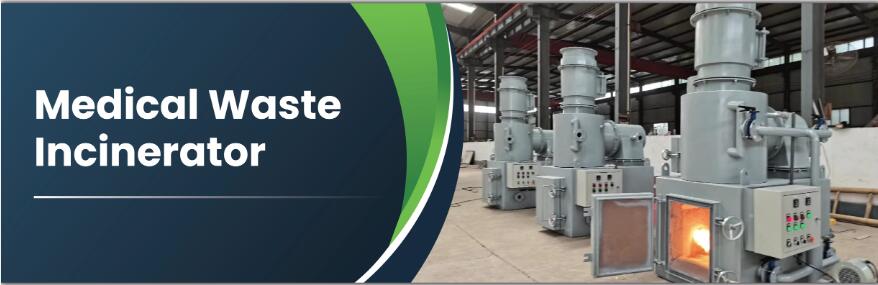
1. Stationary (Fixed-Chamber) Medical Waste Incinerator
This type contains a stationary combustion chamber, with the bottom lined by high-temperature refractory materials. Waste is placed inside and burned within this fixed space.
Best suited for: small clinics, laboratories, and rural or remote health centers that generate relatively low amounts of waste daily.
Advantages:
- Simple, direct structure makes inspection and maintenance easy.
- Initial purchase cost is generally low.
Limitations:
- The combustion process may occasionally be incomplete.
- The total amount of waste that can be treated in a single batch is limited, making it unsuitable for facilities with large-scale waste volumes.
2. Rotary Kiln Medical Waste Incinerator
This design features a cylindrical inner chamber that rotates continuously, tumbling and mixing the waste for more uniform combustion and reduced residue.
Best suited for: large hospitals with high patient volumes, centralized waste treatment facilities serving multiple institutions, or licensed professional medical waste disposal companies.
Advantages:
- Capable of treating complex and mixed waste compositions.
- High combustion efficiency and continuous, uninterrupted operation.
Limitations:
- Higher purchase and installation costs than other models.
- Contains more moving mechanical parts, increasing maintenance complexity and frequency.
3. Controlled-Air (Dual-Chamber) Medical Waste Incinerator
This incinerator includes two separate combustion chambers: the primary chamber performs the initial burning of waste, while the secondary chamber completely combusts harmful gases and particulates produced in the first stage. Adjustable airflow systems are integrated to enhance safety and combustion control.
Best suited for: medium-sized healthcare facilities and private medical centers.
Advantages:
- Very low smoke emissions and high overall waste-to-energy combustion efficiency.
- Easier compliance with most countries’ environmental emission standards.
Considerations:
- Operators must possess technical skills, responsibility, and relevant experience.
- Continuous and stable fuel and electricity supply are essential.
- Routine maintenance must be performed carefully and cannot be neglected.
How to Choose the Right Incinerator Based on Facility Size
Selecting the proper size of a medical waste incinerator is directly related to how much waste a facility generates each day and the capacity of the incinerator (the amount it can handle per batch or per hour). The following table provides general guidance to help different types of healthcare facilities estimate which capacity and model may best fit their operational needs.
Medical Waste Incinerator Selection Guide (by Facility Scale)
| Facility Type | Typical Daily Waste Generation | Recommended Incineration Capacity | Suggested Incinerator Type |
| Small clinics, dental offices, laboratories, rural or remote health centers | Usually less than a few bags per day (under 200 kg) | 10–30 kg per batch | Stationary (fixed-chamber) medical waste incinerator |
| Regional hospitals, general clinics, or medium-scale private medical centers | Multiple bags daily (200–several hundred kg) | 30–100 kg per batch | Controlled-air (dual-chamber) medical waste incinerator |
| Large regional or teaching hospitals, centralized medical waste treatment centers | High waste volume exceeding 800 kg/day | 100 kg/hour or more | Rotary kiln medical waste incinerator |
Notes:
The waste amounts and treatment capacities listed in the table are common estimates. Actual selection should always consider the specific types and compositions of waste, as well as local environmental regulations related to medical waste incineration.
Tip: BiosafePro can customize the system according to actual needs by adjusting component configurations—such as combustion chamber size, key structural parts, or emission treatment levels—to offer solutions tailored to each facility’s operating conditions.
Comparison of Common Energy Sources for Medical Waste Incinerators
Operating an incinerator for medical waste requires the use of fuel as an energy source. Each type of fuel has its own characteristics, and the choice usually depends on the available energy resources and operational requirements at the facility’s location.
Comparison of Main Energy Types for Medical Waste Incineration
| Energy Type | Main Advantages | Limitations or Considerations | Most Common Usage Scenarios |
| Diesel | Widely available and easy to refuel in most regions. Enables the incinerator to quickly reach operating temperature. | Fuel costs can fluctuate significantly. Smoke and gases generated during combustion must be properly treated before release. | Ideal for remote clinics or field stations lacking stable power grids; temporary or mobile waste treatment operations. |
| Liquefied Petroleum Gas (LPG) | Produces little residual odor and lower pollutant content— cleaner combustion overall. Heat output can be accurately adjusted via control valves. | Requires dedicated gas storage tanks for safety. Gas is stored under high pressure, so strict storage safety standards are necessary. | Suitable for hospitals and outpatient centers located in urban or suburban areas with sufficient space for gas tank installation. |
| Electricity | Generates no combustion fumes or smoke on-site, keeping the work environment clean. Allows precise and stable temperature control through digital monitoring instruments. | Depends entirely on stable, sufficient grid electricity. Any power outage or voltage instability directly affects operation. | Best for laboratories or medical facilities requiring a clean working environment, or in areas with strict emission regulations. |
Important Note:
BiosafePro recognizes that users face different energy conditions around the world. Therefore, its medical waste incinerators can operate with single-fuel systems or dual-fuel configurations (for example, compatible with both LPG and diesel). Some models can even integrate electric and fuel-powered systems simultaneously, greatly improving adaptability to varying fuel and electricity availability.
Comparison Table: “Which Type of Medical Waste Incinerator Suits Your Facility?”
The table below summarizes key selection criteria to help users compare the three main types of medical waste incinerators—stationary, controlled-air, and rotary kiln models. It outlines their performance, cost, maintenance requirements, and ideal application scenarios.
| Selection Criteria | Stationary (Fixed-Chamber) Medical Waste Incinerator | Controlled-Air (Dual-Chamber) Medical Waste Incinerator | Rotary Kiln Medical Waste Incinerator |
| Capacity (kg/hour) | 10–30 kg | 30–100 kg | 100 kg or above |
| Waste Type | General items, dressings, small packaged medical waste | Infectious or liquid pathological waste | Mixed or hazardous medical waste |
| Installation Space | Requires very limited space | Medium installation space | Large industrial-scale site required |
| Maintenance | Basic maintenance by operator | Routine servicing by trained technical staff | Complex maintenance by experienced professionals |
| Initial Cost | Low purchase cost | Moderate investment | High initial investment required |
| Operational Efficiency | Basic functional performance | High efficiency and combustion uniformity | Stable, consistent, and outstanding performance |
| Emission Performance | Meets basic emission requirements | Typically compliant after gas purification | Fully compliant with environmental emission standards after advanced treatment |
Maintenance and Operational Cost Analysis
Different types of medical waste incinerators vary significantly in terms of daily maintenance requirements and operational costs. Each facility should make its choice based on available resources, staffing, and long-term budget considerations.
Stationary (Fixed-Chamber) Medical Waste Incinerator
This type has the simplest structure and requires only basic operation. Typically, only a few components—such as refractory bricks or burner nozzles—need replacement within a year. As a result, overall maintenance costs remain low and stable over time.
It is particularly suitable for small healthcare facilities with limited budgets, remote township clinics, or locations lacking technical maintenance support.
When properly maintained, the service life can exceed 10 years. Routine care involves quarterly cleaning of ash passages and annual inspection of door seals to ensure operational safety.
Controlled-Air (Dual-Chamber) Medical Waste Incinerator
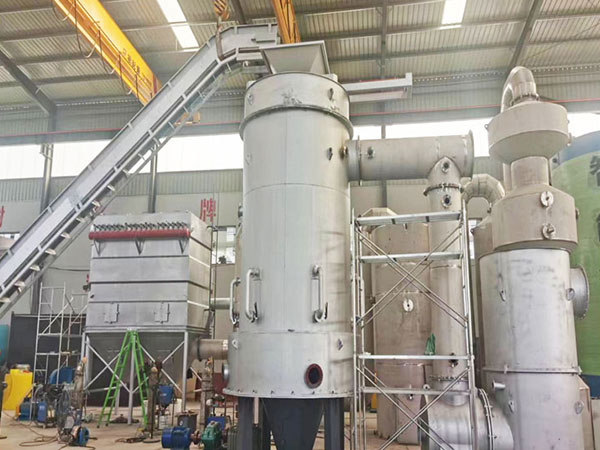
This type requires regular maintenance of the burners and exhaust gas treatment systems (often equipped with filters or settling chambers). Compared to stationary models, maintenance cycles are more frequent—typically involving monthly filter cleaning and semiannual calibration of the temperature control system.
Advantages: It achieves a balanced performance between fuel efficiency and waste destruction effectiveness. Waste combustion is more complete, and exhaust emissions are significantly cleaner.
Although overall operational costs are somewhat higher (due to filter replacement and component calibration), it helps avoid hidden losses caused by unplanned downtime.
This model is recommended for municipal general hospitals or mid-sized private medical centers with moderate budgets.
Normal service life: 12–13 years under regular maintenance.
Rotary Kiln Medical Waste Incinerator
This design provides the highest efficiency but also entails the highest maintenance and energy costs.
The rotary drive system must have its gears and lubrication checked monthly, while high-temperature sealing rings generally require replacement every 3–5 years. The flue gas purification unit (using activated carbon or lime slurry) demands frequent replenishment of consumables.
Energy consumption is also significantly higher—especially in continuous operation mode—resulting in notable long-term cost pressure.
However, its large processing capacity and superior environmental compliance performance make it ideal for centralized medical waste treatment centers or hazardous waste disposal facilities.
By preventing regulatory violations and environmental fines, it offsets the higher maintenance investment through reliability and compliance.
When subject to weekly functional inspections and quarterly deep maintenance, the equipment can achieve a service life of 15 years or more.
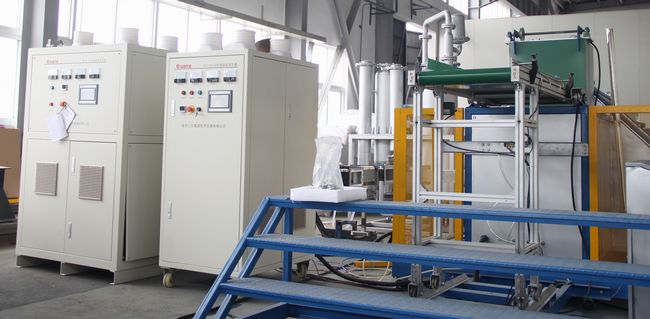
Recommendations: BiosafePro’s Customized Support and Services
To meet the diverse operational needs of healthcare institutions, BiosafePro offers multiple levels of customization and engineering flexibility for medical waste incinerators.
1. Customization of Incinerator Design
The working volume of the combustion chamber can be adjusted based on daily waste throughput:
- For small clinics with low daily output, the chamber size can be reduced to lower preheating requirements.
- For large infectious disease hospitals, the secondary combustion chamber can be expanded to enhance continuous processing capacity.
Thermal output limits are fine-tuned according to waste composition (e.g., higher plastic content), ensuring consistent combustion efficiency.
The emission control units are configured to match local environmental regulations:
- In European regions with strict standards, additional multi-layer filtration systems are integrated.
- In tropical climates, anti-humidity structural reinforcements are prioritized.
2. Flexible Energy Configuration
For regions with limited energy infrastructure, BiosafePro’s systems can adapt to different fuel sources:
- In urban areas with limited electricity but ample LPG, the system can be configured for LPG-initiated operation.
- For remote field stations, diesel fuel can serve as the primary energy source with optional backup tanks to ensure continuous operation.
- For research centers with reliable grid access, fully electric, automated operation can be implemented.
- This flexibility allows facilities to operate the incinerator without modifying existing infrastructure or energy supply systems.
3. Long-Term Operation and Technical Support
BiosafePro provides a three-tier global support system to ensure continuous, safe, and compliant operation:
- IoT-Based Monitoring:Real-time tracking of operational parameters; abnormal readings (e.g., sudden chamber temperature drops) automatically trigger alerts to technical staff.
- Comprehensive Training and Operation Manuals:Step-by-step guidance on console operation, emergency shutdown procedures, and troubleshooting, reducing operator error risk.
- Global Spare Parts Network:Key consumables—such as grate plates and temperature sensors—are stored at regional warehouses, enabling replacement within 72 hours in most cases.
All BiosafePro medical waste incinerators comply with World Health Organization (WHO) safety standards and EU emission directives (EU 2019/2020).
Before export, every system undergoes local environmental certification—such as compliance with China’s HJ/T Pollution Control Standards for Medical Waste Incineration—ensuring the equipment passes environmental audits in the destination country.